

The revitalization of downtown Portland is gaining momentum despite persistent negative media coverage, according to industry veteran Rashelle Newmyer, a Coldwell Banker realtor and host of ...

Historic Preservation Rules Are Why Luxury Prices Drop Just 4-8% While Other Markets Fall 15-20%

Written by:
Date:
05 Jan 2026
Share via Facebook

Share via Linkedin

Share via X

Copy to clipboard

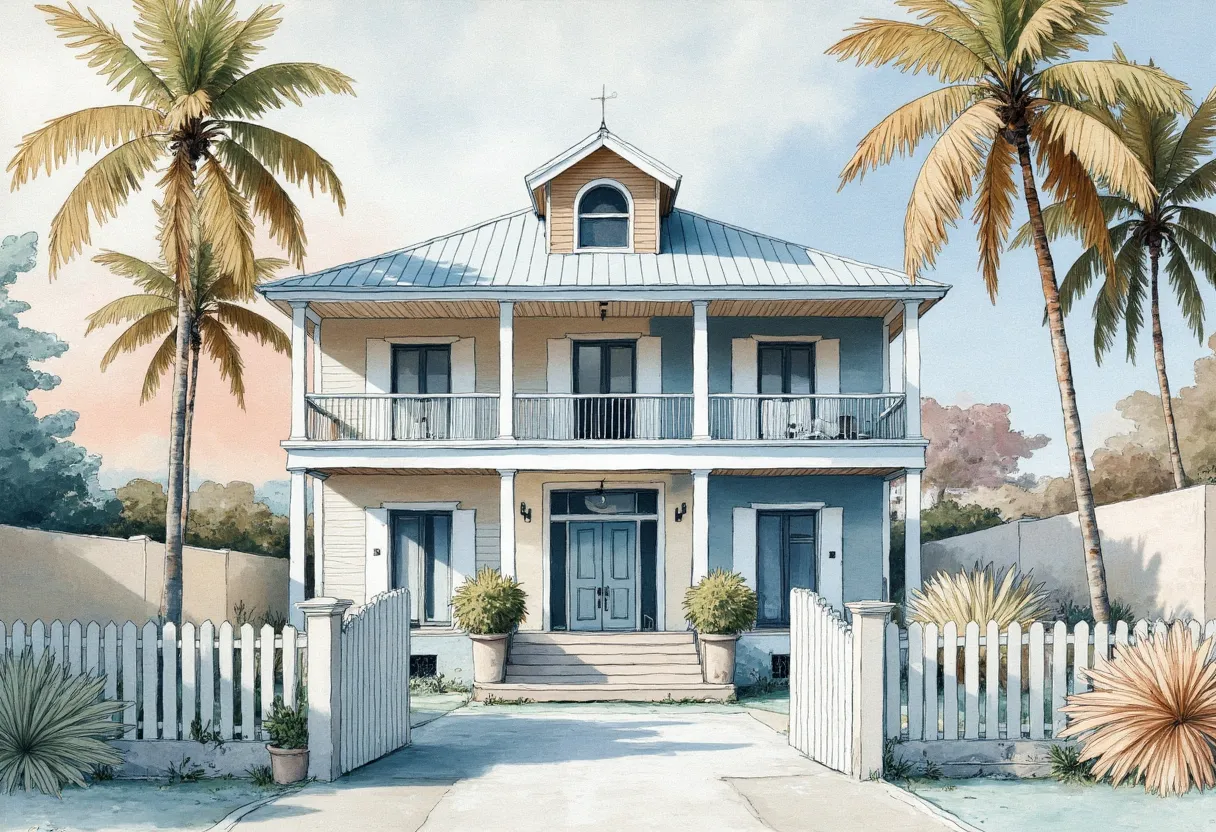
The Florida Keys present a real estate scenario that often confuses investors: the same historic preservation guidelines and zoning restrictions that create long permitting processes and costly restoration requirements also underpin the market’s resilience during downturns, according to Ellen Gvili, global real estate advisor at Ocean Sotheby’s International Realty.
“The Key West market is one of the most distinctive in the United States. Inventories are always limited, not only because of the island’s size but also due to strict zoning and historic preservation guidelines,” Gvili explains. “Our supply cannot expand, so pricing and values tend to be pretty resilient even during broader market volatility compared to other areas in the States.”
Gvili notes that while other Florida markets may see price drops of 15 to 20 percent in downturns, the Keys usually see only a 4 to 8 percent adjustment. This difference comes directly from supply constraints that prevent oversupply when demand weakens.
Scarcity-by-Design in the Keys
The preservation framework in Key West blocks unlimited new construction and requires that historic properties be restored rather than demolished and replaced. “Many homes and historic properties are thoughtfully restored and protected. It takes time to go through the permitting process and find contractors skilled in restoring historic homes,” Gvili says. “It’s a long process and requires a lot of money and time, but it adds to the charm and long-term value of such a property.”
This creates a market dynamic unlike regions where developers can quickly add supply in response to rising prices. In most markets, a price surge prompts new construction, which eventually leads to oversupply and price corrections. In the Keys, regulations prevent this, keeping inventory tight even during boom periods.
As a result, prices in the Keys remain stable because the market never faces the excess inventory that causes sharp declines elsewhere. When demand slows, prices adjust only modestly, avoiding the steep declines seen in less-regulated areas.
Recent Market Trends Highlight the Effect
The post-COVID period clearly shows how this system works. Gvili says the Keys saw a surge in demand when remote work took hold, and other markets imposed strict lockdowns. “A lot of people came here, and that created a boom in the market with many multiple-offer situations,” she says.
That boom has now faded, but the market correction has been mild. “In the last two years, we’ve seen a cooldown, and sellers need to adjust their pricing. If properties are priced and positioned right, they sell. If they’re overpriced, they sit,” Gvili notes.
The price drops Gvili describes—typically 4 to 8 percent, sometimes up to 10 percent for significantly overpriced properties—reflect a gentle correction rather than a crash. Well-priced homes continue to sell, even though bidding wars have ended.
This contrasts sharply with markets like Austin, Boise, and Phoenix, where rapid building during the boom left a glut of unsold homes when demand fell, resulting in much steeper price declines.
Restoration Requirements Signal Quality
Beyond limiting supply, the restoration requirements serve as a quality guarantee. Properties that make it through the lengthy permitting and restoration process are vetted under strict standards, giving buyers confidence in both construction quality and historical authenticity.
The time and money invested in compliance are reflected in a property’s value. Buyers know they are purchasing homes that meet preservation standards, not generic renovations that may cut corners or lose historic character.
This attracts buyers who value authenticity and are willing to pay a premium for it. “It adds to the charm and long-term value of such a property,” Gvili says. According to her, these buyers see the restoration requirements not as obstacles but as assurances of quality and preservation.
Lifestyle Buyers Help Stabilize Prices
The supply constraints also attract a specific buyer profile that supports stable prices. “It’s a lifestyle investment for many owners. They use it for personal enjoyment or as an income property,” Gvili explains. “The market is less dependent on full-time local occupancy. It’s more driven by lifestyle buyers, seasonal residents, and international ownership.”
These buyers are less affected by local economic shifts or employment changes than primary-residence buyers. Lifestyle and investment buyers make decisions based on long-term goals and broader financial portfolios, helping keep demand steady even during uncertain times.
International demand is a key factor. Gvili reports strong interest from European buyers—especially from Germany, France, and England—as well as Latin American buyers from Brazil, Venezuela, and Colombia. These buyers compare the Keys to global destinations, not just other U.S. markets, which helps maintain a stable base of demand.
Investment Takeaways for the Keys
For investors, understanding the Keys’ supply-constrained model is essential. The regulations that seem burdensome actually prevent oversupply and price swings. “Because our supply cannot expand, pricing tends to be pretty resilient,” Gvili emphasizes.
This means the risk and return profile is different from markets where supply can grow quickly. Investors may not see the same explosive gains during booms because supply constraints prevent bubbles from forming, and avoid steep losses during downturns since oversupply never materializes.
Sotheby’s Approach in the Keys
Ocean Sotheby’s International Realty, Gvili’s firm, positions itself as the expert in navigating these complex rules. As the exclusive Sotheby’s affiliate in the Keys, with offices from Key West to Marathon, Key Largo, and Ocean Reef, the company offers the local expertise needed to guide buyers through permitting, restoration, and zoning challenges.
“Key West requires a specific level of expertise. Buyers must understand the historic district, zoning restrictions, rental regulations, and flood zones,” Gvili says. The firm’s deep local knowledge and international marketing reach allow it to connect the limited supply with a global buyer pool that values scarcity and authenticity.
Whether other markets will adopt similar preservation-based approaches to support pricing remains uncertain. For now, the Keys offer a clear example of how regulatory constraints that limit supply can protect long-term property values, even if they slow transactions and complicate permitting.
Similar Articles
Explore similar articles from Our Team of Experts.