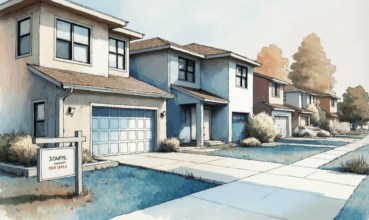
Many would-be homebuyers in Pinellas County are holding back, convinced they need to wait for lower mortgage rates or save a 20% down payment before they can buy. These common misconceptions are keeping buyers out of the market and causing them to miss out on opportunities.
Mark Hartman, a team leader with Charles Rutenberg Realty who has worked in Tampa Bay real estate since 2005, says the biggest mistake buyers make is waiting for perfect market conditions. “The best deals rarely go to the best timers,” Hartman says.
Here are five persistent myths about buying in Pinellas County—and the facts buyers need to know to make informed decisions now.
1. You Should Wait for Rates to Drop Before Buying
Many buyers believe mortgage rates will fall dramatically, making homes more affordable. But rates between 6% and 7%—though higher than the 2% to 3% seen during the pandemic—are still low by historical standards. In the early 1980s, mortgage rates reached 17%. There is no guarantee rates will drop significantly in the near future, and waiting could mean paying more as home prices continue to rise.
Even if rates decrease, increased demand could drive home prices up, erasing any potential savings from a lower rate. “If you wait for a big drop, you’ll probably miss out on homes that fit your needs,” Hartman says.
Instead, buyers should focus on what they can afford today. If rates fall later, refinancing is an option. But if prices rise in the meantime, affordability may decrease.
2. You Need 20% Down to Buy a Home
The belief that a 20% down payment is required keeps many buyers from entering the market. In reality, most buyers in Pinellas put down far less. “Only about a third of my buyers put down 20%,” Hartman says. Many loan programs accept as little as 3% to 5% down, and first-time buyers often qualify for FHA loans or local down payment assistance (DPA) programs.
Pinellas County offers DPA programs that can help cover closing costs or contribute to the down payment. While private mortgage insurance (PMI) will increase the monthly payment for those with less than 20% down, it’s often less expensive than renting while saving for a larger down payment.
Buyers should discuss low-down-payment options with their lender and compare the total monthly cost—including PMI—to their current rent.
3. You Can’t Buy If You Have Student Loans
Student loan debt does not automatically disqualify buyers. Lenders look at the debt-to-income (DTI) ratio, not the total loan balance. “I’ve had buyers with $100,000 in student loans still qualify,” Hartman says. What matters is how much of your monthly income goes toward debt payments.
If you have a manageable monthly student loan payment—especially if you’re on an income-driven repayment plan—your chances of qualifying are better than you might expect.
To assess eligibility, add up all monthly debt payments (student loans, car loans, credit cards) and divide by gross monthly income. Most lenders prefer a DTI below 43%.
4. You Should Always Offer Under Asking Price
Some buyers assume it’s standard to offer less than the asking price, but that strategy can backfire in today’s Pinellas market. Well-priced homes—especially those that are new to the market—often receive multiple offers and sell quickly. “Lowball offers don’t work on well-priced homes—those sell fast,” Hartman says. If a home has been listed for several weeks, there may be room for negotiation. But for new, competitively priced listings, offering below asking can mean missing out.
Buyers should review recent comparable sales in the neighborhood. If a home has been on the market for more than 30 days, there may be room to negotiate. For new listings, bring your best offer.
5. You Should Waive Inspections to Win the Deal
During the pandemic housing frenzy, some buyers felt pressured to waive inspections to compete. That is no longer standard practice in Pinellas County. “Most sellers will let you do at least an informational inspection,” Hartman says. Skipping inspections can lead to expensive surprises after closing.
Instead, buyers should include an “informational only” inspection contingency, which allows them to withdraw if significant issues are discovered. Buyers can also request disclosure of recent repairs to understand the home’s condition.
What Actually Matters When Buying in Pinellas
Rather than waiting for perfect conditions or worrying about myths, buyers should focus on three key factors:
Know Your Monthly Budget: Consider the full monthly payment—including mortgage, property taxes, insurance, and any HOA fees—not just the purchase price.
Get Pre-Approved Early: Pre-approval signals to sellers that you are a serious buyer and helps you shop within your true price range. It also streamlines the process once you find a home.
Be Realistic About Must-Haves: Focus on aspects of the home you can’t change, such as location, layout, and significant systems. “You can paint a wall, but you can’t move a house,” Hartman says.
The Bottom Line
Don’t let myths about rates, down payments, or student loans keep you from buying a home in Pinellas County. The most critical steps are understanding your finances, getting reliable advice, and acting when you find a home that fits your needs. Waiting for perfect conditions is likely to mean missing out on opportunities that exist now.
This article provides insights from a local real estate professional and is not legal, financial, or investment advice. Consult a qualified expert for guidance on your specific situation.
This article was sourced from a live expert interview.
Every month we conduct hundreds of interviews with active market practitioners - thousands to date.
Local investor Sergio Aguinaga argues Detroit’s most profitable investment opportunities now exist in a specific price band, challenging conventional wisdom about the market’s re...
The luxury real estate market is moving away from models that rely on sheer listing volume, with a growing emphasis on selective curation. Yet many brokerages still operate under the belief ...
The long-standing idea of buying a fixer-upper in the countryside and restoring it over time is quickly losing ground in affluent second-home markets. William Melnick, associate agent at Ely...
Florida’s Gulf Coast real estate market is entering 2026 with a noticeable uptick in buyer activity and changing preferences, as recent hurricanes and rising insurance costs reshape what b...
A surge in new construction is forcing existing home sellers to significantly adjust their pricing strategies in Central Florida, according to Michael Dorman of Elevate Real Estate Brokers, ...
While St. Johns County continues to attract the bulk of buyer attention in Northeast Florida, some areas remain undervalued despite solid fundamentals and new development. According to Terry...