If you are an investor eyeing Miami real estate, the property tax reduction that Florida’s governor is pushing would not help you at all. And if you are a buyer planning to live in the...

Ohio Suburbs Race to Adapt as Intel’s Expansion Redraws the Map

Written by:
Date:
16 Jan 2026
Share via Facebook

Share via Linkedin

Share via X

Copy to clipboard

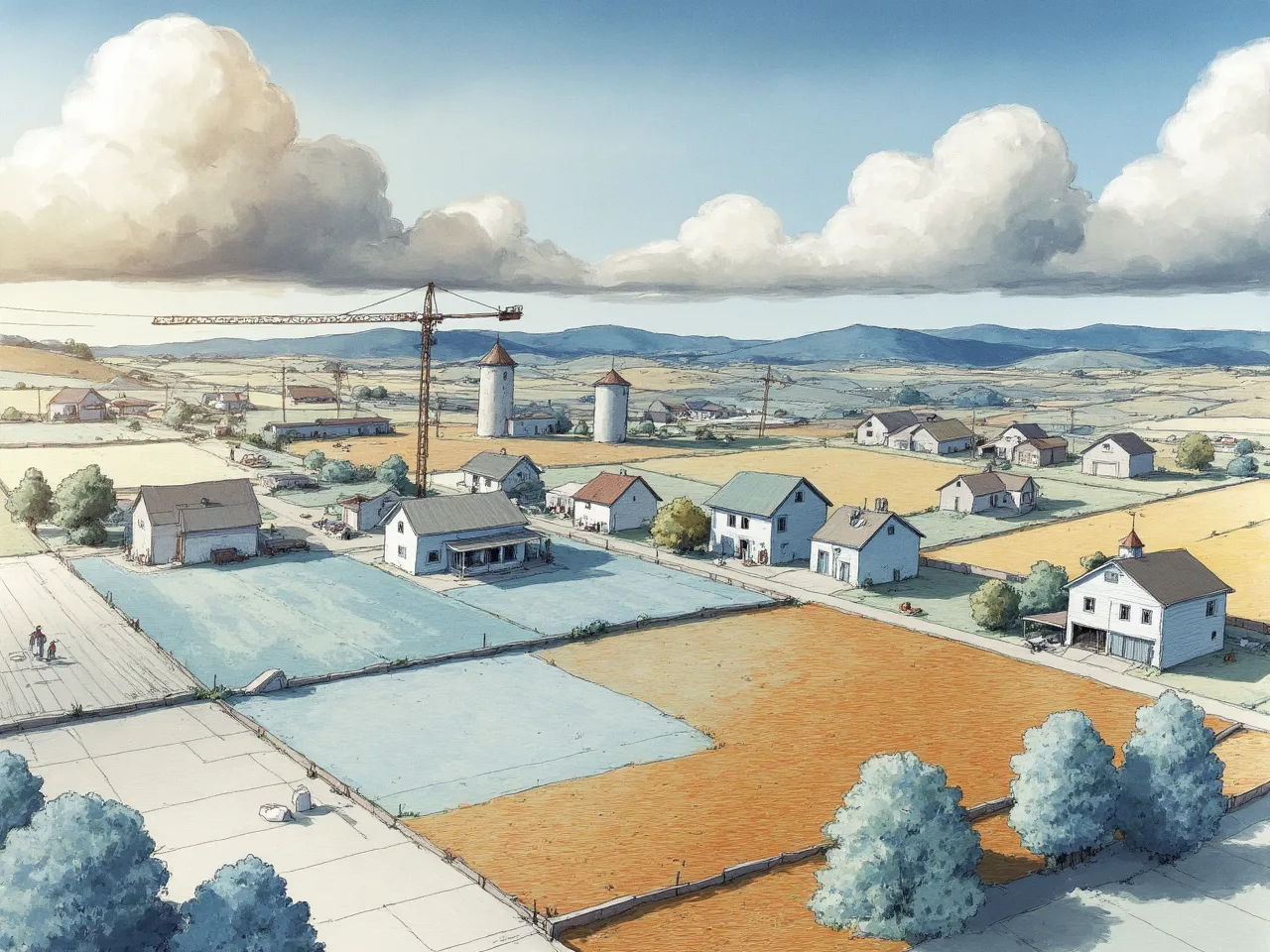
When Intel announced its multi-billion-dollar semiconductor facility in Licking County, Ohio, the impact quickly spread beyond the factory’s footprint. Neighboring townships, once expecting only gradual growth, are now facing a surge in demand for housing, data centers, and commercial buildings. These communities are rushing to update zoning laws and infrastructure plans, all while trying to protect the farmland that has long defined the region.
“There wasn’t a big growth plan in those townships, and so they’re sort of scrambling to meet up with that,” says Brian Lorenz, Director of Planning and Permitting at the Ohio House of Representatives and the only professional planner in the state’s General Assembly.
The central challenge is clear: how to manage rapid commercial expansion alongside residential needs without overwhelming local roads, schools, and water systems, or eroding Ohio’s agricultural identity. The timing is urgent, as Intel’s project accelerates a transformation already underway in central Ohio.
Intel’s Ripple Effect: More Than a Factory
The Intel facility has triggered a wave of secondary development throughout central Ohio. Data centers are arriving to support the growing tech sector, while companies like Anduril have launched nearby operations. This influx is bringing high-earning professionals, engineers, researchers, and technical staff, whose salaries provide a significant boost to local tax bases.
“You’re also seeing an influx of white-collar capital, intellectuals, folks that are in there to work in those facilities,” Lorenz says. “Those higher salaries obviously contribute more to the tax base as well.”
Demand for housing near the Intel site is high. Developers are vying for land, and townships that never anticipated this level of activity are now updating zoning codes and infrastructure plans in real time. Local governments are under pressure to provide roads, utilities, and schools fast enough to meet the needs of new residents and employers.
The Farmland vs. Development Dilemma
Central Ohio’s suburbs now face a direct conflict between preserving farmland, still the state’s largest industry, and accommodating new development. Farmers and rural residents want to maintain agricultural land, while developers eye open acreage for new homes and commercial projects.
“You’ve got a conflict between the farming community and more of the rural settings, and then the suburbs,” Lorenz says. “It’s a very crucial and careful balance on what we need to do to preserve agricultural land.”
The risk, Lorenz explains, is unchecked sprawl that strains infrastructure and permanently eliminates farmland. He points to the need for targeted redevelopment: converting empty office buildings near highways into mixed-use projects with housing, retail, and workspaces. By focusing density near transit corridors, communities can avoid extending roads and utilities into undeveloped areas, reducing congestion and infrastructure costs.
“When we spread that out, all we’re doing is creating traffic congestion, overburdening our school systems,” Lorenz says. “Our water and sewer rates go up. We can’t keep up.”
Predictability Tops Incentives for Developers
For companies considering Ohio, the main draw is not just financial incentives but also a transparent, predictable approval process. Developers need to know how long permitting will take and whether their projects will move forward without unexpected delays.
“The number one thing that I emphasize is that predictability, that comfort level,” Lorenz says. “Am I going to be successful here? What’s my path to approval?”
Speed to market is critical, especially as competition for prime locations intensifies. If permitting drags on or zoning rules are unclear, projects can stall. Lorenz is backing House Bill 361 to create more predictable land-use processes by requiring stronger comprehensive planning and reducing last-minute disputes between developers and local governments.
“When we have predictability, that lessens lawsuits, referendums, that saves the communities and the developers time and money,” he says.
Impact on Homeowners and Small Investors
For property owners near the Intel site or other major employment hubs, the surge in demand is driving up prices and attracting buyers and renters. However, smaller investors may struggle to compete with large developers who can move quickly and buy in bulk.
The opportunity for small investors lies in focusing on housing types that remain underserved, such as starter homes, townhomes, or rentals suitable for mid-level professionals. Competing for large parcels against institutional buyers is likely to prove difficult.
For existing homeowners, rising property values can mean higher tax bills. While Ohio has passed some property tax relief measures, Lorenz notes that these steps may not be enough for long-term residents struggling with escalating assessments. “When I get calls from people that say, ‘I’ve been in my home 30 years, and I can’t pay my taxes because they’re worth more than my house,’ we’ve got a problem,” he says.
What’s at Stake for Ohio
Ohio is positioning itself as a business-friendly alternative to coastal states, offering lower costs, strong universities, and stable infrastructure. The Intel project is accelerating this trend, but the bigger challenge is whether local governments can plan and build fast enough to accommodate growth without sacrificing farmland and small-town character.
“We really have to balance that residential growth with the commercial growth,” Lorenz says. “We want more of the commercial growth because that lessens the property taxes.” For now, local officials and residents are adjusting to a new reality, as rapid development tests the limits of infrastructure and the region’s ability to retain its agricultural roots.
This article shares insights about Ohio’s development landscape; it is not legal, financial, or investment advice.
Similar Articles
Explore similar articles from Our Team of Experts.