Sports facilities can reshape urban neighborhoods in ways that conventional development rarely achieves, according to Kevin Kelley, shareholder at Greenberg Traurig and veteran advisor on sp...

Labor Crisis Drives Up Costs in Texas Commercial Real Estate

Written by:
Date:
26 Dec 2025
Share via Facebook

Share via Linkedin

Share via X

Copy to clipboard

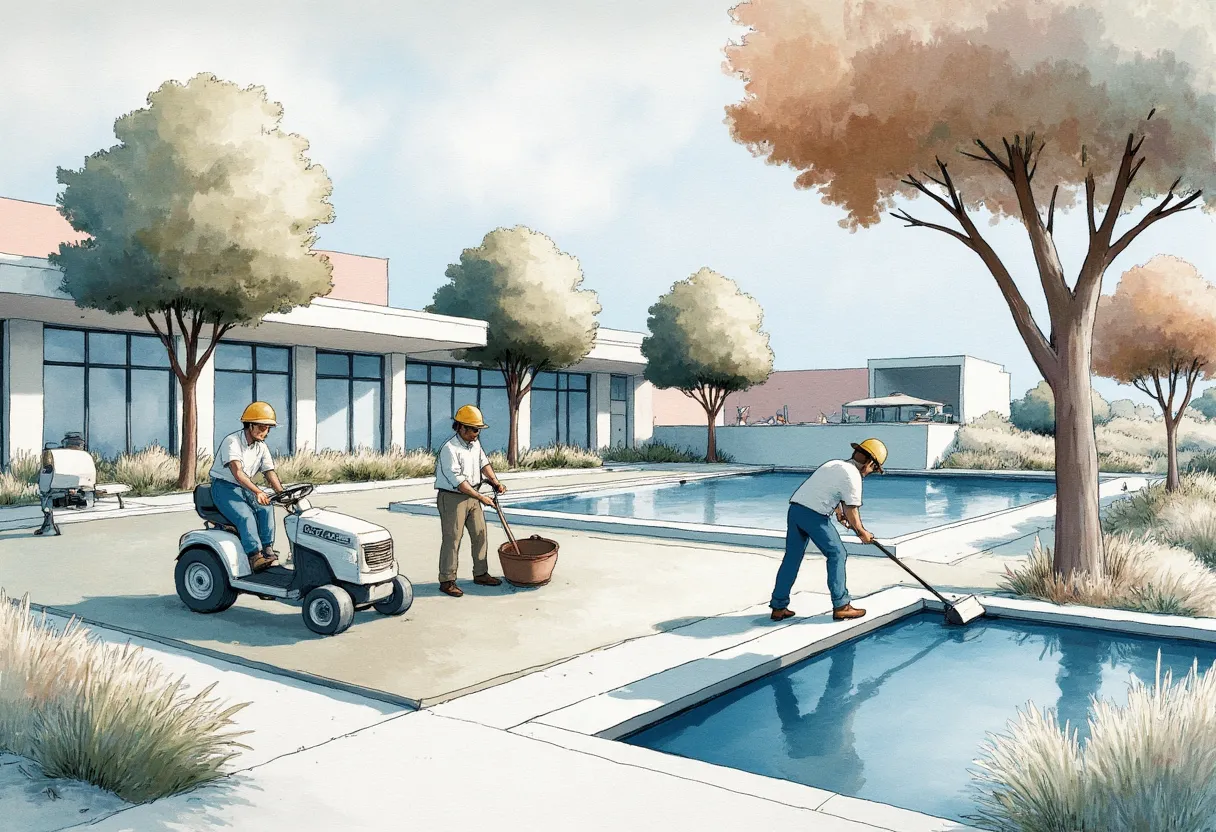
A severe labor shortage in landscaping and grounds maintenance is quietly pushing up costs and complicating project timelines for commercial real estate developers across Texas. Sergio Grado, a business development professional with experience at an international landscape architecture firm and founder of GradCo Distributors, says the workforce contraction is reshaping the economics of new construction and ongoing property management.
Grado explains the root of the problem: “The majority of laborers in landscaping were undocumented or had questionable citizenship status. Doesn’t mean they couldn’t do the work – everybody’s trying to make a living. But those are the ones who were out there doing the hard work.” As immigration enforcement has increased and labor policies have tightened, the pool of available workers has shrunk dramatically. “You start deporting all those people, you don’t have a whole lot left,” Grado says. “So the market is taking a hit.”
Traditional Bidding Strategies Are Breaking Down
For years, landscaping companies in Texas followed a predictable pattern. At the start of the year, established firms would bid aggressively on a high volume of contracts, sometimes underpricing jobs to keep their crews working. Once they secured enough work to keep their employees busy, they would shift focus in the second or third quarter to pursue more selective, profitable projects.
This system depended on a steady supply of affordable labor. Now, with fewer workers, companies are forced to be more selective from the outset, reducing the number of firms able to compete for contracts. “It’s very competitive,” Grado says. “The key thing is maintenance contracts. If a landscape company can land some maintenance contracts, then they’ve got stability. Now they can go off and do new construction projects.”
Even companies with maintenance contracts, however, are struggling to find enough workers for new projects. “It’s very labor-intensive,” Grado notes. “With everything that’s been happening with deportations and things like that, you don’t have a whole lot left.”
This shift is causing established players to pull back from competitive bidding, especially later in the year. Grado explains, “You’re getting into bidding wars, and whoever submits the lowest bid wins. But some companies have taken on so much business that they’re not bidding toward the end of the year. That opens up the market a little bit.” In many cases, companies are not exiting because they are booked solid, but because they can’t maintain profitability with current labor costs.
Impact on Commercial Real Estate Development
Landscaping is typically one of the last trades on a commercial development project and represents a significant line item in project budgets. Developers who previously relied on stable, predictable landscaping costs are now facing higher bids, reduced competition, and uncertainty about project timelines. Fewer qualified bidders mean less leverage for developers, while those who do bid are factoring in higher labor costs and greater risk.
Grado says the current environment is not a temporary disruption but a structural change. “Landscaping costs in commercial real estate development are likely to remain elevated,” he says. For developers and property managers, this means adjusting expectations for both budgets and schedules. Landscaping should now be treated as a fixed cost, not a variable one, with reduced availability and higher pricing than in previous years.
A Shift Toward Alternative Solutions
In response to these challenges, some in the industry are seeking new approaches to reduce reliance on traditional labor. Grado’s company, GradCo Distributors, has shifted focus to products that address new pain points in property management. One example is the Broncho Power Boost, a battery backup system designed for properties where traditional generators are impractical due to space or regulatory constraints.
The product has gained traction in the condominium sector, where property managers are reporting increased demand for backup power solutions from residents. Grado recounts, “People were asking if they could have a large refrigerated room somewhere in the building that everybody could take their food down to just to keep it cold in case of a power outage.”
Looking Ahead
Whether the current labor shortage will prompt broader changes in how developers approach landscaping and grounds maintenance remains uncertain. However, Grado’s experience suggests that the industry is unlikely to return to previous norms. Developers and property managers, he advises, should budget for higher, less flexible costs and be prepared for a more limited pool of qualified contractors.
The landscaping labor crisis is now a defining factor in Texas commercial real estate, and developers who fail to adjust may face higher costs and project delays. The industry is being forced to adapt, with long-standing business models giving way to new realities shaped by labor scarcity and rising costs.
EDITOR’S NOTE: This article has been updated to correct the styling of Grado’s company.
Similar Articles
Explore similar articles from Our Team of Experts.