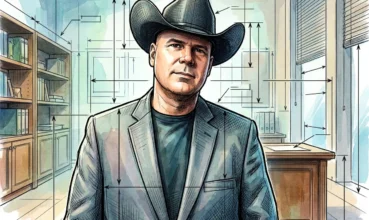

“It’s just as easy to do something big as it is to do something small. So you might as well pursue something that truly excites you,” says Matthew Aitchison, quoting Blacks...

Upstate South Carolina Becomes a Key Southeast Land Development Center

Written by:
Date:
22 Dec 2025
Share via Facebook

Share via Linkedin

Share via X

Copy to clipboard


Upstate South Carolina is undergoing rapid growth as developers and investors seek new opportunities away from crowded coastal markets. With Greenville nearly out of available land and neighboring areas like Spartanburg attracting increased interest, the region has become one of the most active commercial real estate corridors in the Southeast.
Migration Patterns Fueling Demand
Significant demographic changes—particularly migration from the Northeast and other parts of the eastern United States—are driving the surge in development. Maggie Steck, associate broker with Freedom Commercial LLC and a land sales specialist in the region, observes, “People are moving here in droves from New York and all the eastern part of the country, the Northeast.”
This influx has created a marked supply-demand imbalance, fundamentally altering the local real estate landscape. Greenville, once considered a mid-sized Southern city, now faces a shortage of developable land within its limits. The city’s appeal is not limited to affordability; Greenville has developed a vibrant downtown with frequent festivals, a wide range of dining options, and walkable entertainment districts. Steck describes Greenville as “a party town,” citing Friday night events where downtown streets close for food trucks, live music, and community gatherings along the Reedy River Falls.
Land Acquisition in a Tight Market
In this environment, commercial brokers rely on traditional prospecting techniques to find and secure land deals. Steck’s process involves a systematic review of county GIS mapping systems to identify vacant parcels, followed by direct outreach to landowners.
“I look for the property on what’s called GIS, the mapping for each county, and I go through the steps of finding vacant land, and then I call the seller and ask if they want to sell,” Steck explains. This targeted approach has produced significant results, including recent transactions for an 86-acre listing and ongoing projects with a former mayor involving multiple large-scale sites.
Land brokerage in this region commands higher fees than standard commercial deals due to the complexity and risk involved. Steck says, “I ask for 10%, and I get it,” emphasizing that land deals often take years to complete, with developers and brokers navigating intricate land-use, entitlement, and infrastructure challenges.
Development Economics and Risk Management
Current conditions present both opportunities and obstacles for developers. While demand for sites remains strong, rising construction costs and more expensive financing have altered project feasibility compared to the pre-pandemic period.
National homebuilders are now more cautious, often preferring to buy finished lots rather than raw land. Steck notes, “A lot of these big builders will buy the land, and they’ll sit on it until things get better,” referencing companies like Stanley Martin that are managing risk by holding land off the market until conditions improve.
As a result, local developers carry greater financial responsibility, funding costly infrastructure improvements before selling lots to builders. “It puts all the heavy-duty responsibility on the developer. He’s the one paying to develop, and it’s millions of dollars to develop,” Steck says.
Affordable Housing Pressures
Despite robust population growth, providing affordable housing remains a significant challenge in the Upstate. Rising land and development costs have pushed even modest new homes beyond the reach of many buyers.
In response, builders are reducing home sizes to keep entry-level options attainable. Steck notes, “They’re building smaller, going into the smaller footprint, like 1,200 to 1,500 square foot homes,” reflecting industry efforts to maintain some level of affordability for first-time buyers.
Multifamily development faces similar hurdles, with higher construction costs limiting new supply. However, there is growing interest in adaptive reuse, such as converting office buildings to residential units, especially as remote work reduces traditional office demand.
Spartanburg’s Growing Significance
While Greenville has attracted most of the region’s attention, Spartanburg County is quickly emerging as a new focal point for growth. Previously seen as primarily industrial, Spartanburg is now drawing significant residential and mixed-use development.
“Spartanburg is growing very fast,” Steck reports. “People are complaining now that there’s too much building going on and traffic is terrible.”
This pattern echoes Greenville’s earlier expansion, indicating that Spartanburg may offer the kind of opportunities that fueled Greenville’s growth over the past decade.
Commercial Sector Performance
Commercial real estate sectors across the Upstate are experiencing varied results. Industrial properties remain in high demand, mainly due to ongoing supply chain and logistics needs. Office space, however, continues to struggle as companies reassess their space needs in the wake of the pandemic.
Retail performance is mixed. Food service businesses are thriving, driving up demand for restaurant spaces. Steck observes, “Food is very popular here, so the spaces are becoming harder to find because there are so many people getting into the food industry.”
Large-format retail properties, such as those anchored by national chains like Dollar General and major grocery stores, continue to draw institutional investment from out-of-state buyers seeking stable, income-producing assets.
Looking Ahead: Growth, Constraints, and Opportunity
The Upstate’s growth appears likely to continue, supported by ongoing migration and the scarcity of land in core markets. However, rising infrastructure costs and limited capacity may slow the pace of expansion in the coming years.
Developers and municipalities are responding by focusing on mixed-use projects with walkable features, aiming to manage growth while enhancing quality of life. Steck explains, “The most popular developments now are mixed-use, where people can walk and trails through the neighborhood,” describing projects that integrate residential, commercial, and recreational elements across large parcels.
For investors, the Upstate offers opportunities in a range of property types, from residential subdivisions to industrial and retail assets. Success, however, depends on understanding local development processes and building relationships with experienced professionals familiar with county-specific regulations and market conditions.
The region’s evolution from a primarily agricultural and manufacturing base to a diverse commercial real estate market aligns with broader development trends across the Southeast. Upstate South Carolina is now positioned as a major player in regional growth, offering both challenges and opportunities for those able to navigate its increasingly competitive landscape.
Similar Articles
Explore similar articles from Our Team of Experts.