
You list your house for the price Zillow suggests, wait two weeks, and nothing happens. No offers, few showings. Meanwhile, your neighbor down the street just cut their price by $30,000 afte...

Vacant Homes Owned for Decades Are Suddenly Selling While Recent Buyers Struggle

Written by:
Date:
07 Jan 2026
Share via Facebook

Share via Linkedin

Share via X

Copy to clipboard

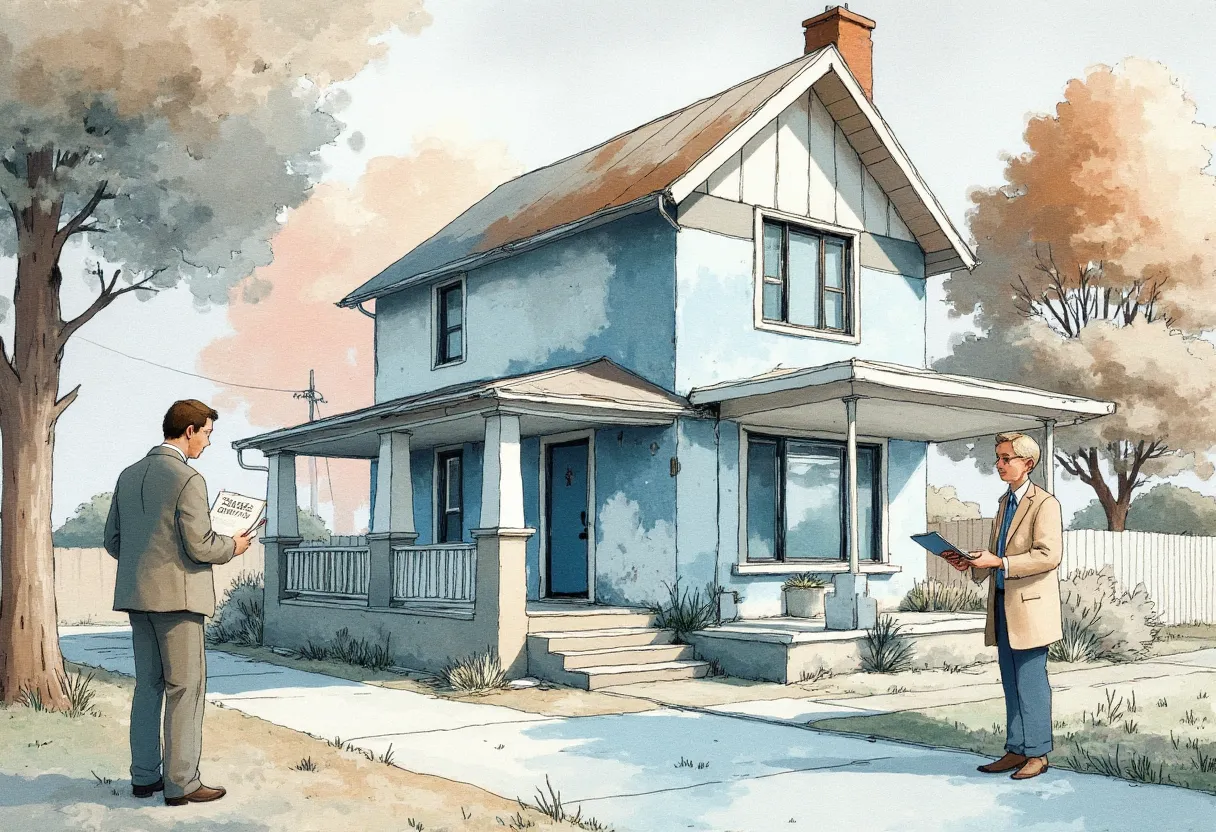
In Ontario, some of the most in-demand properties are not newly renovated or recently occupied homes, but long-vacant houses that have sat empty for years or even decades. These properties, often neglected and in need of repair, are being purchased by cash buyers at a rapid pace. Meanwhile, homes bought in the last five years are languishing on the market with few interested buyers. The difference comes down to equity, financial urgency, and the changing pressures on homeowners.
Sebastian Jania, co-founder and owner of Ontario Property Buyers, recently closed on a home that had been vacant for 30 years. The family that owned it had held onto the property through several market cycles, but rising costs and mounting financial pressure finally prompted them to sell. “It had been an eyesore, something they’d neglected, but they needed the cash now,” Jania says.
Why Long-Neglected Homes Are Selling Quickly
For years, some Ontario homeowners have held on to properties they don’t occupy – inherited houses, former rentals, or family homes left unused. These properties often require extensive renovations, but have one key advantage: substantial equity.
Because these homes were purchased decades ago, the mortgage balance is typically minimal or fully paid off. Even with recent declines in home values, long-term owners can still realize significant proceeds. This makes the properties attractive to investors, who can buy, renovate, and either resell or rent them out for a profit.
“We’re getting a lot of houses that have been owned for a long time and just been sitting,” Jania says. Before 2020, these owners could afford to wait. With property taxes and insurance costs rising, many are experiencing financial stress and are finally ready to sell.
Why Recent Buyers Can’t Sell
In contrast, homeowners who bought in 2021 or 2022 face a very different reality. Many paid peak prices, made small deposits, and took out large mortgages. As prices have dropped, these owners now owe more on their mortgages than their homes are worth, or nearly so.
If they try to sell, the numbers often don’t add up. After paying off the mortgage, realtor commissions, and closing costs, there may be little or nothing left. In some cases, sellers may need to bring cash to closing to complete the sale.
Jania sees this situation frequently. “Even when the seller is motivated, if there’s not enough equity, we can’t make it work,” he says. Realtors face the same challenge, as there is no room to negotiate on price or repairs.
What Changed: The Impact of Higher Rates and Falling Prices
Before 2020, low interest rates made borrowing easy. Homeowners could refinance at low rates, extract equity, and benefit from steadily rising home values. When interest rates increased sharply, home prices declined, and the financial landscape shifted.
Some owners had refinanced and taken cash out during the boom years, increasing their loan balances. Now, their homes are worth less, and their mortgage payments are higher – especially as mortgage renewals come due at much higher rates. For many, the numbers no longer work.
“The party was over, and the financial hangover started to hit,” Jania says. This financial pressure has led many long-term owners – who previously had no urgency to sell – to finally list their properties.
Case Study: A 30-Year Vacant House
Jania’s team recently purchased a home that had been empty since the early 1990s. The family inherited it, but no one lived there. For years, low property taxes and a stable neighborhood made the property easy to hold. But as costs increased, issues mounted: property taxes rose, the roof leaked, and the city issued code violation notices for overgrown grass.
What had once been a low-priority problem became urgent. The family contacted Ontario Property Buyers, received an offer within 48 hours, and closed the sale in 30 days. They left with a check and no further obligations.
Meanwhile, a homeowner who bought a similar property in 2021 for $650,000 and now owes $620,000 cannot sell without a substantial loss. Even at $600,000, the seller would owe $20,000 to exit the deal.
What Ontario Homeowners Should Know
If You Own a Long-Held Property: Now may be the best time to sell, especially if the home requires repairs or if you’re feeling financial pressure. Cash buyers are active, and you likely have enough equity to close a deal without complications. Delaying could result in city enforcement actions or even tax sales.
If You Bought Recently: Carefully calculate your equity before listing. Determine your outstanding mortgage, realistic selling price, and net proceeds after all costs. If the numbers are negative, contact your lender to discuss options such as loan modification, forbearance, or a short sale.
If You’re Looking to Buy: Focus on properties that have been listed for several months, especially those owned by recent buyers. These sellers are often more motivated and may be willing to negotiate on price, repairs, or closing costs.
Key Takeaway
In Ontario, the properties selling fastest are not necessarily the newest or most up-to-date; they are those with significant equity. Long-term owners who held onto vacant homes for decades are finally selling due to financial pressure, while recent buyers are often stuck waiting for prices to rebound. “There needed to be some catalyst,” Jania says. “And that catalyst is here.”
This article provides real estate insights from a local professional. It is not legal, financial, or investment advice. Consult appropriate professionals for significant decisions.
Similar Articles
Explore similar articles from Our Team of Experts.
Market Analysis & Policy, Real Estate Services, Consumer, Residential Real Estate, Real Estate Investment
The Texas real estate market continues to show stability and opportunity, even as buyer behavior has shifted and national housing markets face growing uncertainty. While much of the country ...