
The Philadelphia suburban corridor, stretching across Bucks County, Pennsylvania, and South Jersey, has long attracted buyers seeking a practical middle ground between urban access and resid...

Building for the Long Term: How RAL Companies Navigates Real Estate Development Across Market Cycles

Written by:
Date:
29 Dec 2025
Share via Facebook

Share via Linkedin

Share via X

Copy to clipboard

The real estate development industry has undergone significant changes over the past four decades, from the rapid growth of suburban retail in the 1980s to the rise of urban adaptive reuse and, more recently, luxury hospitality destinations. RAL Companies has adapted to each of these shifts, growing from a commercial architectural firm into a full-service development platform with projects spanning New York City, Colorado, and the Caribbean.
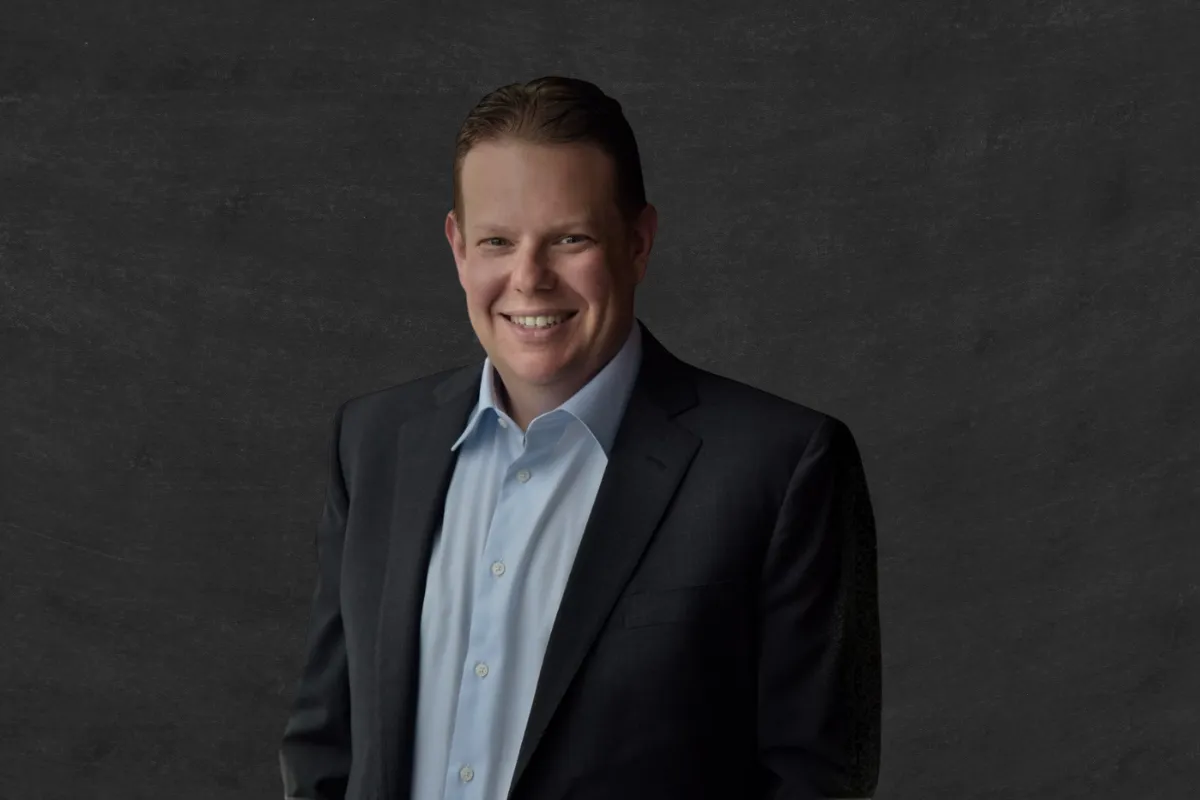
Spencer Levine, President of RAL Companies, represents the second generation of leadership at the 45-year-old firm founded by his father, Robert Levine. Since joining the company in 2005, Spencer has overseen projects through periods of economic expansion and contraction, including the 2008 financial crisis. His experience has shaped RAL’s approach to development strategy and market resilience.
“We’re not interested in studio projects,” Spencer says. “Our projects need to get executed. We don’t want them to sit on our drafting boards. Every project that we get involved in has a path to completion and delivery.”
From Retail Architecture to Adaptive Reuse
RAL Companies began as an architectural firm specializing in retail and supermarket projects during the suburban expansion of the 1980s. The company’s focus changed in the late 1980s, when the sale of a major client to an international conglomerate forced RAL to reconsider its business model. What could have been a setback instead became a turning point, pushing the firm into New York City’s emerging adaptive reuse market.
In the 1990s, RAL became an early leader in converting government and commercial buildings into residential properties. Projects such as Franklin Tower, a former city office building, and 270 Broadway, a state office building, established RAL’s reputation for managing complex conversions. “We were doing some of the earliest conversions down in Tribeca and lower Manhattan before it was the hot word,” Spencer says. “Our approach came from our architectural background. We could go into buildings of different vintages and understand what we might encounter, rather than relying solely on spreadsheets.”
RAL’s technical expertise enabled the company to assess building systems and risks more accurately than competitors, particularly in sealed-bid processes. This hands-on knowledge enabled RAL to price projects realistically while others missed critical construction details.
Timeless Design as a Core Principle
A central element of RAL’s philosophy is what Spencer describes as “timeless design” – a commitment to quality and longevity in both aesthetics and construction. This approach became essential during the 2008 financial crisis, when many developers were left with unsold inventory in a collapsed market.
“Developing a condominium, if the timing’s not right and you hit a cycle, you’ve still got to be able to sell those condominiums when you come out of that cycle,” Spencer says. “Delivering quality, timeless design is essential to the success of any project. You might not make the profits you thought you were going to make, but you’ll be able to move those units because you haven’t done something that’s just pigeonholed into a time period.”
This attention to enduring value extends to how RAL manages its developments after completion. The company often remains involved with its projects for years, advising condominium boards and supporting long-term operations. “We live with our projects,” Spencer adds. “There’s a lot of personal commitment and passion that goes into what we do.”
Expanding into Hospitality
RAL’s move into hospitality development was sparked by a family ski trip to Telluride, Colorado, in the 1990s. The experience led to the company’s first hospitality project, the Inn at Lost Creek, followed by the larger Capella Telluride – a 400,000-square-foot hotel and residential development.
The Capella project opened in February 2009, at the height of the financial crisis. “We opened February 15, 2009, and I know that date so well because it’s actually my father’s birthday,” Spencer recalls. “We made this whole big thing like we’re opening this hotel on Robert’s birthday. And it was also the end of the world at that time. But we delivered that project on time, on budget, through everything we went through.”
Spencer notes that hospitality development presents unique challenges and rewards. “Every person that comes into that lobby has a unique perspective on the work that you deliver,” he says. “You could sit in the lobby and just look at people’s reactions as they walk through the door. You don’t really get that with any other building type.”
A Dual Development Model
Today, RAL operates with a dual business model: the company develops and owns portfolio projects while also serving as a third-party development manager for other owners. This structure allows RAL to invest directly in some projects and partner with other developers on others.
“There are projects like ROAN that are the portfolio projects that we own, that we are fully invested in the capital stack and ownership structure,” Spencer explains. “And then there are projects where we are a principal part of the execution plan, serving in this third-party development role where we are an extension of that ownership bench.”
This approach enables RAL to work on projects beyond its own underwriting capacity, giving the team exposure to new markets and property types. Recent third-party work includes the Four Seasons in Telluride and the Kartrite Resort and Waterpark in upstate New York. “It’s allowed us to work on projects that we wouldn’t typically be able to underwrite or be balance sheet type projects,” Spencer notes. “What it does do is give my team a whole new set of skills that we can bring to other owners or properties across the country.”
Current Projects: ROAN and Mandarin Oriental
Two significant developments highlight RAL’s current focus. ROAN, an 81-townhome project in Steamboat Springs, Colorado, combines luxury amenities with mountain living. By late 2025, framing was complete, and steel structures were rising. “We’ve got three units under contract already, which is really exciting, and those were units that came at odd times within the market and also off of paper,” Spencer says. “Now that we’re vertical and people can really get in the spaces, I walked the frame spaces last week for the first time.”
The company’s largest hospitality project, the Mandarin Oriental in Grand Cayman, spans 67 acres and features both branded residences and resort amenities. Spencer’s background in landscape architecture has influenced the site planning and guest experience. “What is driving a person to buy a branded residential unit at the Mandarin Oriental? It’s not just the brand, it’s the whole experience,” he explains. “Having that landscape architectural background, with bringing all my construction experience to the table, gives us a unique seat at the table.”
2026: A Year of Visibility
Looking ahead, Spencer identifies 2026 as a pivotal year for RAL Companies. Both ROAN and the Mandarin Oriental will reach major visibility milestones, with ROAN delivering its first homes and the Mandarin Oriental’s hotel towers taking shape. “2026 is the year that people get to see the real fruits of all this work, the fruits of the labor that has been going on,” Spencer says. “People are still excited to travel and get away to very authentic experiences.”
Long-Term Perspective in a Short-Term Industry
RAL Companies’ strategy – combining technical expertise, a focus on timeless design, and a flexible business model – positions it to adapt to changing market conditions. By maintaining both portfolio and third-party development capabilities, RAL can respond to shifts in demand while building expertise across different property types and locations.
In an industry often driven by short-term gains, RAL’s emphasis on long-term relationships, quality execution, and resilience through market cycles sets it apart. The company’s track record demonstrates that careful planning, attention to detail, and a willingness to adapt are essential for sustained success in real estate development.
UPDATE: This article has been updated to clarify statements made by the source.
Similar Articles
Explore similar articles from Our Team of Experts.