
The commercial real estate market is splitting into two distinct segments: routine, commoditized transactions and specialized opportunities that demand deep regulatory knowledge. The split i...

Santa Monica’s Luxury Apartment Surge Tests Investor Patience as Supply Floods the Market

Written by:
Date:
12 Jan 2026
Share via Facebook

Share via Linkedin

Share via X

Copy to clipboard


Santa Monica is experiencing a surge in luxury apartment construction, with new towers rising along Broadway and Lincoln. These developments offer studios for over $3,000 a month and penthouses at $10,000 or more, targeting affluent renters and institutional investors seeking high-end, well-located assets. However, the volume of new supply has raised concerns about whether the market can absorb so many upscale units at once.
Joe Killinger, partner at Commercial Brokers International in Los Angeles, tracks the city’s construction boom closely. His firm advises investors nationwide, and many are now questioning whether Santa Monica’s luxury rental market represents a prime investment opportunity or an emerging risk.
“There’s one building at Broadway and Lincoln where studios are over three grand, and they’re not much bigger than a podcast studio,” Killinger says. “I don’t see how you fill all those buildings up.”
A Wave of Class A Construction
The latest developments in Santa Monica are all Class A properties, the top tier of apartment construction. These buildings feature high-end finishes, rooftop lounges, fitness centers, and amenities designed to attract affluent tenants. Studios typically rent for $3,000 to $4,000 per month, one-bedrooms range from $4,500 to $5,500, and larger units can exceed $10,000.
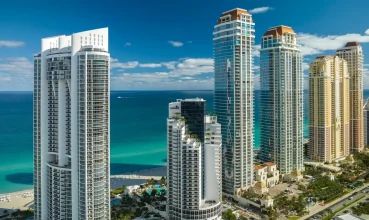
This is not a scattered trend. In some neighborhoods, as many as five new luxury towers stand side by side, all targeting the same pool of high-income renters.
Oversupply Risks Emerge
Luxury apartment projects depend on strong demand and limited competition to maintain high rents and stable occupancy. Santa Monica, however, is delivering new units at a pace not seen in years, with many buildings opening within the same window. This sudden influx raises the risk of oversupply.
Affluent renters have choices. If one building offers better incentives or a superior location, tenants are likely to move. To compete, landlords may offer concessions such as a month of free rent or waived fees. If occupancy rates lag, property values could decline as investors price in higher vacancy risk and lower rental income.
“I think you’re going to see some institutional investors coming in and buying that stuff up once it’s filled,” Killinger says. “But there’s so much of it, I think they’re going to be very cautious.”
Institutional Investors Watch and Wait
Institutional investors—including pension funds, private equity firms, and significant real estate funds—typically favor newly built properties in desirable markets. These assets are easier to manage, attract reliable tenants, and tend to hold value over time. However, institutional buyers are disciplined and will not overpay for buildings with slow lease-ups or high vacancy.
Right now, many are closely monitoring Santa Monica’s new developments to see which properties achieve strong occupancy without heavy discounting. If tenants fill the buildings at or near asking rents, these properties could attract institutional capital. But if landlords struggle to lease up and are forced to cut rents, prices may fall, and only then will institutional buyers likely move in.
Key Risks for Investors
Several factors could undermine the success of Santa Monica’s luxury apartment boom:
Oversupply: Too many luxury units coming online at once will force landlords to compete on price, likely reducing average rents and impacting property values.
Economic uncertainty: High-income renters are often quick to adjust their spending in response to financial shifts. If job growth slows or remote work trends change, demand for expensive rentals could weaken.
Interest rates: Elevated interest rates increase financing costs for both developers and buyers, reducing returns and making acquisitions less attractive.
What Renters and Investors Should Know
For renters, the current market presents an opportunity to negotiate. With so many new luxury buildings seeking tenants, prospective renters may secure concessions or better terms, especially if they are prepared to commit to longer leases.
For investors, caution is warranted. The following six to twelve months will reveal whether Santa Monica’s market can absorb this influx of supply. Waiting to see how occupancy and rent levels stabilize before committing to new acquisitions is a prudent approach.
For sellers, pricing aggressively is essential if a building is not fully leased. Buyers will compare offerings to brand-new competition, so highlighting advantages such as superior location, established tenant base, or lower operating costs is critical.
The Outlook: A Market at a Crossroads
Santa Monica’s luxury apartment boom represents both an opportunity and a risk. On one hand, the city’s desirability and economic fundamentals remain strong. On the other hand, the unprecedented volume of new Class A supply raises the possibility of softer rents, higher vacancies, and downward pressure on property values in the short term.
Institutional investors are watching the market closely, waiting for clear evidence of sustained demand or signs of distress that might create buying opportunities. For renters and buyers alike, the period ahead will determine whether Santa Monica’s building spree leads to long-term growth or signals an overextension.
This article provides insights into local real estate trends and does not constitute legal, financial, or investment advice.
Similar Articles
Explore similar articles from Our Team of Experts.