
The Tampa Bay rental market is undergoing a notable correction, with prices falling 7-8% in many areas compared to last year, according to local property management expert Lei Cheng. In a re...

Hemp Fiber Is Going Mainstream – And It’s Creating New Real Estate Demand

Written by:
Date:
12 Dec 2025
Share via Facebook

Share via Linkedin

Share via X

Copy to clipboard

As regulators finally distinguish industrial hemp from cannabinoids, the fiber-and-grain market is accelerating – and with it, demand for farmland, power-heavy industrial buildings, and logistics infrastructure.
For years, most of the public conversation about hemp has centered on cannabinoids and the regulatory tug-of-war that surrounds them. But that spotlight has obscured a far larger, more stable story taking shape in the background. Hemp’s fiber and grain markets are maturing into serious industrial sectors, and the shift carries real implications for land, logistics, and site selection.
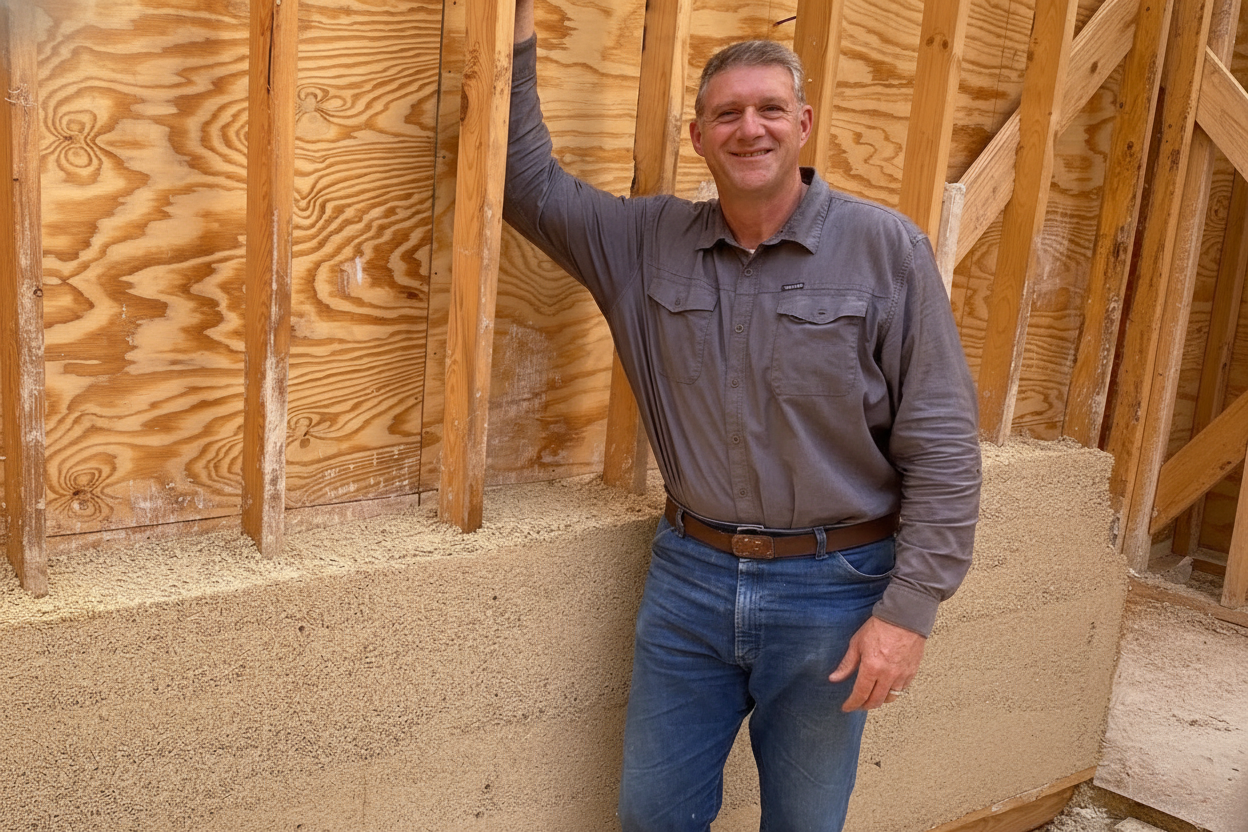
Clifton “Ray” Kaderli, a long-time voice in the industrial hemp sector, says the real opportunity isn’t in cannabinoids at all – it’s in the materials that manufacturers can use at scale. He explains that ever since the 2018 Farm Bill reopened the door for commercial hemp production, fiber and grain have offered real agricultural value, but they’ve been pulled into every controversy surrounding CBD and intoxicating products. “Fiber and grain have been dragged into every political fight happening on the cannabinoid side,” he says. Now that regulators are beginning to distinguish hemp from its intoxicating derivatives, the fiber-and-grain market is finally getting room to grow on its own terms.
Hemp’s Two Industries
Though cannabinoids and fiber come from the same plant species, they function as different industries entirely. They use different genetics, different agricultural practices, and different processing pathways. According to Kaderli, conflating them has slowed progress. “Everything begins with the end in mind,” he says. “If you’re growing for textile fiber, you do one set of things. If you’re growing for grain, it’s a different approach.”
Thankfully, the regulatory confusion affecting cannabinoids hasn’t reflected the reality of fiber and grain. These crops behave more like traditional agricultural commodities – closer to corn, soy, flax, or timber – and they feed into a wide array of industrial supply chains.
Manufacturers are already using hemp fiber and hurd – the woody inner core of the hemp stalk – in automotive interior components, textiles and denim, building materials, absorbents, animal feed, and soil-enhancement products. None of these uses are hypothetical; they’re established categories with steady global demand, and they depend on manufacturers having access to large, predictable volumes of raw material. That’s where the real estate angle becomes hard to ignore. Scaling industrial hemp requires farmland for contracted acreage, processing facilities to turn raw stalks into usable inputs, and warehouse capacity to move products into existing supply chains.
Farmland and Industrial Space
As major hemp producers begin contracting acreage, the industrial footprint of hemp fiber and grain is becoming hard to overlook. Farmers in parts of Kansas and other agricultural regions are now managing these crops the same way they plan rotations of corn, wheat, or soy – as part of a predictable annual mix rather than an experiment. And despite the plant’s reputation, fiber- and grain-type hemp isn’t a theft risk; the THC content is so low that no one can get intoxicated from it, which means growers can treat it like any other commodity crop. The shift towards the normalization of hemp signals a rising need for dependable farmland with irrigation access, consistent soil profiles, and growers willing to sign multi-year agreements.
But the real estate impact of hemp extends well beyond the farm. Before manufacturers can use hemp fiber or grain, the raw stalks have to be broken down and cleaned in a process that’s not unlike lumber milling. The first step, called decortication, mechanically separates the long outer fibers from the woody core. From there, processors clean, refine, and prepare the material according to what different industries need, whether that’s fiber for automotive panels or hurd for absorbent products.
Those steps require industrial buildings with serious infrastructure: high electrical capacity, reliable water access, room for large machines, and the ability to move truckloads of material in and out throughout the day. As processors scale up, they’re looking for properties that can be adapted quickly and for regions with strong freight networks capable of supporting high-volume movement of agricultural commodities.
After processing, the material behaves like any other bulk commodity, which brings warehousing and distribution into play. Processors need short-term storage, regional hubs, and access to freight corridors that let them ship to automakers, textile mills, feed producers, and other industrial buyers exploring hemp-based inputs.
For developers and brokers, the pattern looks familiar. The early stages echo what happened during the rise of mass timber or the growth of specialty grains: scattered activity begins to coalesce around processing centers, and those centers start anchoring new regional clusters. In the hemp fiber and grain sector, that clustering is already starting to take shape, and it’s creating real demand for land, industrial space, and supply-chain infrastructure. What’s the upside? Well, the global industrial hemp market was valued at about US $9.47 billion in 2024 and is projected to reach around US $47.82 billion by 2032
Industrial Buyers
The biggest catalyst, Kaderli says, is the growing interest from major industrial buyers. Automakers, textile manufacturers, non-wovens producers, and feed companies are all testing hemp-based materials. When even one of these players signals that it’s ready to buy at scale, the entire supply chain will react.
A large manufacturer exploring hemp as an input can prompt farmers to expand acreage in a specific region, because growers want to be close to guaranteed buyers. That, in turn, encourages processors to propose new facilities, often clustering around transportation corridors where heavy freight is easier to move in and out. Add warehousing needs, specialized equipment, and workforce considerations, and suddenly the groundwork for a multi-industry industrial park starts to form.
“Hemp sees real traction when industrial buyers raise their hands,” Kaderli says. “That’s what pulls everything else forward.” This is the shift that turns hemp fiber and grain from an agricultural curiosity into a real estate story, one driven by the same forces that have shaped other emerging materials markets.
Regulatory Catch-Up
Kaderli argues that one of the biggest obstacles for fiber and grain has been the regulatory assumption that all hemp is the same. For years, industrial growers were treated as if they were operating in the same market as cannabinoid producers, even though they grow different crops, follow different practices, and sell into completely different industries. That overlap created confusion for lenders, insurers, and policymakers, and slowed investment that would otherwise be routine for an agricultural commodity.
Recent federal moves suggest that separation may finally be underway. Language introduced during the recent government-funding resolution points toward a clearer distinction between cannabinoid products and industrial hemp. If that distinction becomes formal policy, Kaderli says, it would remove a major source of friction. Fiber and grain could be regulated like corn, soy, or flax, while cannabinoids could be handled through their own separate framework. Growers would navigate fewer compliance hurdles, banks would have an easier time underwriting loans, and developers evaluating processing-plant investments would face fewer unknowns.
What to Watch for
The clearest signal of where the hemp market is heading will come from processing-plant activity. Industrial demand can’t expand without facilities that turn raw stalks and seed into usable material, so new plant announcements – especially in strong agricultural regions – are the first indicator that momentum is building.
Farmland decisions offer another early clue. When growers dedicate irrigated pivots or full acreage blocks to hemp year after year, it suggests that contracts are stable, yields are predictable, and the economics work. Those choices tend to attract attention from lenders, developers, and local officials who track where agricultural profits are shifting.
Industrial site-selection trends round out the picture. As textile manufacturers, automakers, and material-science businesses explore alternative inputs, they influence where new clusters will form. A single major buyer can recalibrate an entire region, drawing processing facilities, warehousing, and supporting businesses around it.
If these forces move together, hemp fiber and grain could mark one of the most significant shifts in how materials flow into construction, manufacturing, and other parts of the economy. For now, the opportunity sits at the intersection of agriculture, industry, and real estate. As Kaderli puts it, “Hemp has already proven what it can do. Now it’s about connecting the right players at the right scale.”
Similar Articles
Explore similar articles from Our Team of Experts.