

Major real estate owners entering New York City’s property tax system often encounter a dysfunctional appeals process that does not meet the standards of a global financial center. Ins...

The Gap Between Land Acquisitions and Real Change in Miami

Written by:
Date:
17 Dec 2025
Share via Facebook

Share via Linkedin

Share via X

Copy to clipboard

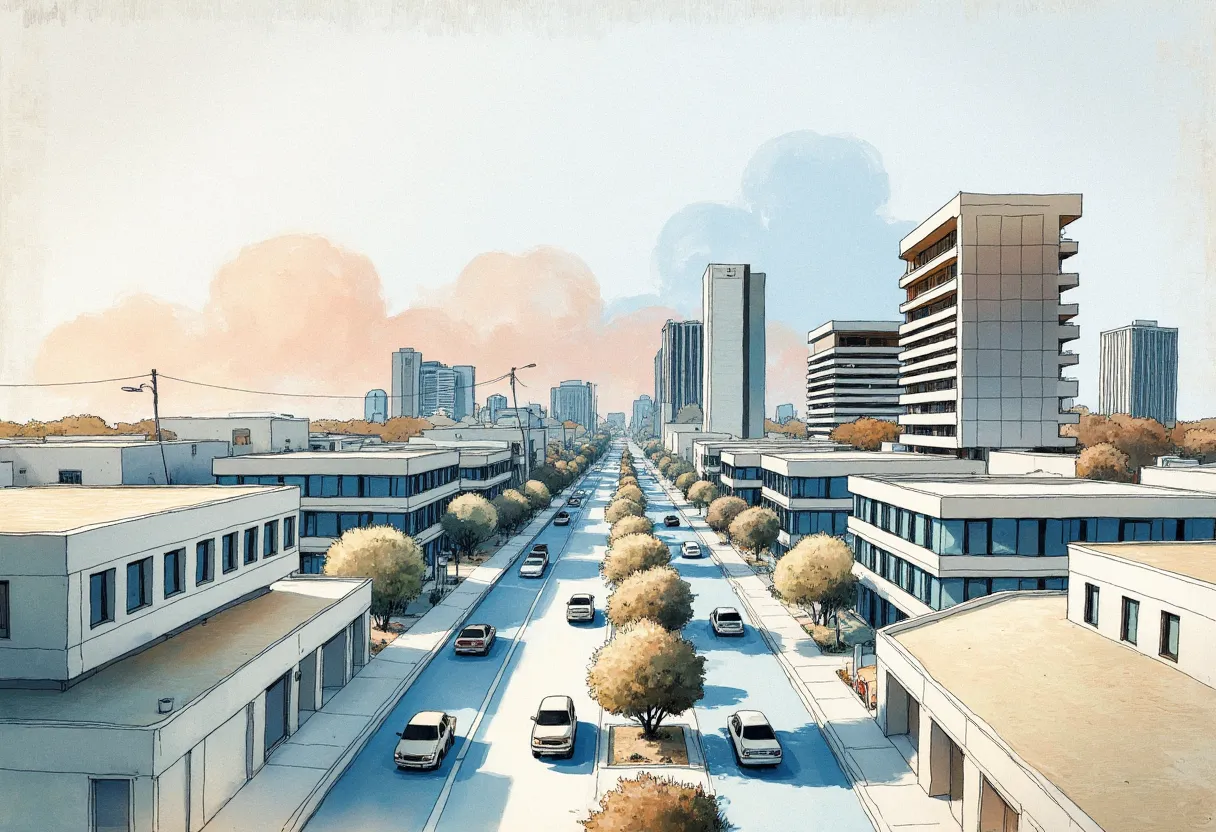
Miami’s urban redevelopment is revealing a gap between developer land grabs and actual neighborhood change, according to Irene Dakota, Senior Commercial Advisor at Metro 1 Commercial. Dakota, who has observed Miami’s core neighborhoods for over two decades, says that while developers have quickly assembled land in target areas like Magic City, the real transformation depends on whether major projects move from planning to construction—a process that often takes years.
“Magic City was very quickly acquired, but the key new building parts have not been built yet,” Dakota says. “So when that happens, there will be a big transformation.”
Dakota’s comments highlight a critical timing question for investors: neighborhoods that have attracted developer interest may not see significant value creation until core projects are completed. The window for returns can be compressed, with most price appreciation occurring as soon as construction begins.
The Staging Phase: Anticipation Without Delivery
Magic City illustrates how neighborhoods can enter a staging phase, where peripheral properties begin to change in anticipation of major new developments that have yet to materialize. “You were seeing warehouses turn into paddleball courts, retail, beautiful gyms, microbreweries,” Dakota says. “So the surrounding area is ready for residential.”
Dakota notes that the planned residential and office components are expected to drive the next wave of change. “What they were intending to build was residential and office,” she says. “I think when that gets done, that neighborhood is going to be amazing.”
She adds that the impact is likely to extend well beyond Magic City’s immediate footprint. “It’s just going to grow into Little River, because you’re talking about 10 blocks,” Dakota says.
Traffic and Localization: Miami’s Urban Pattern
Dakota attributes Miami’s neighborhood-by-neighborhood development to the city’s rapid growth and worsening traffic. “I’ve lived here longer than 20 years, and I have seen this be a sleepy beach town to a very big city,” she says. “You used to be able to get from one end of Miami in 30 minutes. You can’t get anywhere in that time anymore.”
This congestion, Dakota explains, has made Miami more like Los Angeles, with residents increasingly choosing to live and work within the same area to avoid traffic. “Miami has grown into a very, very big city, very similar in my mind to Los Angeles, lots of neighborhoods, lots of different areas. People tend to live and work in the area where they have to be because the traffic has become awful.”
As a result, proximity has become a primary value driver in real estate decisions, outweighing broader citywide location considerations.
Work-Live Zoning: High Barriers to Entry
Miami’s work-live zoning program is intended to facilitate mixed-use redevelopment by allowing industrial sites to be converted into high-rise residential and office buildings. However, Dakota says this policy presents major financial and logistical hurdles.
“The only program that affects it is the new work-live program, where you can take an industrial building and build high rise,” Dakota says. “Very expensive to do that. It really takes big developers. A few are doing some in the urban core, a couple of large ones. I’m anxious to see how that works.”
According to Dakota, these high barriers limit participation to well-capitalized developers capable of managing both the regulatory complexity and the upfront costs.
Workforce Housing: Uncertain Outcomes
Within this evolving landscape, workforce housing—especially for-sale options—remains a question mark. Dakota distinguishes sharply between rental and for-sale models.
“I think workforce housing, expensive apartments, is a different thing,” Dakota says. “If it’s a rental project, I get it, but if it’s a sales project, I have no idea how that’s going to work.”
Her skepticism points to the need for developers to match their project type to local demand, as rental projects may find tenants more easily than for-sale workforce housing can attract buyers.
The Spillover Effect: Targeting Partially Renovated Areas
Dakota sees the most immediate opportunities for developers in neighborhoods that have already seen some renovation or are adjacent to areas with recent investment. By positioning new projects to benefit from this spillover, developers can capture value without waiting for unproven areas to mature.
“Developers are interested in areas that have been somewhat renovated at this point, or are near an area that’s been renovated only to benefit from the add-on,” Dakota says. “There are parcels on Biscayne Boulevard that are available.”
She cites the Flow project as a case study in large-scale, multi-jurisdictional redevelopment. “There is the gentleman, forgot his last name from WeWork, who bought a huge piece of land, and he’s creating Flow,” she says. “That was a trailer park. That trailer park sits in three cities. I’m very curious to watch it get built, because it’s not going to be easy with the zoning and everybody’s permissions.”
Little River: Complicated Path to Change
Little River is another area attracting developer attention, but Dakota says the presence of subsidized housing complicates the picture. “The surrounding properties is a lot of subsidized housing,” she says. “Some of that has gone up for sale. I don’t know if it’s sold successfully. The one I know of did not, because they were asking inflated prices for what they had.”
This underscores that not all properties benefit equally from nearby development; successful sales depend on realistic pricing and compatibility with the neighborhood’s evolving character.
Metro 1 Commercial’s Approach
Metro 1 Commercial, led by founder Tony Cho and joined by Dakota in 2005, has focused on identifying early-stage neighborhoods and maintaining a long-term presence through multiple market cycles. The firm played a key role in the transformation of Wynwood and Magic City, moving these areas from industrial uses to vibrant mixed-use destinations.
The pace and scope of future neighborhood change in Miami will depend on how quickly core projects move from land assembly to construction, and whether developers can navigate the regulatory challenges of redeveloping complex, multi-jurisdictional sites. For now, Dakota’s perspective suggests that patience—and careful focus on project execution, not just land acquisition—is essential for anyone hoping to capture Miami’s next wave of urban growth.
Similar Articles
Explore similar articles from Our Team of Experts.


Commercial Real Estate, Residential Real Estate, Property Technology, Market Analysis & Policy, Perspectives
Major real estate companies are increasingly restricting access to their proprietary databases. Data ownership now outweighs transaction volume or brand recognition as the primary source of ...