
Broward County’s real estate market in mid-2026 looks very different depending on which segment you examine. Single-family homes in sought-after school districts are moving steadily, w...

Finding Value in Overbuilt Markets: A Contrarian Approach to Multifamily Investment

Written by:
Date:
13 Nov 2025
Share via Facebook

Share via Linkedin

Share via X

Copy to clipboard

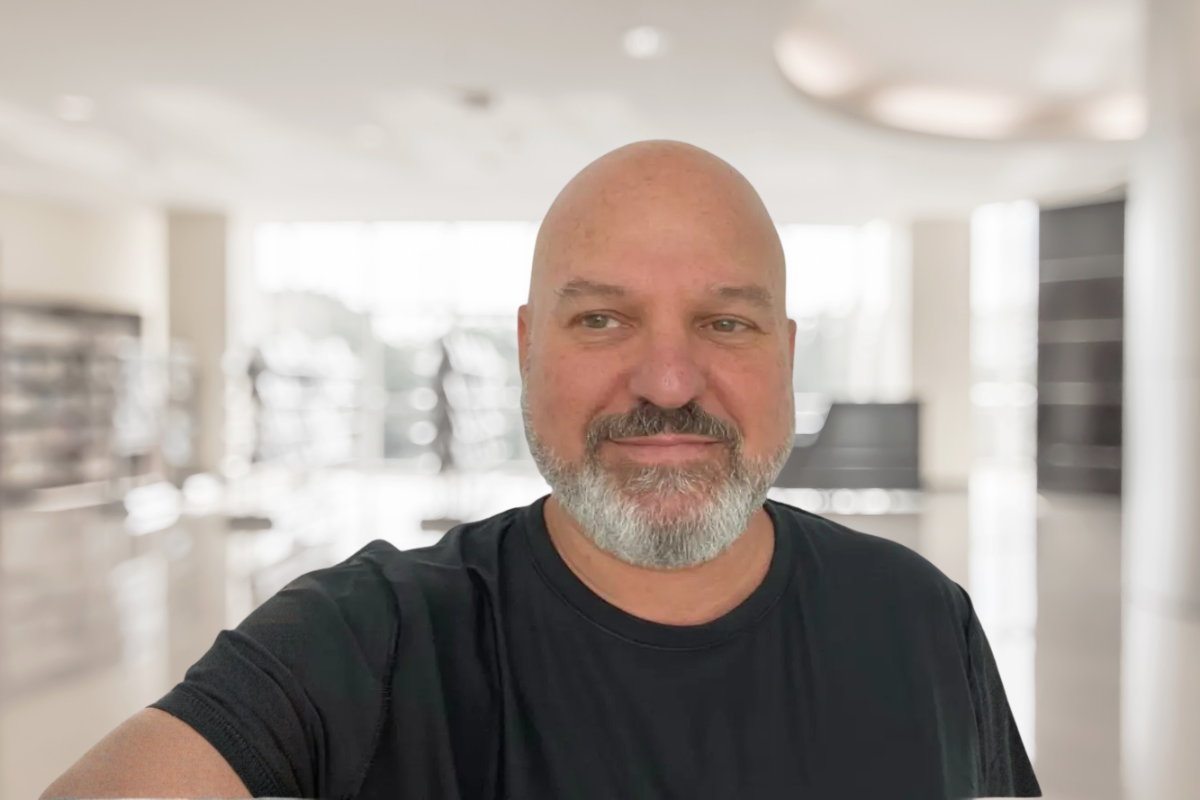
The multifamily real estate market presents a complex landscape where conventional wisdom often clashes with opportunity. While many investors remain sidelined by high interest rates and market uncertainty, experienced operators are finding compelling deals in unexpected places. Danny Kattan, founder of Sell2Rent and managing partner of a multifamily investment firm with $400 million in assets under management, represents this contrarian approach to today’s market conditions.
From Crisis to Opportunity: A Market Veteran’s Journey
Kattan’s path to real estate began during the 2008 financial crisis, when he and his partner started buying distressed single-family homes in South Florida. “We quickly realized that this had wings and we could create something more professional,” he recalls. What started as opportunistic buying evolved into an integrated platform encompassing property management, construction, and maintenance companies.
By 2012, when institutional single-family rental companies like Invitation Homes emerged, Kattan’s team had already built the operational infrastructure that would become the industry standard. After selling their single-family portfolio to Cerberus in 2018, they pivoted to multifamily investments, applying the same disciplined approach that had served them well during the housing crisis.
Today, Kattan’s firm manages six properties totaling over 1,200 units across markets including Pensacola, Jacksonville, Savannah, Fayetteville, Birmingham, and Atlanta. Their conservative approach has yielded consistent returns without losing investor capital—a track record that speaks to their risk management philosophy.
The Overbuilt Market Opportunity
While many investors avoid markets with oversupply, Kattan sees these conditions as creating the best opportunities. “One of the insights we’ve been getting lately is there’s a lot of opportunity in markets that have been overbuilt,” he explains. “The reason we see a great opportunity is by default, the markets that have been overbuilt are markets where people saw they’re going to grow.”
This counterintuitive strategy focuses on fundamentally strong markets experiencing temporary supply imbalances. Cities like Atlanta, Charlotte, Austin, and Huntsville attracted development because of underlying growth drivers—job creation, population migration, and economic expansion. The oversupply represents a timing mismatch rather than a fundamental flaw.
“Any market that has sustainable growth eventually is going to absorb their supply, and rents will come back to normal,” Kattan notes. “But if you’re buying things right now in those markets and you have the stomach to take a low cap rate that comes along with a low acquisition cost in a high interest rate environment, and you figure out a way to make it work, that’s where there’s going to be huge payoffs.”
Cost Basis vs. Financing: A Long-Term Perspective
Central to Kattan’s investment philosophy is a simple but powerful principle: “Cost basis is permanent and financing is temporary.” This perspective allows his team to focus on acquisition prices rather than current financing costs, recognizing that interest rates will eventually normalize while purchase prices remain fixed.
Currently, his firm is under contract on a 272-unit property in Huntsville, Alabama—a 2023 vintage building they’re acquiring at $414 per square foot. “You cannot build it for less than $200,” Kattan emphasizes, highlighting the significant discount to replacement cost that current market conditions have created.
This approach requires patience and strong operational capabilities. “We underwrite about 500 properties every year, we end up buying one,” he explains. “Some years, we don’t do anything. We always look at this as not about financial engineering. Everything that we bought, we bought with the idea that in ten years, we’re debt-free.”
The Capital Dislocation Opportunity
Kattan identifies a significant dislocation in capital allocation, with investors drawn to stock market returns rather than real estate fundamentals. “There’s a dislocation of capital because it’s been distracted by the artificially high rates of return that you’re getting from the stock market,” he observes.
This dynamic creates opportunities for disciplined investors willing to accept lower initial returns in exchange for long-term value creation. “Fundamentally, the stock market is overvalued. Fundamentally, multifamily is undervalued,” Kattan argues, drawing parallels to the single-family opportunity he capitalized on during the last crisis.
During that period, many investors remained on the sidelines while Kattan’s team acquired properties at significant discounts to replacement cost. “There’s so much money on the sidelines that the minute any of those things happen, everybody will come out and basically bring back up prices,” he warns, suggesting that waiting for perfect conditions may result in missing the opportunity entirely.
Inflation Hedge Through Real Assets
Beyond the immediate investment opportunity, Kattan views multifamily real estate as the optimal inflation hedge. “The best defense against inflation is you buy a brick,” he states. “If you buy a brick in multifamily, I can tell you how much that property will be renting for in a couple of years.”
This predictability contrasts sharply with other asset classes facing technological disruption. Office buildings sit half-empty, industrial properties face automation challenges, and retail continues evolving. “We still need a place to live,” Kattan emphasizes, highlighting residential real estate’s fundamental necessity regardless of technological advancement.
The Sell2Rent Innovation
Parallel to his multifamily investments, Kattan has developed Sell2Rent, a platform addressing homeowner liquidity needs through sale-leaseback transactions. The concept emerged from his experience acquiring foreclosed properties and witnessing families displaced from their homes.
“I literally went into 6,000 homes to buy 400 in South Florida,” he recalls. “When you walk into a home that is being foreclosed and evicted and you walk into a pink room and you have little girls, it just hits your heart.”
Sell2Rent allows homeowners to sell their properties for cash while remaining as tenants, providing liquidity without displacement. The platform uses a patented algorithm to match properties with investor groups across 26 markets, having facilitated several hundred transactions since inception.
“I believe that leaseback, if well implemented, could be between 5 to 6% of the market,” Kattan projects, seeing significant potential for this alternative to traditional reverse mortgages or foreclosure proceedings.
Market Positioning for Recovery
As the market navigates current uncertainties, Kattan’s firm continues executing their disciplined acquisition strategy. With the Huntsville property closing and ongoing conversations with foreclosure servicers about leaseback alternatives, they’re positioning for the eventual market recovery.
“In the next six months to a year, we’ll have a clear process to be able to execute for the GSEs,” Kattan explains, referring to potential partnerships with government-sponsored enterprises to standardize sale-leaseback procedures.
For multifamily investors, Kattan’s approach offers a template for navigating challenging market conditions: focus on fundamentally strong markets experiencing temporary oversupply, prioritize cost basis over financing terms, and maintain the operational capability to execute when others cannot. While this strategy requires patience and capital discipline, it positions investors to benefit from the eventual market normalization that growth markets inevitably experience.
The current environment may feel uncertain, but for investors with the right perspective and execution capability, it represents the kind of opportunity that defines successful real estate careers. As Kattan demonstrates, sometimes the best investments are found not where everyone is looking, but where everyone is afraid to go.
Similar Articles
Explore similar articles from Our Team of Experts.