
The real estate industry has changed significantly over the past three decades, creating new challenges for academic institutions tasked with preparing students for careers in an increasingl...

Pensacola Fix-and-Flip Market Remains Steady as Conditions Evolve

Written by:
Date:
20 Oct 2025
Share via Facebook

Share via Linkedin

Share via X

Copy to clipboard

The Pensacola real estate market has undergone notable changes in recent years, with median home prices rising from $190,000 in 2020 to about $310,000 in 2024. For investors navigating this environment, staying flexible and adapting to new realities has become essential for continued profitability.
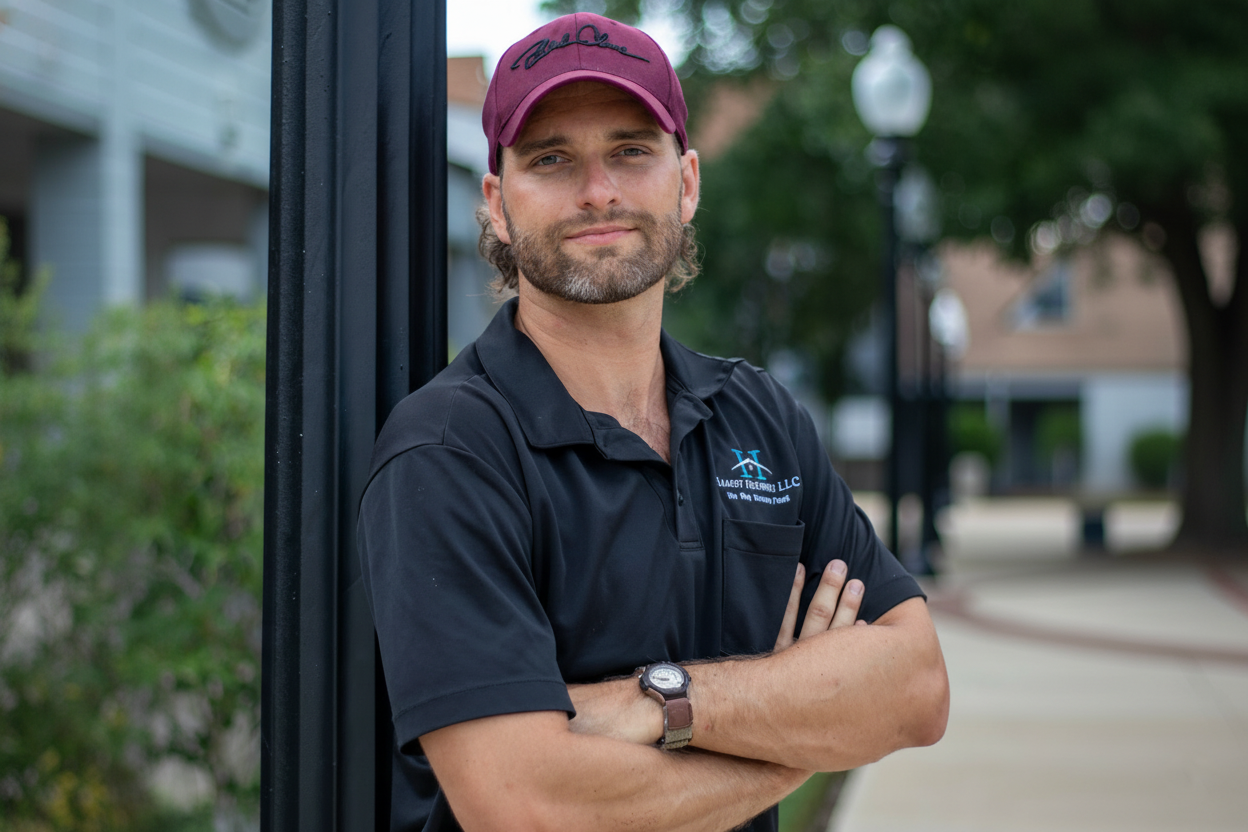
Michael Hamby, owner of Hamby Housing under the “Mullet Man Buys Houses” brand in Pensacola, has managed to maintain steady deal flow despite market fluctuations. His strategy blends traditional cash buying with real estate agent services, giving sellers both immediate cash options and conventional listing opportunities.
A Dual-Service Strategy
Hamby’s business model stands out in the competitive “we buy houses” sector by emphasizing transparency and choice. When assessing properties, he offers sellers two clear options: a cash offer for a quick closing within 30 days or the opportunity to list with him as a real estate agent, usually at a price about 20% higher than the cash offer.
“I say, ‘Here’s my cash price. If you want to close in 30 days or less, this is what I can do cash, it’s a done deal. Or if you want to make more money, I can represent you as a real estate agent,’” Hamby says. “I just want to present all options to them and let them make the best decision for their family.”
The split between these options is roughly 60-70% cash offers to 30-40% listings, with the seller’s circumstances often guiding the choice. Those facing urgent situations, such as pending foreclosure auctions, usually opt for the immediate cash route.
Competition and Lead Generation
Despite moving to Pensacola with the expectation of less competition in a smaller market, Hamby finds himself up against three to five other investors on most properties. The area, which includes Pensacola and the neighboring major county, has a population of around 500,000 and continues to draw active investor interest.
“Every house I go on, I’ll have about three to five other investors that the seller has mentioned,” Hamby notes. His method is to schedule appointments promptly and conduct thorough, hour-long evaluations, which often discourage sellers from repeating the process with multiple investors.
Lead generation remains steady at about 30 calls per month, and referrals from real estate agents are increasing. After joining Keller Williams six months ago, Hamby has received more referrals from agents who come across distressed properties.
Targeting Distressed Properties
Hamby’s marketing is aimed at properties with public distress signals such as liens, foreclosures, tax problems, or code enforcement issues. Two categories in particular have produced strong results: inherited properties and homes with code enforcement liens.
Inherited properties, especially those owned by out-of-state heirs, present a significant opportunity. “If those who inherited the house are out of state, they just want the cash quickly,” Hamby says.
The condition of these properties varies widely, from homes that are simply outdated or need a new roof or HVAC system, to those that are extensively damaged. Florida’s insurance rules add another layer of complexity, as roofs older than 15 years typically have to be replaced regardless of their actual condition.
Operational Efficiency and Vendor Networks
Hamby’s operation has expanded from 10-12 deals annually in previous years to about 20 deals currently, thanks to increased advertising and focused planning. He works with private money lenders who fund individual projects, allowing him to maintain operational control while securing necessary capital.
“I find the deals, but I bring in private money lender partners to fund them,” Hamby explains. “I have all the operations, all the contractors. I’m a real estate agent still, and I’ve met private people throughout my career.”
Maintaining strong relationships with vendors has become essential for keeping margins and timelines on track. After three years in Pensacola, Hamby has built a reliable contractor network, though he periodically compares pricing with market rates as costs slowly rise.
Market Timing and Economic Considerations
The average flip timeline is five to six months, with two to three months devoted to renovation and another two to three months to the sale process. Hamby observed a shift in the market in September 2024, which initially seemed like a 10% price drop but on closer analysis is closer to 3%.
“I noticed the market change September of 2024,” Hamby says. “It feels like a 10% price drop, but in actuality, I think it’s like a 3%. Maybe the new builds are skewing that data.”
At present, construction costs and material availability have stabilized compared to the disruptions seen during the COVID-19 period. “At this current moment, I’ve seen no changes in material or delivery times. We’re good there,” Hamby reports.
Rental Market Weakness
Although Hamby previously held some properties as rentals, in 2024 he has focused exclusively on sales. The rental market has slowed noticeably, with two recent turnovers taking three to six months to fill, much longer than in previous years.
“I used to get $200 to $300 more in rent on these two specific rentals two years ago,” Hamby says. “It’s really a mind change that I just have to accept that I can’t get what I used to get.”
This decline in rental demand has influenced his strategy, leading him to prioritize maximizing cash flow through sales rather than expanding a rental portfolio, especially given current buying conditions.
Adjusting the Price Point Strategy
With Pensacola’s median home price now at $310,000, Hamby is rethinking his focus on properties that resell in the low $200,000s. He is considering whether aiming for the low $300,000s would better match buyer financing options and market demand.
“I’m wondering if I should be changing the houses I target to resell more in the low $300,000s, if that’s the median price of a house,” Hamby says. “That’s where I want to be, the house that sells most often.”
Market Outlook
Local real estate professionals believe Pensacola reached its low point for both pricing and days on market in summer 2024, which Hamby finds notable since summer is usually a strong season. Despite this, he remains cautiously optimistic about where the market is heading.
“The talk I’m hearing around the community is that we hit the bottom of price point and days on market this summer,” Hamby says. “We’re definitely heading towards the green right now, but I think there’s a good chance that we could be starting to get on our way up.”
Hamby credits the monthly market data presentations at Keller Williams for keeping him updated on local trends, offering detailed analysis of Pensacola market performance without requiring him to conduct his own research.
Keys to Success in a Changing Market
For investors working in secondary markets like Pensacola, Hamby’s experience highlights the importance of adaptability, strong local relationships, and honest communication with sellers. His dual-service model and focus on distressed property categories provide a sustainable path even as market conditions shift.
By continually reassessing his approach, whether it’s adjusting target price points, building reliable contractor relationships, or staying alert to rental market changes, Hamby demonstrates how investors can remain resilient. As Pensacola’s market continues to evolve, such strategies are likely to become even more crucial for those seeking long-term success.
Similar Articles
Explore similar articles from Our Team of Experts.