
Out-of-state migration is transforming buyer behavior and market dynamics in Las Vegas. While much of the country faces cooling demand and price corrections, the local market shows a clear d...

Commercial Real Estate Law Evolves as Market Dynamics Shift

Written by:
Date:
14 Oct 2025
Share via Facebook

Share via Linkedin

Share via X

Copy to clipboard


The commercial real estate legal landscape is undergoing significant change as market conditions create new challenges and opportunities for investors, developers, and legal practitioners. From changing deal structures to emerging regulatory hurdles, the industry is adapting to a complex environment that demands innovative approaches to traditional legal services.
The Rise of Boutique Legal Services
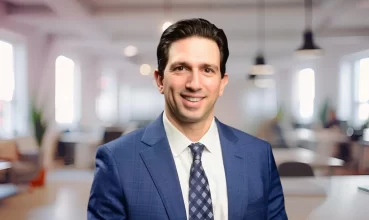
The legal industry serving commercial real estate is experiencing a shift toward more client-focused, efficient service models. Eric Proos, Founding Partner at Next Era Legal, represents this evolution. His firm, launched in January 2025, embodies a new philosophy that challenges traditional legal practices.
“We don’t want to be seen as the bottleneck. We want to be seen as the team that helps you get your deal done,” Proos explains. This approach reflects broader changes in how legal services are delivered to middle-market commercial real estate clients who seek more predictable, streamlined legal support.
The firm’s formation illustrates how experienced practitioners are reimagining legal service delivery. After seven years running separate practices, Proos and his partner Jeff planned their joint venture, focusing on vision, ideal clients, and long-term strategy.
Market Dynamics Driving Deal Activity
Current market conditions are creating distinct patterns in commercial real estate transactions. Proos observes significant activity in single-tenant retail properties, particularly former CVS and Walgreens locations. “We’re seeing a big liquidation of CVS and Walgreens, mostly ones with corporate leases,” he notes.
These properties are finding new life through value-add conversions. One client is transforming a former pharmacy into an outdoor pickleball and bowling lounge, taking advantage of the substantial infrastructure these buildings offer, including storage areas and drive-through capabilities.
The shift away from traditional pharmacy retail reflects broader consumer behavior changes. Decreased foot traffic and competition from online retailers are affecting the viability of these locations. However, the substantial real estate footprint makes them attractive for creative redevelopment.
Financing Structures Adapt to Interest Rate Environment
The current interest rate environment has changed deal structures. “If it’s not a cash deal, it is seller financing,” Proos observes. Traditional bank financing has become less attractive, pushing parties toward alternative arrangements.
While many of his firm’s transactions this year have been cash deals, those requiring financing rely heavily on seller-financed notes. This shift requires careful documentation and risk assessment, as sellers take on roles traditionally filled by institutional lenders.
Capital Markets Focus on Resilient Sectors
Private equity and investment capital are concentrating on sectors perceived as resistant to technological disruption. Home services companies, particularly HVAC and roofing businesses, are attracting significant attention.
“These companies will be the last companies that AI can possibly touch. AI is not going to be able to get in crawl spaces and have the dexterity to change out piping or put in ventilation,” Proos explains. This perceived durability makes these businesses attractive to investors seeking stable, growth-oriented opportunities.
The interest in home services creates a dual opportunity for legal practitioners. These companies require both business legal services and commercial real estate support as they expand and acquire new properties.
Due Diligence Intensifies
Investment due diligence processes have become more extensive and protective. Rather than simply being more cautious, investors are structuring deals with greater earn-out components, requiring sellers to remain involved and meet performance benchmarks to receive full compensation.
One client recently received an 80-question survey as part of a due diligence process with a significant earn-out structure. This trend reflects investors’ desire to ensure continued performance and reduce upfront risk while maintaining deal momentum.
Geographic Expansion Patterns
Commercial real estate clients are pursuing strategic geographic expansion, though patterns vary by business type. Coffee shop operators are expanding regionally within Southern California, while home service companies are targeting broader areas based on operational considerations.
Specialty businesses face unique geographic constraints. A supercar rental company Proos represents is expanding only to markets without snow, focusing on Arizona, Southern California, and Florida.
Regulatory Challenges in Multi-State Operations
Geographic expansion creates complex regulatory challenges. Businesses crossing state lines must navigate licensing requirements, business registration in multiple jurisdictions, and varying state laws governing commercial leases and operations.
“If they’re leasing a space in Nevada but based in California, now we have to qualify their business to do business there. They’re paying taxes there, going through regulations there, and have a lease under Nevada law,” Proos explains. These requirements multiply administrative complexity and legal costs for expanding businesses.
Technology’s Role in Legal Practice
While artificial intelligence is changing many industries, its impact on commercial real estate legal practice remains focused on research and administrative functions. Legal practitioners are leveraging AI for preliminary research and documentation, but core legal analysis and negotiation remain human-centered activities.
The technology’s limitations in physical industries like HVAC and construction contribute to investor confidence in these sectors, creating opportunities for legal practitioners serving these resilient business models.
The Future of Commercial Real Estate Legal Services
The legal industry serving commercial real estate is moving toward greater transparency and predictability. Flat-rate billing models are replacing traditional hourly arrangements that create uncertainty for business clients.
“You’re going to see a lot more attorneys switch over to flat rate billing so clients don’t get that surprise invoice at the end of the month,” Proos predicts. This shift reflects broader client demands for predictable legal costs and clearer service delivery.
The transformation extends beyond billing practices to communication styles and service philosophy. Legal practitioners are adopting clearer language and positioning themselves as business partners rather than traditional service providers.
Market Outlook
The commercial real estate legal market is adapting to an environment characterized by alternative financing, sector-specific investment patterns, and evolving client expectations. Success depends on understanding both legal requirements and business dynamics across industries and jurisdictions.
For commercial real estate professionals, these changes represent both challenges and opportunities. While regulatory complexity increases with geographic expansion, new financing structures and investment patterns create deal opportunities. The key lies in working with legal partners who understand both traditional real estate law and the evolving business landscape driving today’s transactions.
The transformation of legal services delivery, combined with shifting market dynamics, suggests that commercial real estate will continue evolving toward more efficient, client-focused models that support business growth while managing legal and regulatory risks.
Similar Articles
Explore similar articles from Our Team of Experts.