
A massive reclassification of bank loans mandated by federal regulators in 2024 has revealed a $1.5 trillion exposure that may represent one of the financial system’s most significant ...

The Decline of DIY Tech Infrastructure in Commercial Real Estate Leasing

Written by:
Date:
05 Sep 2025
Share via Facebook

Share via Linkedin

Share via X

Copy to clipboard

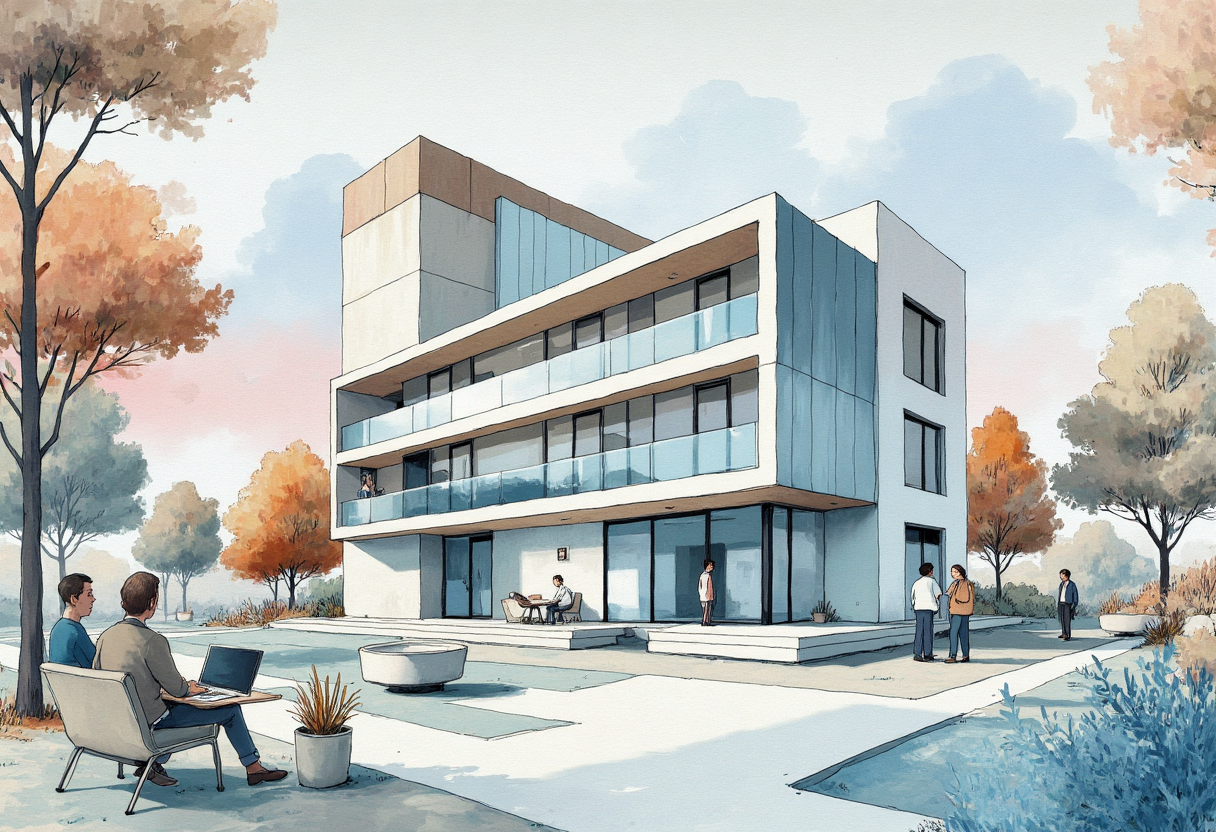
The expectations of commercial real estate tenants have fundamentally shifted over the past five years, with sophisticated digital infrastructure becoming a key differentiator for properties, according to one industry expert who sees many owners falling behind market demands.
“Tenant need and want and tenant demand has changed in the past five to seven years, and now they want to be able to go anywhere on their property with their own private network,” says Bill Douglas, CEO of OpticWise, describing what he sees as a critical evolution in tenant expectations.
The Myth of Tenant Technology Independence
Douglas challenges a common industry assumption: “Most common thing we hear is ‘we let our tenants deal with technology. We don’t try to handle that for them.’ But the tenants actually want a building that’s already got all this in place. They don’t want to build it.”
This shift is evident across multiple property types, from office towers to multifamily developments, as tenants increasingly view technology as a baseline expectation rather than an optional upgrade. They want seamless connectivity throughout the property to support both work and lifestyle needs, along with enterprise-grade security that protects sensitive data. Integrated smart building features are also becoming standard, offering convenience and efficiency through automation. Above all, tenants expect flexible technology infrastructure that can adapt as their requirements evolve, placing new pressure on landlords and developers to deliver future-ready spaces.
The Security Imperative
For commercial tenants especially, security considerations are driving demand for integrated building technology. “The chief security officer of that tenant loves the fact that anywhere that employee goes in this facility, it’s behind my rules, my security rules,” Douglas explains.
This extends beyond just basic internet access: “If you have a tenant, a commercial tenant, move into your office building and take a floor, how come their employees can’t work from the rooftop deck in the coffee shop downstairs and still be on the employer’s network? Why do they have to go hop on a guest network or VPN?”
The Multifamily Evolution
Similar expectations are reshaping the multifamily market. “When I sign my lease, how come I can’t get internet right there as I sit and work from anywhere?” Douglas asks, pointing to changing resident demands.
He sees property owners missing revenue opportunities: “Are you offering services to your tenants that they’re actually buying right now? The answer is yes. Do you know what they are that they could buy from you?”
Future-Proofing Considerations
Douglas argues that forward-thinking infrastructure planning is crucial: “You’re going to want to put a Smart Lock on that door. How’s the Smart Lock going to connect? You’re gonna have to put in a whole nother network, or you have one that’ll just let you bolt the lock on, and it’ll work.”
This extends to broader building systems: “Do you want to future proof it and put in a real digital infrastructure and ask the data question all day, or not?”
The Market Response
Properties that meet these evolving demands are seeing results, according to Douglas. “We have clients that are buying a Class B property and taking it to an A minus, and in the transaction they are setting aside improvement funds, they’re attracting a different class of tenant.”
The return on investment can be substantial: “They’re generating $800 a door NOI from that system, not counting savings. I’m talking about revenue,” Douglas notes.
“The more you could reduce their moving expenses and keep their CAMs in control and improve their employees’ lives on your facility, the more you’ve got a tenant for life that’s going to pay a premium,” Douglas concludes.
Similar Articles
Explore similar articles from Our Team of Experts.


Perspectives, Commercial Real Estate, Market Analysis & Policy, Real Estate Investment, Industry News
The landscape of hotel buyers in 2025 defies conventional wisdom, with well-capitalized local operators competing alongside institutional players for select opportunities, according to a lea...