
Dearborn’s housing market is facing unprecedented demand driven by unique cultural factors, with capacity to immediately absorb thousands of new units, according to Angela Fortino, Dep...

Traditional Storage Model Fails to Meet Urban Demand as City Living Evolves

Written by:
Date:
17 Sep 2025
Share via Facebook

Share via Linkedin

Share via X

Copy to clipboard


The traditional self-storage model of large, staffed facilities on city outskirts is becoming increasingly obsolete as urban demographics and living patterns evolve, according to one industry expert.
“More and more people are going to be moving into city centers. Everyone’s going to be living in relatively small buildings, cost of housing just goes up and up and up. And as a result, there’s a sort of inertia, a bit of a tailwind on people needing cheaper off-site storage,” says Maxwell Wilson, Co-Founder of Pocket Storage.
The Urban Access Challenge
Wilson points to a fundamental shift in how younger urban residents approach transportation and storage needs. “The rate at which people are learning how to drive is dropping off a cliff in most big cities,” he notes. “The younger generation grew up in a different time where the car wasn’t as essential to freedom.”
This trend creates a growing mismatch between traditional storage facilities, typically located 15-20 minutes outside city centers, and the needs of urban residents who increasingly rely on public transit or ride-sharing services.
Rethinking the Storage Footprint
According to Wilson, the solution lies in reimagining both the size and location of storage facilities. “Unlike your traditional storage operator developing 100,000 square foot units, we’re targeting smaller, more centrally located assets closer to the end consumer,” he explains.
This approach requires creative thinking about urban real estate. “We’re looking at car parking spaces, basement spaces, rears of buildings,” Wilson says. “You don’t need hugely prominent units to drive sales – the footfall is online, not in real life.”
The Economics of Urban Storage
Wilson argues that technology enables a new economic model that makes smaller urban facilities viable. By eliminating on-site staff through automation, operators can profitably run facilities under 30,000 square feet, a size that would be economically challenging under the traditional staffed model.
“Self-storage has a relatively low end-use value,” Wilson notes. “You’ve got to think fairly creatively about how you can get your hands on well-located spaces at affordable prices.”
The Future of Urban Storage
While Pocket Storage is starting with London, Wilson sees the model as applicable to any major urban center where housing costs and population density are driving demand for off-site storage solutions.
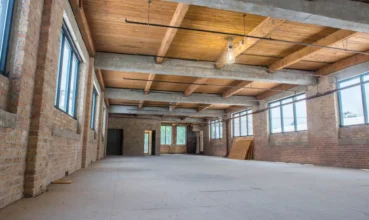
The company’s first location, opening in a converted biscuit factory in Bermondsey, will test whether this new approach to urban storage resonates with city residents. If successful, it could signal a broader shift in how the industry approaches urban markets.
Similar Articles
Explore similar articles from Our Team of Experts.