

If you live in Illinois, New Jersey, or California and have noticed “For Sale” signs lingering in your neighborhood, you’re seeing the effects of a significant trend. These...

Outdated Building Records Pose Safety Risks During Emergencies, Expert Says

Written by:
Date:
03 Oct 2025
Share via Facebook

Share via Linkedin

Share via X

Copy to clipboard

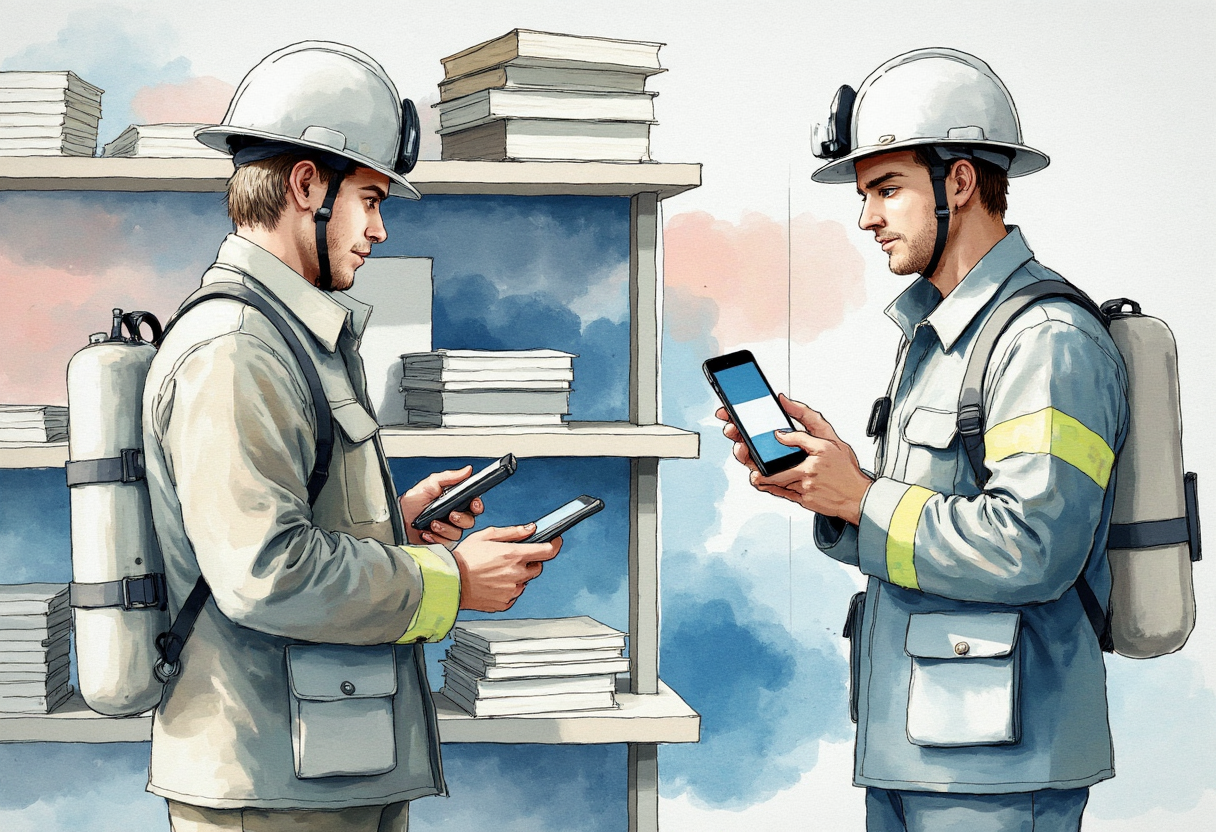
Industry veteran highlights how outdated paper documentation puts building safety at risk, advocating for mobile-first emergency response systems.
The difference between minor incident and major disaster often comes down to response time, according to facility management expert David Trask. Yet many buildings still rely on paper documentation scattered across multiple locations, creating dangerous delays during emergencies.
The Hidden Crisis in Building Documentation
“The challenge is, if that stuff’s just not documented, the person who goes to work on it is going in blind,” Trask says, describing a common scenario where maintenance teams waste precious minutes searching for critical building information during emergencies.
According to Trask, this problem extends beyond internal teams to emergency responders. “As a firefighter or first responder, they don’t know your building. They’re blind, so when they come up to the door, they don’t know what’s on the other side of that door,” he explains.
The Mobile Revolution in Emergency Response
Trask argues that mobile-first documentation systems are transforming emergency response capabilities. He shares a revealing example: “We had clients where first responders roll up to the building because there’s a rooftop unit that’s on fire. They call the school district about the electrical panel location. An employee who’d been on the job for just two weeks pulls up on her phone and says, ‘it’s this room.’ She unlocks it, shows them the exact breaker to shut off, and they contain the situation.”
This scenario, Trask notes, demonstrates both the power of mobile solutions and the current gap in most facilities. “I challenge people, can your team do that? 90% say no,” he reveals.
Critical Information at Critical Moments
Modern mobile systems are transforming how facility teams respond to emergencies and manage complex infrastructure. With real-time access to critical data, staff can instantly locate equipment and review specifications, identify shut-off valve positions, and check the placement of emergency tools or exits. Detailed mechanical system layouts are available on demand, reducing the guesswork that can cost valuable minutes in high-pressure situations. Beyond static records, these systems also deliver live building status updates, empowering teams to act quickly, coordinate effectively, and maintain safety even under rapidly changing conditions.
“Access to Information is king,” Trask emphasizes. “Your team in facilities is mobile. They’re always in the field, they’re moving, they’re running from fire to fire.”
Implementation Challenges and Solutions
While the benefits of digital transformation are clear, transitioning from paper-based systems requires careful planning and execution. Trask emphasizes that success depends on a structured approach, beginning with the complete digitization of existing documentation to ensure no critical information is lost. Standardized mapping protocols should then be established to maintain consistency across building portfolios. Implementing mobile-friendly interfaces is key to ensuring accessibility in the field, while comprehensive staff training helps teams fully adopt new tools. Finally, Trask stresses the importance of regular updates and audits to maintain accuracy and keep systems reliable over time.
The Future of Building Safety
Looking ahead, Trask sees mobile documentation systems becoming increasingly integrated with other building technologies. “We’re seeing sensor technology evolving quickly,” he notes, suggesting that future systems will combine real-time sensor data with detailed building documentation for even faster emergency response.
The key, Trask emphasizes, is ensuring that critical building information is instantly accessible to anyone who needs it, wherever they are in the facility. “It shouldn’t be in somebody’s head, shouldn’t be in a plan room someplace, shouldn’t be in a binder on a shelf someplace,” he concludes.
Similar Articles
Explore similar articles from Our Team of Experts.