

The Tampa Bay real estate market has been making national headlines lately, mostly for the wrong reasons. But on the ground in Pasco County, the picture is more nuanced than the broad stroke...

Building Teams and Relationships in Commercial Real Estate: Lessons from a Veteran Broker

Written by:
Date:
11 Sep 2025
Share via Facebook

Share via Linkedin

Share via X

Copy to clipboard

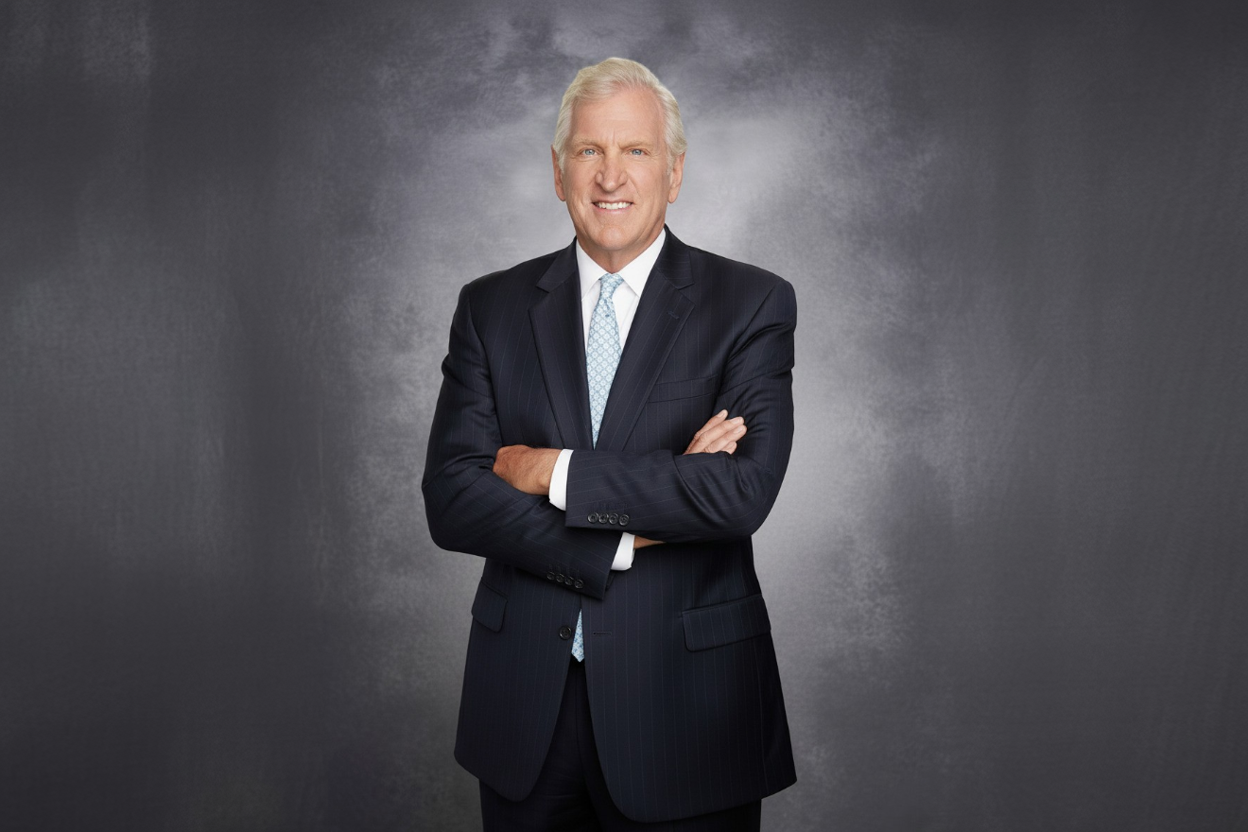
The commercial real estate industry has changed significantly over the past three decades, from technological disruption to changing workforce demographics. Few professionals have observed these shifts as closely as Jim Kruse, Director of Brokerage at NAI Capital Commercial, whose career spans leadership roles at some of the industry’s most prominent firms.
Kruse’s journey through commercial real estate began nearly three decades ago at Grubb and Ellis, where he ran the LA region. His success in recruiting top talent caught the attention of CBRE, leading to a pivotal career move. “They took me to dinner, and then they made me an offer,” Kruse recalls of CBRE’s response to his recruitment of three of their top performers.
At CBRE, Kruse improved the LA South region, which encompassed Century City, downtown LA, and the South Bay office markets. Under his leadership, the office grew from 30 brokers generating $18 million in gross revenue to 60 brokers producing $138 million. “We were one of the leading offices in the world,” he notes, crediting major client relationships with companies like Fox, JP Morgan, Hulu, and Google for driving that growth.
The Foundation of Successful Brokerage
Kruse’s approach to building successful brokerage operations centers on understanding individual broker needs and providing leverage opportunities. “I try to take my senior brokers and understand the dynamics of their team, if they have a team, and if they don’t have a team, understand what their needs are,” he explains. “I believe in leverage, being able to leverage my senior brokers’ representation out in the marketplace.”
This philosophy extends to his recruitment strategy, which casts a wide net across experience levels. “Talent comes from a lot of unique places,” Kruse observes. “It’s not like people are just calling and saying they want to join. You’ve got to go and find it and find out what they have, what they’re missing, what they want.”
The mental aspect of commercial real estate brokerage is particularly crucial, according to Kruse. “It’s really about people’s minds, and that’s the most important thing with brokers, because minds are very fragile, and it’s a tough business. These people have to come in and create money out of thin air. All they have is a notion and maybe a database.”
Essential Skills for Modern Brokers
Drawing from his experience training hundreds of brokers at CBRE’s national training programs, Kruse identifies two critical skills: penetration and presentation ability. His approach to presentations challenges conventional wisdom about preparation.
When asked about the most important aspect of presentation preparation, brokers typically cited market knowledge, competitive analysis, and financing understanding. “I would say, wrong, wrong, wrong. The most important thing in presenting or creating a presentation is sitting down with the ownership and finding out what they want.”
This client-centric approach extends to ensuring all decision-makers are present. “Make sure if there’s a wife that has a real say, or a brother-in-law or a golfing buddy or other family members or a trust, whatever. Make sure they’re all in the room. If you don’t have all those people that you’re presenting to, you’re just going through a rehearsal.”
Kruse emphasizes the importance of daily discipline and organization. “You don’t go home until every call is returned, every email is returned. Your desk has got to be organized for the next day. Because here’s the thing, all you’ve got is your time. You’ve got your time and your attitude, and if you’re not protective of both of those things, you’re not going to go anywhere.”
Evolving Workforce Demographics
The commercial real estate industry has experienced significant demographic shifts over the past decade, particularly in gender representation and generational diversity. “Ten to fifteen years ago, there was not a healthy amount of women in the industry, or young people,” Kruse notes.
“Women in the industry are the most significant brokers. I think they’ve got a great capacity for patience. I think they’ve got a care factor that really plays well to clients. And I think emotionally, they’re tougher.”
Regarding younger professionals entering the field, Kruse acknowledges both challenges and strengths. “The one thing I will say is that these young people are very well educated, they’re very well spoken, and I think they’ve got a better eye on the direction they want to go than people did when I came out of school. Today, people are much more serious. They may be fragmented, but they’re sharp people, and the industry has gotten better because of it.”
Technology’s Role and Limitations
As technology companies increasingly target commercial real estate with platforms promising to streamline or automate traditional broker functions, Kruse maintains a measured perspective on technology’s capabilities and limitations.
“I don’t think tech can read the emotions of a client,” he explains. “There’s a lot of stuff that you can find in a database, but you really can’t find out the dynamics of what’s going on in their lives. If you’ve got the ability to ask intelligent questions, and intelligence is the ability to ask good questions, if you can ask the salient, pertinent questions, that second and third level type of question, you’re going to get there sooner than any kind of ChatGPT or any kind of system of artificial intelligence.”
Kruse expresses concern about technology creating a “hurry up offense” mentality among brokers, particularly with automated calling systems. “If you’re always going to be feeling rushed to keep pace with the next call that you connect with, I don’t think that serves my brokers or the client well. You’ve got to remember to take care of the client.”
The Personal Touch in a Digital World
Despite technological advances, Kruse continues to emphasize traditional relationship-building techniques. “I make sure that all of my brokers, if they have a meeting, they write a handwritten thank you note. This is just a separator. Nobody writes handwritten thank you notes. They’ll send a text, and my young people who live on their phones will send an email, but that falls into the category of what I call bullshit, and people can eliminate that unbelievably quickly.”
The key is personalization and genuine connection. “If you can splice in there something that’s really personal to that client, then that’s a separator, and you want to separate yourself from everybody else in the market.”
Information sharing is another area where Kruse challenges conventional broker thinking. “A lot of times, brokers will think that their information is like solid gold, and they’re very protective of it. That information is bait. That’s what you use to get in and get that audience with that owner. You need to be able to have something that is so compelling for that ownership that they want to talk to you.”
Looking Forward
Kruse’s passion for the industry remains evident as he continues building NAI Capital Commercial’s brokerage operations. “I don’t hunt, I don’t fish, I don’t golf, I don’t have a boat. I thoroughly enjoy what I do. I enjoy Los Angeles, and I enjoy the people that I work with.”
His approach to future growth mirrors his broker development philosophy: “If I don’t have an appointment set with a potential broker before I go home, then I’m suffering the same as one of my brokers who’s not made a business development call to a potential client out there. I want to be talking to talent.”
For Kruse, the commercial real estate industry offers unique rewards despite its challenges. “I’m very respectful of people in this business, only because of the difficulty, the survivability of a lot of them. A lot of these people are damn sharp. They’re interesting to talk to and they’ve overcome some amazing things.”
His journey from Olympic water polo player and English teacher to industry veteran illustrates the diverse paths that can lead to success in commercial real estate. “I was not educated for it, but I was trained in terms of how to work and how to work hard and how to bounce back from a loss. I have had some great training for it, not even knowing that.”
As the industry continues evolving with new technologies and changing demographics, Kruse’s emphasis on fundamental relationship-building skills, mental resilience, and client-focused service provides a roadmap for sustainable success in commercial real estate brokerage.
Similar Articles
Explore similar articles from Our Team of Experts.