

A lender tells you that you qualify for $350,000. You start browsing listings at that number. Within weeks, you are under contract on a home that stretches your monthly budget past the point...

Green Building Trends Show Why More Buyers Are Choosing Future Ready Homes

Written by:
Date:
29 Aug 2025
Share via Facebook

Share via Linkedin

Share via X

Copy to clipboard

The business case for green building is becoming increasingly clear, with long-term operational savings and rising property values offsetting initial investments, according to certified green realtor and sustainability expert Izumi Tanaka, host of the podcast Home Green Homes.
“When you’re considering the total cost of ownership, it makes sense to have those energy efficient equipment,” Tanaka says, challenging the common focus on upfront costs alone. She argues that monthly operating expenses are becoming as important as mortgage payments in homebuying decisions.
The Total Cost Revolution
According to Tanaka, savvy buyers are starting to look beyond traditional metrics when evaluating homes. “People who are buying is going to consider what the mortgage payment is going to be, the tax payment is going to be and insurance payment is going to be but they also need to consider the cost of operation of your home,” she explains.
This shift in perspective is particularly relevant for energy-efficient technologies like heat pumps. While these systems may cost more initially, Tanaka notes they “last longer” and significantly reduce monthly energy bills, improving the overall financial picture.
The Competitive Advantage
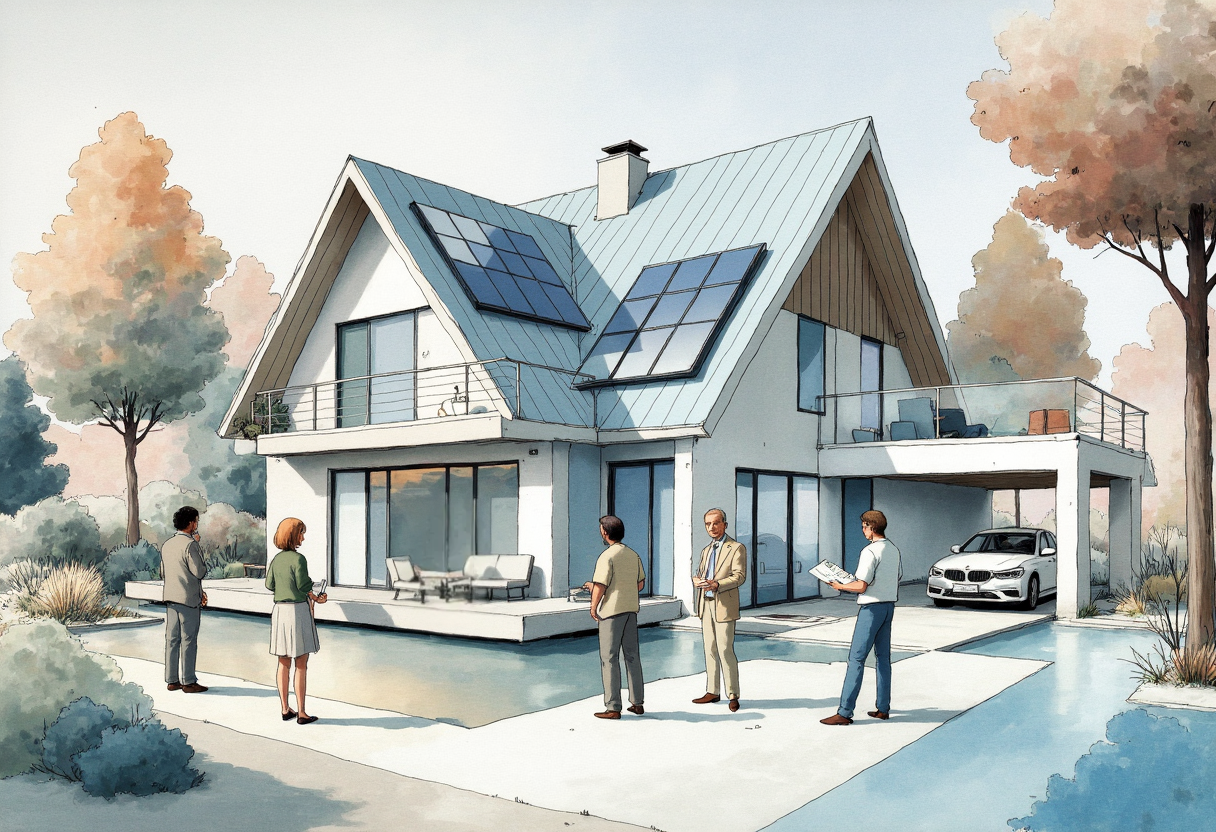
For builders and developers, Tanaka argues that green features are becoming a key differentiator. “If you have a house A and house B that looks the same, but if you take one home that is really built with sustainability, that has energy efficient homes, would be ready for more, ready for future,” she says.
This future-ready positioning is becoming increasingly important as market trends point toward full electrification. “Despite what’s happening in the government, the movement is already there. So why not be future ready?” Tanaka asks.
Financial Incentives Landscape
A crucial factor making green building increasingly financially viable is the expanding range of incentives now available at multiple levels of government and through utility providers. According to Tanaka, these programs are being rolled out in nearly every state, with regional utilities, counties, and municipalities stepping up to support sustainable development.
Among the most impactful opportunities are federal initiatives like the Inflation Reduction Act, which provides significant funding for energy-efficient construction. These are complemented by state-level environmental programs, rebates from local utility companies, and grants issued by county and municipal governments. Together, these incentives create a layered support system that reduces costs for builders and encourages adoption of green building practices.
Tanaka also highlights the importance of inclusivity, noting that “even for underserved communities, there are a lot of grants available.” Builders can choose to absorb these incentives directly to offset construction expenses or pass the benefits along to new homeowners. In either case, the growing availability of financial support is making sustainable homes more accessible and economically attractive than ever before.
Market Evolution
According to Tanaka, demographic shifts are accelerating the financial case for green building. “As the younger generation is coming onto the market to either purchase or even rent, they are more selective of the kind of environment that they want to live in,” she observes.
While acknowledging that some traditional builders may be hesitant to change established practices, Tanaka encourages industry professionals to stay open to new approaches. “To have an open mind to know about what’s new technologies, the new systems available, that’s going to only add values to their projects,” she says.
Similar Articles
Explore similar articles from Our Team of Experts.




Perspectives, Residential Real Estate, Market Analysis & Policy, Real Estate Investment, Industry News
The ultra-luxury real estate market in Miami Beach is seeing a significant trend toward cash transactions, reflecting advanced wealth management strategies among high net worth buyers, accor...

