
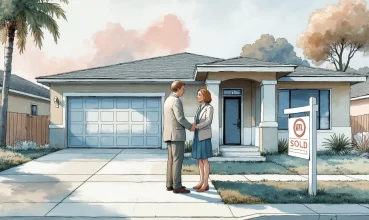
Central Florida’s residential market is seeing a clear divide: homes without homeowners associations (HOAs) are selling faster and attracting far more interest than similar properties gove...

The Growing Importance of Human Connections in an AI Driven Real Estate Industry

Written by:
Date:
01 Sep 2025
Share via Facebook

Share via Linkedin

Share via X

Copy to clipboard


Amid growing excitement around AI solutions in real estate, one industry expert argues that human relationships will become increasingly valuable, not less, in property management’s future.
“It’s a relationship business. And can people create a relationship with AI, maybe, but it’s not the same,” says Jason Hull, CEO of DoorGrow, who coaches hundreds of property management companies. Hull argues that the industry’s fundamentally human nature will make it resistant to complete automation.
The Human Premium in Property Management
According to Hull, the rush to automate property management overlooks a crucial reality: “There’s this human aspect that I think will become a premium. Humans will be more important. Real human interactions will be valued even more.”
Hull points to the complex web of relationships property managers must navigate: “Property management is a very relationship oriented business, managing tenants, managing their lives and what’s going on with their family, managing owners and their properties.”
The Authenticity Advantage
Rather than viewing human imperfection as a weakness to be eliminated through technology, Hull suggests it may become a competitive advantage. “I think people are thinking perfection is the goal, and I think flaws are really what make us human and make us valuable,” he says. “I think that’s going to be highlighted.”
Hull argues that clients often respond better to authentic human interaction than perfect but artificial responses: “If your wife is mad at you and you send a response from ChatGPT to her to kind of make things okay, how effective is that going to be? Is she going to feel cared for and connected to you?”
Beyond Basic Service Delivery
Hull emphasizes that property management isn’t just about operational efficiency: “Nobody wants to buy property management, that’s not like what people wake up in the morning go, ‘man, I really want a property manager today.'”
Instead, he says, “Really, the product in property management that they’re selling is themselves. It’s the humans, it’s the people, and it’s the business owner and his culture, that’s really what they want to buy. They want to buy trust in that.”
The Path Forward
Through his work with DoorGrow, Hull helps property management companies leverage human relationships while still embracing useful technology. The key, he suggests, is finding the right balance rather than pursuing automation at all costs.
“You treat it like a commodity, you get a really crappy result,” Hull warns. Instead, he advocates for property managers to position themselves as trusted investment advisors who can “help you figure out where to get into your next investments, how to maybe do a cash out refinance… these are people that you can lean on to help you make better decisions.”
Similar Articles
Explore similar articles from Our Team of Experts.