
The Paso Robles wine country real estate market is undergoing a significant pricing reset, forcing sellers to recalibrate expectations while opening the door for strategic investors seeking ...

Multifamily Investment Strategy in a Shifting Market Finding Opportunity Amid Uncertainty

Written by:
Date:
27 Jun 2025
Share via Facebook

Share via Linkedin

Share via X

Copy to clipboard


The multifamily investment landscape has undergone significant changes since 2021, creating both challenges for existing investors and opportunities for those with capital and patience. As interest rates climbed and market dynamics shifted, many investors found themselves navigating unfamiliar territory with properties that no longer performed according to original projections.
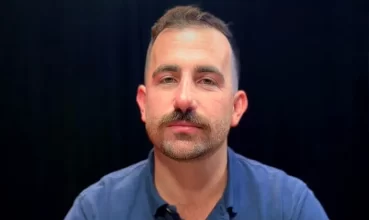
Jason Yarusi, Managing Member of Yarusi Holdings and host of the Multifamily Live podcast, has been actively investing through these market changes. With approximately 3,500 units under management across seven states, Yarusi’s approach offers insights into how experienced investors are adapting their strategies to current conditions.
Strategic Positioning Through Market Volatility
The period from late 2021 through 2022 marked a turning point for multifamily investors. “We saw a lot of things that really changed the dynamics in the market,” Yarusi explains. “Between the run up in interest rates, fear in the market, and seeing some rent progression after years of rent escalation, it started to change a lot of dynamics.”
Rather than retreating from acquisitions, Yarusi’s team made a strategic shift toward bank financing. “We really started moving into bank loans, which don’t always offer the best terms, but we felt very strong that if we could put a five-year runway on projects with potentially a two-year interest-only period, that gives us a good opportunity to forecast where we want to go.”
This approach provides flexibility in an uncertain market. Working with local and regional banks to secure five-year fixed-rate terms allows the team to “stay tight if the market doesn’t turn around,” while positioning for opportunities if conditions improve. “If the market does start to rally or we see transaction volume pick up, it’s easy for us to go and sell some projects or potentially refinance into more favorable terms.”
Identifying Value in Operational Inefficiencies
While the anticipated wave of distressed properties hasn’t materialized as dramatically as some predicted, Yarusi has found opportunities in a different category of deals. “I don’t think there’s been a million distressed projects,” he notes. “For many owners, they’re holding because we’ve continued to see rent levels stay high, so they haven’t been pushed to the tipping point where they have to get out.”
Instead, the team focuses on properties with operational inefficiencies rather than capital structure problems. “We’ve been really active buying projects that we feel we’re getting at very strong basis, but they’re cash flowing from day one.”
The value creation comes from addressing straightforward operational gaps. “We see a very straightforward business plan where we can add marketing, add an online presence to the property, put in the right property management system, and really identify what’s missing,” Yarusi explains. “Some of this is very simple – they’re not charging the right fees, they’re not matching the market in terms of pushing rates where they should be, often because they have no online presence or because they’ve held the property for so long they don’t want to make those changes.”
Market Fundamentals Supporting Rental Demand
Several underlying market factors continue to support multifamily fundamentals, even as transaction volume remains subdued. The supply-demand imbalance remains a key driver, with new construction having slowed significantly.
“We had the first time in 2023-2024 where we actually met the yearly amount of units we need,” Yarusi observes. “But we quickly retracted from that as interest rates went up, labor costs increased, and supply materials became hard to come by. We’re going in the opposite direction now, where there aren’t enough units coming online.”
This supply constraint, combined with limited mobility among renters, has created favorable conditions for existing property owners. “Renters can’t jump out, especially where rates are today, to go buy a single family house,” Yarusi notes. “That’s going to make them longer-term renters.”
The result is reduced turnover and stronger rent growth potential. “Typically, you’ll see 50%, maybe 55% of units turn in a year, but you’ve had years where you’re seeing turnover in the 30s,” Yarusi explains. “They’re better situated where they are, and if you’re fair in your rental increases, you’re picking up that additional rent increase based on your yearly increases without the large cost of turnover.”
Geographic Focus and Asset Strategy
Yarusi’s investment strategy centers on workforce housing in carefully selected markets. “Ninety percent of our projects focus on the same thing: workforce housing, garden-style apartment buildings built between 1975 to about 2005-2010,” he explains. The remaining 10% includes office, self-storage, and development projects, primarily in their home market of Middle Tennessee.
This geographic concentration allows for operational efficiencies and market expertise. “We’re very focused on cities that we want to be in,” Yarusi notes. “We have a strong management arm set up here, and about 30% of our assets are managed out of our office.”
The team’s approach emphasizes market knowledge over geographic diversification. Their first major market was Louisville, Kentucky, where they “spent a lot of time educating ourselves on the market and building the right team around us, both internal and external.” After successfully acquiring and later selling about 500 units there, they applied the same focused approach to other markets.
Looking Ahead Cautious Optimism
Despite ongoing uncertainty around interest rates and economic conditions, Yarusi maintains a measured optimism about market opportunities. “If you had to be a betting man, we hope that within 12 months we’ll see some shifts in interest rates,” he says. “However, we’ve had that narrative for now a year and a half.”
Rather than timing the market, Yarusi’s team focuses on consistent action. “We try to put the energy toward having the likelihood to acquire a deal a quarter. Is that perfect math? Absolutely not – sometimes it’s one deal and then no deals for three or four quarters, and then you find the next deal. But we try to put the energy and actions there, because you can’t control the results, only your actions and energy.”
This approach reflects a broader philosophy about navigating uncertainty in real estate investment. “You’re never going to call the bottom,” Yarusi acknowledges. “But we feel that we’ve seen a lot of things shake out of the market right now.”
For investors considering multifamily opportunities in the current environment, Yarusi’s strategy suggests focusing on operational value creation rather than speculative plays, maintaining financial flexibility through appropriate capital structures, and staying disciplined about market selection and deal criteria. While the market may not offer the easy wins of previous years, opportunities remain for those willing to do the operational work and maintain a long-term perspective.
Similar Articles
Explore similar articles from Our Team of Experts.