
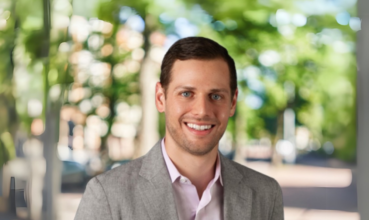
“Not every seller is experiencing a seller’s market,” explains Jared Antin, Managing Director at Elegran | Forbes Global Properties. “Sellers of certain types of prop...

The Art of Creative Finance: Matthew Aitchison Navigates Today's Commercial Real Estate Market

Written by:
Date:
20 Jun 2025
Share via Facebook

Share via Linkedin

Share via X

Copy to clipboard


“It’s just as easy to do something big as it is to do something small. So you might as well pursue something that truly excites you,” says Matthew Aitchison, quoting Blackstone CEO and co-founder Steven Schwarzman, as he explains his philosophy on commercial real estate investing.
As founder and CEO of Imagos Group and host of the Millionaire Mindcast podcast, Aitchison has built a reputation for finding creative solutions in challenging markets. His journey from flipping houses to owning boutique hotels and shopping centers offers valuable insights for investors navigating today’s complex commercial real estate landscape.
From Cat Lady Houses to Commercial Properties
Aitchison’s real estate journey began in 2010, during the aftermath of the financial crisis. Fresh out of college and uninspired by entry-level job prospects paying just $35,000-40,000 annually, he turned to real estate—a field his mother had introduced him to years earlier.
“I found an ad on Craigslist that said, ‘real estate mentor seeks real estate mentee,'” Aitchison recalls. “Looking back, I realize that meant working for free in exchange for practical experience and valuable learning lessons.”
After a year of unpaid apprenticeship learning the house-flipping business, Aitchison took the plunge with his first investment property, a home owned by a woman with over 100 stray cats. Despite his enthusiasm, there was one significant problem: “I got into my car, and I’m readjusting my mirror, and I look up and think, ‘I have no idea how I’m going to fund this house.'”
Through his mentor’s guidance, Aitchison funded the deal entirely with other people’s money, a strategy that would become his signature approach. That first flip netted him over six figures at age 21, launching a career that would eventually span hundreds of house flips and multiple commercial asset classes.
Strategic Pivots in a Changing Market
As Aitchison’s portfolio grew, he recognized the limitations of single-family rentals. “I started flipping two houses, holding one, and as I grew my single-family portfolio with all the management headaches that accompanied it, just to collect $200 a month off each door, I realized I would need many properties to achieve my financial freedom goals.”
This realization prompted his shift to commercial real estate, beginning with neighborhood shopping centers and eventually expanding into boutique hotels and other asset classes.
In 2022, sensing market headwinds as the Federal Reserve began raising interest rates, Aitchison made a strategic decision to sell his boutique hotel portfolio and reallocate capital to shopping centers, which his research indicated still had strong fundamentals.
“I saw that retail remained competitive and strong. Vacancies were at an all-time low. Overall, brand sales and stocks were still holding relatively strong,” he explains. “It felt like a good place to pivot and direct my capital and attention.”
The Season of Seller Finance
In today’s challenging commercial real estate environment, Aitchison emphasizes that success requires creativity and persistence. “This is a season of seller finance and not finding deals, but creating deals,” he notes.
The current market dynamics, high interest rates, expanded cap rates, and often unrealistic seller expectations, have made traditional deal structures difficult to execute. Aitchison’s response has been to double down on creative financing approaches.
“The deals that I have seen in this market, stumbling across a deal that just slaps you in the face—they’re few and far between right now,” he says. “However, this is the market where deals are made, often through creative finance and deal structuring.”
As an example, Aitchison describes a mobile home park acquisition he’s currently closing: “It is 75% financed by a bank, and I got the seller to carry back the remaining 25% of the purchase price in second position, interest only at 0% for three years.”
This approach allows him to engineer deals that make financial sense despite challenging market conditions, giving his investments runway to weather current headwinds.
Market Insights Across Asset Classes
Aitchison offers a nuanced view of various commercial real estate sectors, noting that different asset classes are at different points in their market cycles:
- Hotels: “In April, recent reports showed hotel sales were down 53% year over year. We’re seeing issues with international travel declining. Tariffs are also influencing consumer spending habits.”
- Industrial: “Certain markets with strong demand for industrial space have now been over-supplied.”
- Multifamily: “Many markets have seen excessive permits and delivery of units. We’re seeing more supply than demand, with declining rents and values and expansion of cap rates.” However, Aitchison notes that “many believe multifamily has reached its bottom, and we’ll start to see recovery in that asset class.”
- Medical Office: “Medical office has been a relatively strong and stable asset class that I really like. I own several assets there that I believe will continue to remain resilient.”
- Retail: “I think retail still has good runway and some insulation to it.”
- Affordable Housing: “Affordable housing will continue to have strong demand and insulation based on the affordability issues in America, a problem without any near-term relief or solution.”
Technology as a Value Driver
While Aitchison is cautious about adopting technology for technology’s sake, he sees significant potential in AI and property technology (prop tech) to drive operational efficiencies and enhance asset value.
“We’re leaning in and early adopting AI and exploring how it can be leveraged on the operational and asset management side,” he explains. “We’re creating efficiencies to reduce operating expenses and finding ways to drive more value that increase our net operating income.”
In his boutique hotel properties, Aitchison implemented innovative tech stacks that enabled contactless experiences and remote management without compromising guest satisfaction. Similarly, in his shopping centers, he’s exploring technologies that drive value for tenants and attract more patrons.
However, he cautions that “not all prop tech is created equal. Just because it’s available and innovative doesn’t mean it always delivers the net benefit you’re seeking for its cost.”
Looking Ahead: Opportunity in Uncertainty
As the commercial real estate market navigates changing economic conditions and a new presidential administration, Aitchison maintains a balanced outlook, optimistic about emerging opportunities while remaining vigilant about protecting his existing investments.
“I’m excited and optimistic about where things are headed, while maintaining a healthy level of paranoia about protecting downside and building a moat around what we’ve created,” he says.
He anticipates significant distress in certain market segments, particularly among less experienced operators who may have been overly optimistic: “We’re seeing many syndications with expiring debt that’s resetting. We’ve got capital calls happening. We’ve got people returning properties through deed in lieu.”
For well-positioned investors like Aitchison, this distress represents opportunity. “If and when there is distress and you’re properly positioned, it’s an exciting time,” he notes.
The Aitchison Approach
Throughout his career, Aitchison has demonstrated an ability to adapt to changing market conditions while maintaining core principles that drive his success:
- Creative financing: Finding ways to structure deals using other people’s money, seller financing, and innovative capital stacks.
- Data-driven decisions: “Letting data drive decisions, removing much of the emotion that can plague investors.”
- Strategic pivots: Willingness to exit asset classes when market conditions change and reallocate capital to more promising opportunities.
- Technology adoption: Leveraging AI and prop tech to drive operational efficiencies and enhance asset value.
- Volume and velocity: “It’s a volume and velocity game right now… when you get the right opportunities onto your radar, creative minds working toward a collective goal can create win-win situations.”
For investors navigating today’s challenging commercial real estate landscape, Aitchison’s approach offers a blueprint for finding opportunity where others see only obstacles. As he puts it: “The beauty of commercial real estate is you can get as creative as the minds at the table are willing to get.”
For those interested in learning more about Matthew Aitchison’s investment strategies or potentially investing with him, visit imagosgroup.com or check out the Wise Investor Collective, his commercial real estate mastermind and education community. He can also be found on social media platforms as @officialMattyA.
Similar Articles
Explore similar articles from Our Team of Experts.


Master Mind Realty's Kevin Burgos on Building a Strategic Real Estate Presence in Medellín, Colombia
Real estate runs in Kevin Burgos’s blood. As the son of Colombian immigrants in the United States, he witnessed firsthand how the industry could create opportunities when his father be...