
Cape Cod’s luxury real estate market is defined by extreme scarcity, with just 494 active listings among 130,000 single-family homes — an available inventory rate of only 0.38%. This...

Making Luxury Real Estate Accessible: Belwood Investments Opens High-End Property Flipping to Everyday Investors

Written by:
Date:
02 Jul 2025
Share via Facebook

Share via Linkedin

Share via X

Copy to clipboard

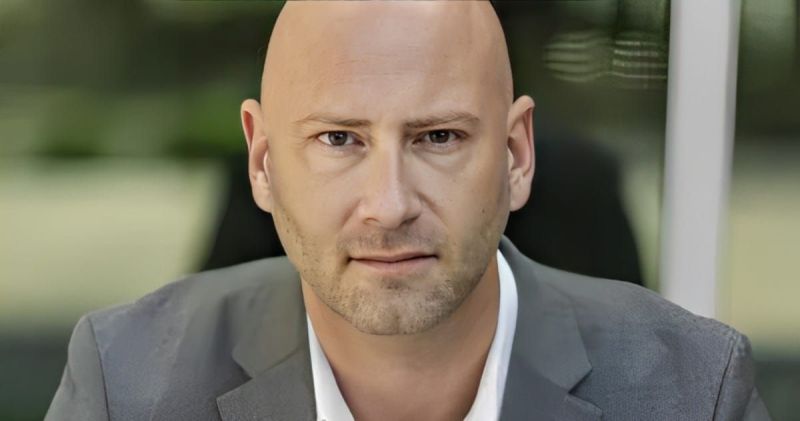
“My goal is to democratize luxury real estate investing, bringing what we’ve developed to everyone,”says Bo Belmont, CEO and Founder of Belwood Investments. What began as a one-man house-flipping operation during the 2008 financial crisis has evolved into a technology-driven platform enabling thousands of everyday investors to participate in high-end property projects that were once the exclusive domain of the wealthy.
From Crisis to Opportunity: The Birth of a Vision
When the 2007-2008 financial crisis hit, Belmont found himself at a crossroads. Having worked in mortgage lending during the housing boom, he suddenly faced a contracted market with his industry expertise seemingly devalued overnight.
“All the wholesale lenders were gone. I was left with knowledge but in a market that wasn’t fruitful anymore,” Belmont recalls. “I had to pivot.”
The opportunity came through his neighbour, who introduced him to property flipping, buying distressed homes, renovating them, and selling for profit, even in a declining market.
“There were numerous bank-owned properties and abundant opportunities,” Belmont says. “I learned the basics from him, and then took a leap of faith.”
His first flip was remarkably personal: a property he purchased for $175,000 that he had previously helped finance for nearly half a million dollars just months earlier. Despite challenges, including receiving a “red tag” for failing to pull proper permits, Belmont completed the renovation himself and sold the property for an $80,000 profit.
“Even in a declining market, people could see the value of a fully renovated home”, he explains. “I knew there was potential to make money in this unique field even during a recession.”
The Collaborative Model That Changed Everything
As Belmont continued flipping properties, friends noticed his success. When one friend, Ray, expressed interest but couldn’t quit his job to pursue flipping full-time, Belmont had an insight that would transform his business model.
“I told Ray, ‘I’ll get the hard money loan. You come in with the other capital, and I’ll handle everything—permits, construction, the works. We’ll pay off all the debt, and then split the profit 50/50.'”
Ray earned 100% return on his investment, and word spread quickly. Soon Belmont was managing multiple properties with investments from an expanding network of friends and family.
“I scaled to managing 10-15 properties simultaneously, bringing on crews and learning the business thoroughly” he says. By 2010-2011, the operation had grown to include several hundred investors, necessitating staff, administrators, and proper company infrastructure.
Technology: The Great Democratizer
By 2018, Belmont needed technology to facilitate the growing number of transactions and investors. The solution was the Belwood Investor App, which revolutionized how everyday people could participate in real estate flipping.
“We now have about 6,000 investors,” Belmont notes. ” Agents bring inventory to our app, which undergoes thorough vetting through our algorithm and underwriting process.”
The app transformed the investment model in a crucial way: instead of one person investing $100,000 in a single property, Belwood could now distribute that investment among 100 people contributing $1,000 each. Investors become private money lenders secured by a deed of trust on the property, which must be paid off when the renovated home is sold.
“We renovate and sell the home, pay off the deeds of trust, and then split the profit 50/50. Belwood takes 50%, and our investors receive 50%,” Belmont explains.
The Luxury Pivot: Why High-End Properties?
A significant evolution in Belwood’s business model has been its strategic move into luxury real estate markets. “We’re now flipping homes like the Kanye West property in Malibu, properties in Beverly Hills, and homes in the Hollywood Hills,” Belmont says.
This pivot serves multiple practical purposes. First, it addresses overwhelming investor demand. “We have so many investors that a $500,000 home investment opportunity fills in seconds,”Belmont explains. “We can raise $1 million through our app in about a minute.”
By focusing on multi-million dollar properties, Belwood can accommodate more investors per project and provide more time to participate. “When raising several million for a home in Beverly Hills, we can extend the funding window to 24 or 48 hours, giving people time to join.”
Second, luxury properties often attract cash buyers, making them less vulnerable to lending restrictions and interest rate fluctuations. “Wealthy buyers understand real estate cycles,”Belmont notes. “They recognize that while the market might temporarily slow, they have capital to deploy, and they understand that real estate appreciates over time.”
The “Entry-Level Luxury”Strategy
Belwood’s specific approach focuses on what Belmont calls “entry-level homes in extremely luxurious markets.” He cites a recent example in the Hollywood Hills: “I evaluated a property where neighboring homes were priced at $14 million and $20 million. Across the ridge was a $100 million home owned by the Grand Theft Auto creator.”
The property Belwood considered was priced at about $2.25 million with potential resale value in the mid-$3 million range. “We target entry-level properties in premium markets where buyers are grateful to participate,” Belmont explains. “They can say, ‘I live next to the WhatsApp creator with comparable views. My home may be smaller, but I’m living among notable residents at an entry-level price.'”
This strategy creates value for both investors and eventual buyers—investors benefit from the premium market dynamics, while buyers gain access to prestigious neighborhoods at relatively accessible price points.
The Future: Deeper Engagement and Global Expansion
Belwood is preparing to launch version 2 of its investor app, enabling greater investor participation in the renovation process itself. “What’s compelling is our ability to provide a more involved real estate investment experience,”Belmont says. “It’s not just investing and waiting for quarterly reports.”
The new app will allow investors to vote on finishes for properties they’ve invested in. “They’ll vote on elements like wall colors,”Belmont explains. “We’ll present carefully curated options—four variations of white: white sand, white linen, white clouds, white stone.”
If 80 out of 100 investors vote for white linen walls, that choice will be implemented. “Investors help guide the project to completion and take pride in knowing they’ve contributed to design decisions in a luxury flip in Beverly Hills.”
Belwood is also expanding internationally, with projects already underway in Greece and plans to enter the Italian market next. “Land is a finite resource,”Belmont observes. “We’re investing in established markets with proven year-over-year performance.”
For Belmont, this global expansion advances his core mission: “We’re eliminating the scenario where people watch home renovation shows, turn to their spouse saying, ‘I want to do that,’ only to hear, ‘We don’t have the capital, that’s impossible.’ We’re delivering realistic returns and meaningful participation opportunities.”
Through technology, strategic market positioning, and commitment to investor engagement, Belwood Investments is making the once-exclusive world of luxury real estate flipping accessible to thousands of everyday investors—transforming both the investment landscape and the lives of those who participate in it.
Similar Articles
Explore similar articles from Our Team of Experts.