As online retail rapidly reshaped consumer behavior, many investors exited the brick-and-mortar space, spooked by the rise of e-commerce. But not George Wommack. In 2007, as e-commerce began disrupting traditional retail, he saw a different path forward rooted in the resilience of service-oriented shopping centers.
Wommack first recognized this opportunity by identifying a crucial distinction: small, service-focused shopping centers were fundamentally different from big-box retail that struggled against online competition. “The majority of tenants in these properties are service retailers, over 90% for most portfolios, making them highly resistant to e-commerce disruption,” Wommack explains. This insight formed the foundation of his investment thesis that has proven increasingly prescient.
“While everyone was running away from retail as Amazon gained prominence, I saw opportunity in service-oriented shopping centers that e-commerce couldn’t touch,” says George Wommack, President and CEO of Headwall Investments, whose contrarian bet on unanchored shopping centers is now attracting significant institutional attention.
After taking a seven-year hiatus to pursue other ventures, Wommack returned to the sector in 2019 with Headwall Investments, which takes a fund approach to acquiring and aggregating unanchored shopping centers primarily in Texas markets.
Strategic Texas Expansion Continues
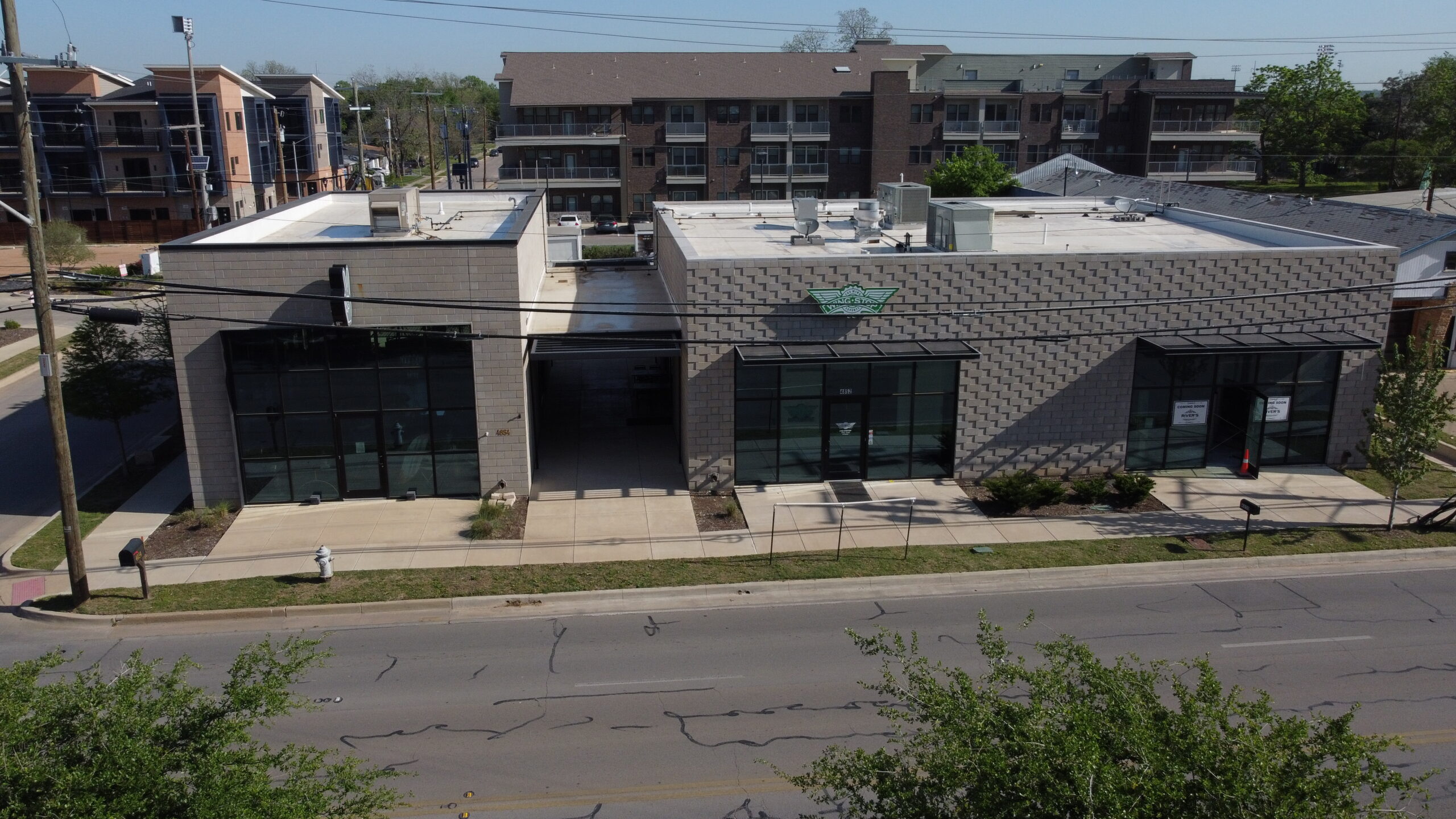
Headwall recently closed on two properties: River District Plaza and Tower at Boerne, continuing its focused growth in Texas. These acquisitions align with the firm’s carefully defined investment criteria.
“We target the major metros of Texas, Dallas-Fort Worth, Houston, Austin, and San Antonio,” Wommack explains. “We look for properties with strong visibility, preferably on signalized intersections, in areas with high median household incomes and dense residential populations.”
Proximity to residential neighborhoods is particularly crucial in Headwall’s strategy. “We prefer properties that back up to single-family residential subdivisions and serve the convenience needs of nearby residents,” says Wommack. “These centers primarily draw customers from within a one-to-three-mile radius.”
For the remainder of 2025, Headwall is targeting “three to five additional acquisitions,” with Wommack noting that “five would be aggressive, but if the opportunities present themselves, we can achieve that goal.”
Institutional Capital Discovers the Sector
Perhaps the most significant validation of Wommack’s thesis has been the recent surge in institutional interest in unanchored shopping centers, a trend that has accelerated since late 2024.
“These properties have historically been predominantly owned by individuals, families, and small family offices,” Wommack notes. “Now we’re seeing a dramatic shift as institutional money flows into the space.”
This institutional awakening was highlighted by Site Centers Corp’s strategic decision to spin off its unanchored shopping centers into a separate public company called Curbline. “Curbline is a pure-play, unanchored convenience center public REIT that has been well received by the market and is actively acquiring properties,” Wommack explains.
The market’s enthusiastic reception to Curbline, which has traded at implied cap rates around 5.5% and has further validated the investment case for unanchored shopping centers.
Four Key Advantages Driving Investment Appeal
Wommack identifies several factors that make unanchored shopping centers particularly attractive in today’s market:
E-commerce resistance: “These centers house businesses that provide services that simply can’t be delivered through a website: hair salons, dental offices, restaurants, fitness centers. They meet needs that fundamentally require physical presence.”
Low capital expenditure requirements: “When re-tenanting a space, it typically doesn’t require moving walls, splitting utilities, or significant reconfiguration. One tenant leaves and another can occupy that exact same space with minimal modifications, which dramatically improves returns.”
Limited new supply: “We’re emerging from a 15-year period of minimal shopping center development. Before the global financial crisis, there was massive construction, then activity virtually stopped. This supply constraint creates significant value for existing properties.”
Rental rate upside: “The in-place rents at these properties have been substantially lower than what’s required to justify new construction. As that gap closes, there’s tremendous upside in both rental rates and property values.”
Building a Substantial Portfolio
While institutional interest grows, Headwall has built its portfolio primarily through capital from high-net-worth individuals and family offices.
“We’ve built a substantial portfolio through those channels,” Wommack says. “Our portfolio now represents about $220 million in gross asset value, and we’ve raised $94 million of equity through high-net-worth individuals and family offices who recognized this opportunity early.”
As Headwall continues its disciplined acquisition strategy in Texas markets, Wommack’s early thesis on unanchored shopping centers is gaining broader market acceptance. The combination of e-commerce resistance, low capital requirements, limited new supply, and rental rate upside positions Headwall to capitalize on an opportunity that Wommack identified long before institutional investors took notice.
“Sometimes the best opportunities are hiding in plain sight,” Wommack reflects. “These aren’t flashy properties, but they provide essential services to their communities and reliable returns to our investors.”
Maine’s industrial real estate market is experiencing a significant cooling period after five years of unprecedented growth, according to a veteran broker who sees this as a major shif...
Year-round outdoor living gives South Florida a clear advantage in how mixed-use projects are designed, built, and marketed, according to Nicolas Pinzon, Associate Principal at RSP Architect...
St. Paul’s downtown recovery strategy highlights a core reality of urban real estate. In distressed city centers, properties are never neutral. They either help drive revitalization or dee...
Office tenants are increasingly choosing mixed-use locations over traditional office buildings, driven by employee expectations for amenities and convenience. Companies now consider access t...
Over the past decade, food halls emerged as one of retail real estate’s most promising formats — a way to activate large spaces, attract foot traffic, and give independent food opera...
As artificial intelligence sweeps through industries, commercial real estate technology firms are taking a notably different approach from the “replace all humans” narrative seen...