Tucson’s sprawling geography punishes proximity-based neighborhood decisions in ways that more compact cities do not – and most relocating buyers don’t realize it until after they’ve committed.
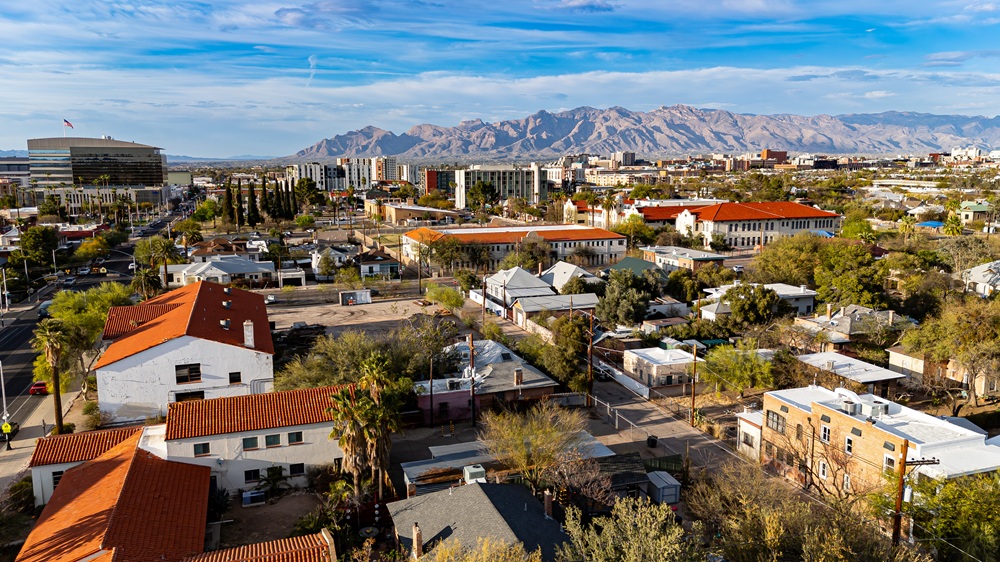
Unlike denser metros where most areas share broadly similar infrastructure and character, Tucson’s four surrounding mountain ranges and low-density development pattern have produced distinct microenvironments that differ substantially in terrain, housing stock, community character, and daily lifestyle. According to Tony Ray Baker, Realtor and Team Leader at REMAX Fine Properties, who has worked in Tucson relocation for over 30 years, the most common mistake out-of-state buyers make is allowing the wrong people to choose their neighborhood for them.
“Out-of-town buyers keep making this one huge mistake, and that’s listening to their friends or their family members about which neighborhood they should live in,” Tony Ray says. “The reality is this: what works for them may not work for you.”
Why Tucson’s Geography Makes This Mistake Costly
In a compact city, settling near friends or family carries limited downside. Neighborhoods are close enough that lifestyle mismatches can be absorbed through short commutes. Tucson does not work this way. The city grew outward rather than upward – Tony Ray notes that residents historically prioritized mountain views, which pushed development wide rather than tall – and the result is a metro area where east, west, north, and south each function as semi-independent communities.
These are not subtle variations. Terrain and elevation shift noticeably across the city, affecting temperature, vegetation, and visual environment. The availability of specific amenities – hiking access, restaurant density, cultural institutions, proximity to the University of Arizona – varies substantially by quadrant. Housing styles, lot sizes, and neighborhood age differ enough that a buyer who would thrive in one area might find another genuinely unsuitable.
Tony Ray argues that this geographic reality makes socially driven neighborhood selection particularly problematic. A friend who loves the foothills is not a reliable guide for a buyer whose priorities point toward a walkable downtown environment. The friend’s enthusiasm is genuine, but the recommendation reflects personal fit, not the newcomer’s actual needs.
The Social Pressure Problem
Tony Ray says the dynamic is emotionally understandable even when it produces poor outcomes. Existing residents want their friends and family nearby. Newcomers, navigating an unfamiliar city, find comfort in settling close to people they already know.
“I appreciate the loved ones wanting you to live closer to them,” adds Tony Ray. “But what works for them may not work for you.”
What makes this pattern persistent, in Tony Ray’s view, is that buyers often do not discover the mismatch until after they have committed. Online listings do not convey the experiential differences between Tucson’s neighborhoods. Photos of homes in different areas can look broadly similar while the surrounding environments are fundamentally distinct. Without a systematic tour of the city’s different zones, buyers lack the reference points needed to evaluate whether a friend’s neighborhood actually aligns with their own priorities.
Tony Ray also notes that the distance concern driving proximity-based decisions is often overstated. Tucson’s transportation network means that neighborhoods 15 to 20 minutes apart remain easily accessible for regular social interaction. The practical barrier to maintaining friendships across different parts of the city is lower than buyers typically assume when making initial decisions under social pressure.
How the Problem Gets Solved
Tony Ray says his standard relocation process begins with a two- to three-hour city tour designed to expose buyers to Tucson’s distinct areas before any neighborhood decision is made. The goal is to give buyers enough firsthand exposure to each zone that they can form their own preferences rather than defaulting to someone else’s.
“It’s more important for us that you get the exact desired lifestyle that you’re expecting when you get to Tucson,” Tony Ray says. “And the only way we do that is to actually research and look at all those neighborhoods and help you discover which ones are possible for you to live in.”
Tony Ray says the approach produces consistent results. Approximately 98 percent of clients who complete the city tour leave with a clear sense of which area fits them – at which point the search narrows to finding the right home within that zone rather than evaluating the entire metro. The tour does not eliminate the possibility of landing near friends or family; it ensures that proximity is a byproduct of good fit rather than a substitute for it.
For buyers relocating to Tucson, the practical takeaway is direct: visit the city’s different quadrants before committing to a neighborhood, whether through an agent-led tour or independent exploration. In a metro where each area functions as its own community, the neighborhood decision carries as much weight as the home itself – and the people least qualified to make it are the ones who already live there and assume their own preferences are universal.
About the Expert: Tony Ray Baker is the owner and Team Leader at REMAX Fine Properties in Tucson, Arizona, operating through SeeTucsonHomes.com. With over 30 years of residential real estate experience, Tony Ray and his team serve buyers and sellers across Tucson, Oro Valley, Marana, Sahuarita, Vail, Catalina, and Green Valley.
This article is based on information provided by the expert source cited above. It is intended for general informational purposes only and does not constitute legal, financial, or real estate advice. Readers should conduct their own research and consult qualified professionals before making any real estate or financial decisions.