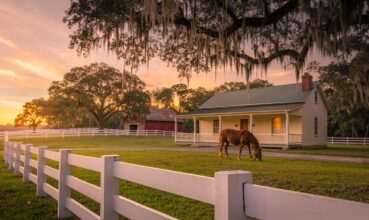
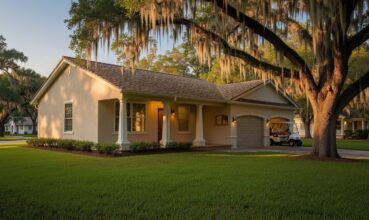
*Photo credit: Sonja Zinke
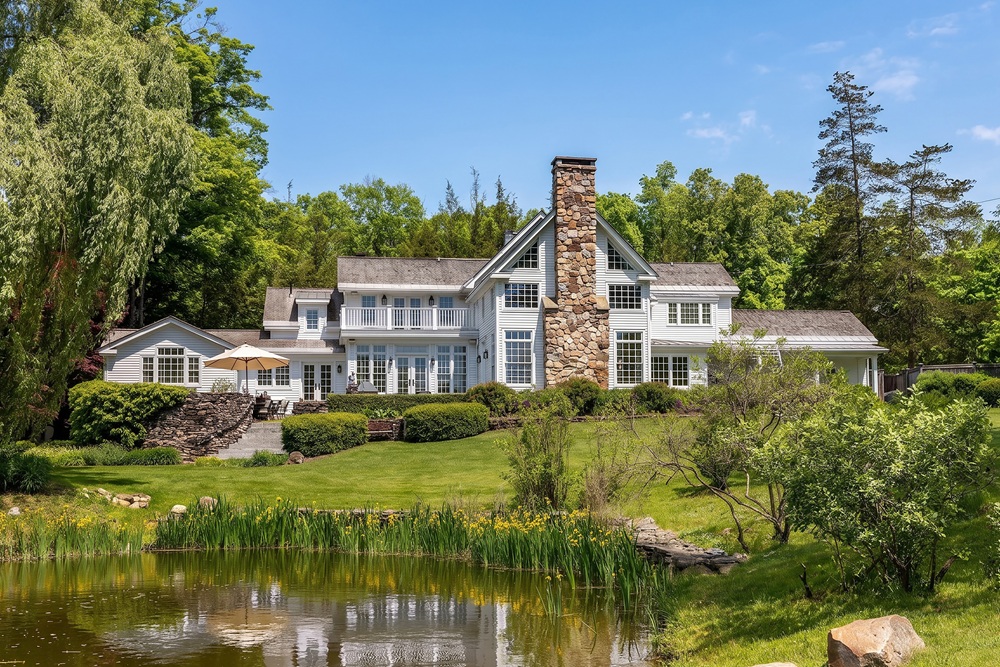
Most buyers who come to the Litchfield Hills, Hudson Valley, and Southern Berkshires arrive with a specific idea of what they are purchasing. A weekend property. A place to decompress. Somewhere the children can run outside, and the city can feel, briefly, very far away.
What many of them do not anticipate is that the region has a way of making the return trip feel like the wrong direction.
Elyse Harney Morris, principal broker and owner at Elyse Harney Real Estate, has watched this pattern repeat across her 30-agent tri-state firm for years. Buyers who came for weekends find themselves extending stays, then commuting back to the city a few days a week, then quietly reassessing whether the city still needs to be the anchor at all. “They stay for a year,” she says, “and then one of them starts commuting a few days a week, and then the whole thing just stops, and they go: we’re staying.”
The question worth examining is not just why buyers are staying, but what it is about this specific region that makes staying feel not like a compromise but like an upgrade.
A Four-Season Region That Earns Year-Round Commitment
The regions that retain buyers beyond their original intentions tend to share a common characteristic: they deliver across all four seasons, not just the ones that photograph well. The Litchfield Hills, Hudson Valley, and Southern Berkshires clear that bar with room to spare.
Winter in this region is anchored by Catamount Mountain Resort, which recently completed a substantial investment in a new lodge, expanded trail network, and improved snowmaking infrastructure. For families with children who ski, the proximity of a genuinely upgraded mountain resort within easy reach of a primary property changes the calculus of year-round living considerably. The region also hosts ski jumping off a 65-meter hill each February, and this coming year will welcome the Junior Olympics for the second time, an event that draws national attention to a corner of Connecticut that prefers, as a rule, not to seek it.
Summer belongs to Tanglewood in Lenox, Massachusetts, where the Boston Symphony Orchestra performs through the warm months and James Taylor’s July concerts have become a regional institution. The Appalachian Trail, the network of land trust properties across all three states, and the growing infrastructure of electric bike trails give outdoor life a depth that sustains engagement across years of residency, not just seasons of novelty.
The cultural calendar runs underneath all of it. The Yale School of Music’s summer programs in Norfolk, Connecticut open to the public. Lectures and performances at the region’s prep schools draw audiences who drive significant distances to attend. The Millbrook Winery in the Hudson Valley hosts weekend music and farm dinners that feel less like events and more like the rhythm of a particular kind of life.
The Community Infrastructure That Makes It Work
A region can have exceptional natural beauty and still fail to retain buyers who discover that daily life requires a 40-minute drive for groceries, that their children have nowhere to go on a weekday afternoon, or that the social fabric thins to nothing between October and May.
The Litchfield Hills, Hudson Valley, and Southern Berkshires have built the kind of community infrastructure that prevents that failure. Town centers like Salisbury offer walkable access to Lakeville Lake, restaurants, and community institutions that function year-round. The prep school network, Hotchkiss, Salisbury School, Berkshire School, and their feeder schools, creates an educational infrastructure that draws and retains families who might otherwise cycle back to the city once their children reach school age.
The farm-to-table culture that has developed across all three markets over the past decade adds another layer. Farmers markets, pick-your-own operations, and a growing calendar of food and wine events give daily life a quality and a localism that is genuinely difficult to replicate in markets that trade more on proximity to a particular scene than on the substance of what they offer.
What Permanent Buyers Are Actually Purchasing
The buyer who decides to stay permanently approaches the real estate market differently than the one who is buying a retreat. The questions that were peripheral become central. School systems, local medical infrastructure, the character of a town on a Tuesday in February: these are the filters through which a permanent purchase is evaluated, and they are filters that this region passes consistently.
Morris describes the $2 million to $3 million price point as the most active segment of the current market, driven in significant part by buyers who have already spent time in the region and are now formalizing a commitment they have already made emotionally. These are not speculative purchases or aspirational acquisitions. They are the natural conclusion of a process that started with a weekend and ended with a decision.
The region’s strict zoning protections and active land conservation programs ensure that what buyers are committing to will still be there in ten years, in twenty years, across the generations that follow. That permanence is not incidental to the purchase. For the buyer who has decided to stay, it is the point.
Elyse Harney Morris is principal broker and owner at Elyse Harney Real Estate, an independent brokerage founded in 1987 and operating across Connecticut, New York, and Massachusetts. She specializes in significant country estates, historic farms, and conservation properties across the Litchfield Hills, Hudson Valley, and Southern Berkshires.
Disclaimer: This article is based on information provided by the expert source cited above. It is intended for general informational purposes only and does not constitute legal, financial, or real estate advice. Readers should conduct their own research and consult qualified professionals before making any real estate or financial decisions.