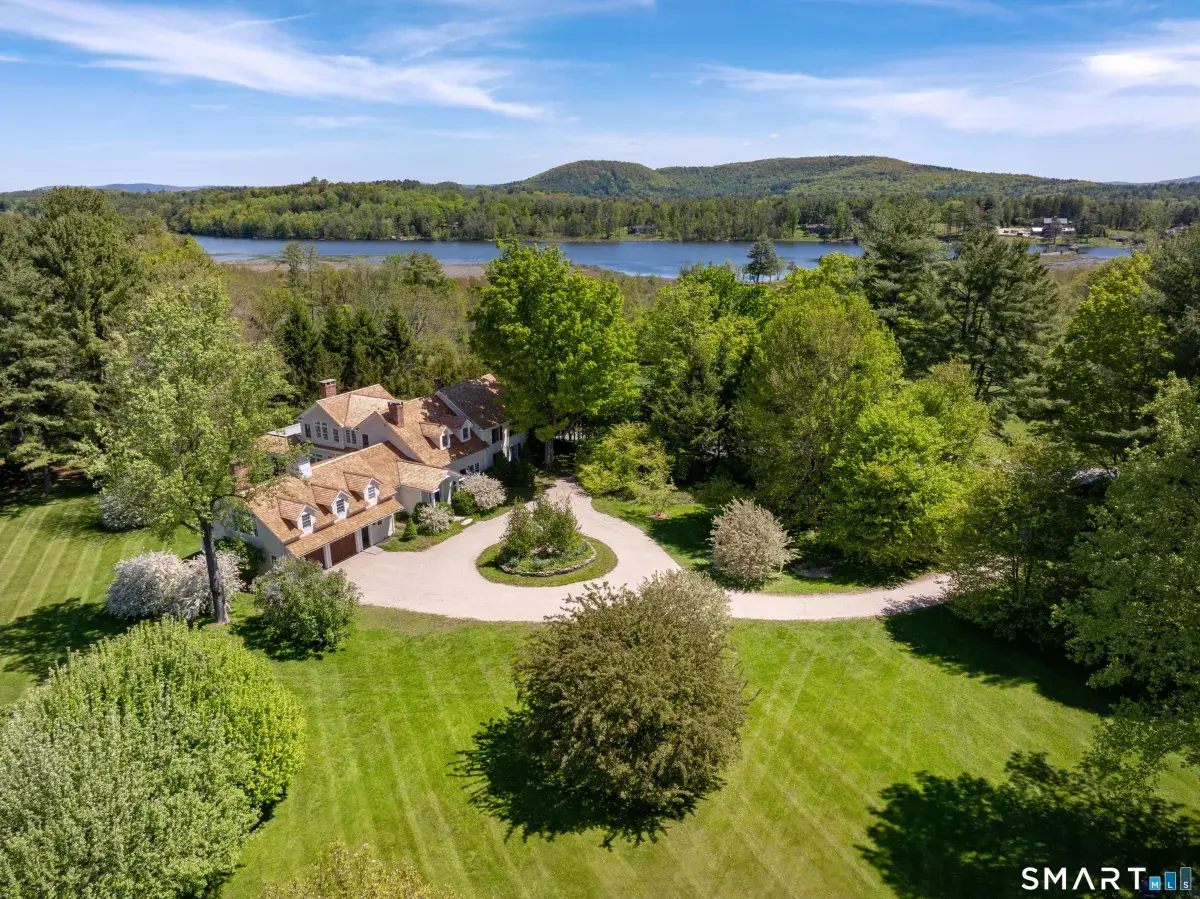
Somewhere between the first school tour and the second home office installation, something shifts. The Litchfield County property that started as a weekend escape becomes something harder to categorize. The commute gets mapped. The grocery run gets optimized. The guest room gets a pullout sofa and a standing desk. At that point, calling it a second home is technically accurate and practically misleading.
Bill Melnick of Elyse Harney Real Estate sees this buyer regularly, often from the first phone call. “When you start the search, buyers lay out their requirements and how they’re going to use the house,” he said. “You can tell pretty quickly who is buying a weekend place and who is buying a co-primary.”
The distinction shapes everything that follows: which towns make the list, which properties work, and how much buyers are willing to spend.
What Co-Primary Actually Means in Practice
The co-primary buyer is not looking for a simpler version of their city life. They are looking for a parallel version of it. That means full kitchen, finished bathrooms, reliable internet, and in most cases, two dedicated home office spaces.
“Often you need two home offices if they’re a couple,” Melnick said. “Both owners may be on Zoom calls, even if they’re going to an office regularly.”
The solutions buyers are finding are varied. Guest rooms configured as swing spaces, with a pullout sofa and a desk, serve double duty without sacrificing either function. Finished basements have become dedicated office floors. Accessory structures, barns, studios, and guest cottages, are being outfitted as separate workspaces entirely. The appeal of a detached office, a building you walk to and then leave at the end of the day, has proven real among buyers who have spent years working from a dining room table.
Properties that cannot accommodate two working adults without significant construction are increasingly being passed over. The home office question has moved from a nice-to-have to a qualifying criterion.
How Town Selection Changes for This Buyer
For a buyer using a property primarily on weekends, a twenty-minute drive to a grocery store registers as a minor inconvenience. For a buyer spending half the week in the county, it registers as a logistics problem. Co-primary buyers consistently place higher priority on proximity to everyday services, a food store, a pharmacy, a few restaurants, than weekend buyers do.
Proximity to the Wassaic Metro-North station is the other significant variable. The station, just across the Connecticut border in New York State, is the last stop on the Harlem line and offers a roughly two-hour ride to Grand Central. For a household where one partner commutes to the city two or three days a week, the driving distance from their Litchfield County town to that station is a meaningful factor in which towns make the list.
“The closer to the train, the better,” Melnick said. “Theoretically you can be dropped at the station for a six or six-thirty train and be at your desk by eight-thirty or nine.”
Towns that sit within a comfortable drive of Wassaic carry a quiet premium for this buyer that does not always show up cleanly in comparable sales data but shows up consistently in conversations.
What They Are Willing to Spend
Co-primary buyers spend more, and they do so deliberately. The property needs to function at the level of a primary residence, which means the amenity threshold is higher and the tolerance for renovation projects is lower. These buyers want something they can move into, be on a Zoom call from, and have their children enrolled in school from, without a construction project running in the background.
“They want to feel like they’re not sacrificing,” Melnick said. “Often it’s even more than what they have in the city, because you have the space.”
At the top of this segment, the buyer who has effectively made Litchfield County their primary base while maintaining a city apartment is often trading up from an earlier property in the county. The first house was a weekend place. The second is the one they actually live in, and the budget reflects that.
About The Expert: Bill Melnick is a luxury real estate specialist with Elyse Harney Real Estate, serving Litchfield County and surrounding markets in Connecticut.
This article is based on information provided by the expert source cited above. It is intended for general informational purposes only and does not constitute legal, financial, or real estate advice. Readers should conduct their own research and consult qualified professionals before making any real estate or financial decisions.