Photo credit: Sonja Zinke
The Litchfield Hills, Hudson Valley, and Southern Berkshires sit within a remarkably compact geography. From Salisbury, Connecticut, you can be in New York State in five minutes and in Massachusetts in under ten. Within that small radius, however, the communities on offer are genuinely distinct from one another, and for buyers making a significant purchase decision, those distinctions are often the difference between a property that becomes a home and one that gets listed again two years later.
Elyse Harney Morris, principal broker at Elyse Harney Real Estate, has guided buyers through this choice for years. She describes the discovery process as one of the most important and most underestimated parts of purchasing in this region. “Often buyers have a very strong concept of what they are looking for,” she says, “and often that isn’t what they buy. You don’t know that you want to live in town until you look at it in town.”
The Town Center Buyer
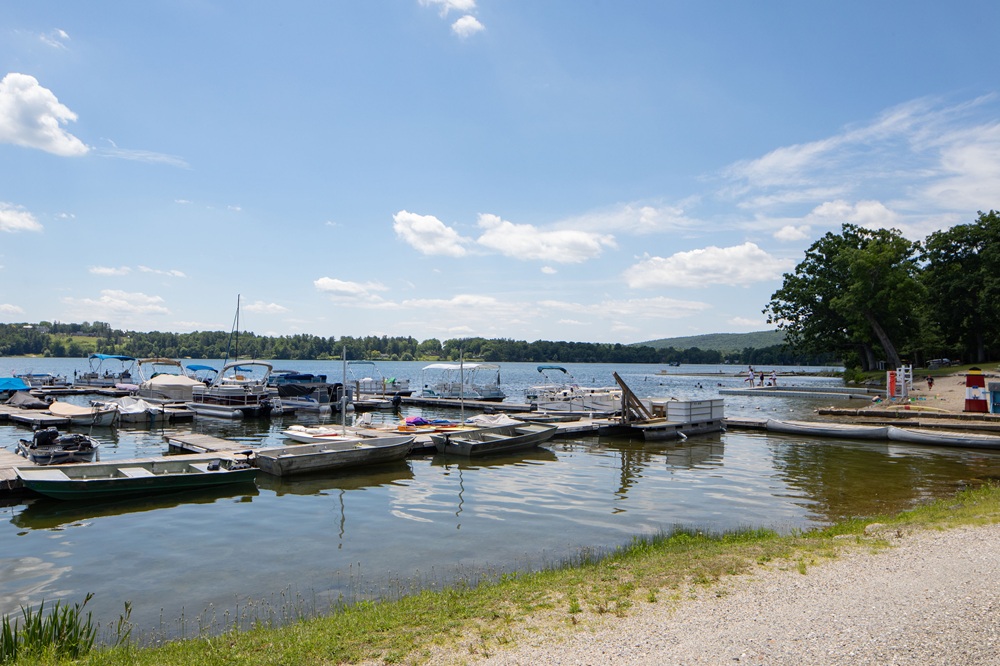
For some buyers, the revelation comes when they step into one of Litchfield County’s historic town centers and discover that walkability, community access, and the rhythm of daily life in a small town are exactly what they were looking for without knowing it. Salisbury, Connecticut offers access to Lakeville Lake, restaurants, tennis courts, and a community calendar that runs year-round. The town feels alive across seasons, not just on autumn weekends.
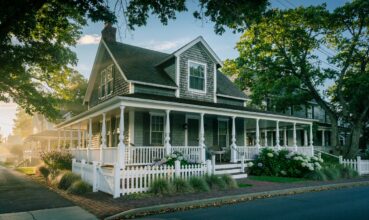
Morris recently sold a home on Main Street in Salisbury for $1.9 million to a family who had been living rurally and discovered, only after the fact, that proximity to community was what they actually valued. “What they really wanted was to be part of a community,” she says, “to have their kids be able to walk to the lake, to restaurants, to town.”
That same property had previously sold to a family from New York with identical priorities. Two buyers from different starting points, separated by years, arrived at the same conclusion through direct experience rather than assumption.
The Land and Acreage Buyer
For buyers whose priorities run in the opposite direction, the region offers something equally compelling: large parcels with genuine privacy, water features, trail systems, pond and river frontage, and agricultural character that markets closer to major cities cannot provide at comparable price points.
The $2 million to $3 million range, which Morris identifies as the most active segment of the current market, delivers meaningfully different assets here than in markets that trade primarily on brand or social proximity.
Properties in this range across the tri-state region routinely include significant acreage, historic structures, and the kind of working landscape that supports beehives, kitchen gardens, fishing access, and trails through woodland, features that resonate particularly strongly with multi-generational buyers assembling long-term family arrangements.
Understanding what a piece of land can and cannot do requires specific expertise. Conservation easements, agricultural programs, water rights, and development restrictions all affect what a buyer can actually do with a property over time, and navigating those questions requires a broker with genuine fluency in the conservation and land categories that define this region.
Why Direct Experience Resolves What Research Cannot
The most consistent pattern Morris observes in buyers new to this region is the gap between what they think they want and what they discover they want once they are standing in it. A property that looks isolated and private on a listing can feel remote and disconnected in daily life. A town that looks small on a map can feel vibrant and connected when experienced directly.
Her recommendation for buyers who have not yet narrowed their geography is to rent before purchasing, ideally for six months in a target area. “It makes a difference,” she says, “because you figure out what happens not only on a Saturday and Sunday, but what happens on a Tuesday.” The midweek experience of a place, its pace, its access, its community rhythms, is often the factor that determines whether a buyer ultimately feels at home.
For buyers who have done that work and know what they want, the advice shifts. In a market where inventory remains tight across all three states despite some easing from pandemic-era lows, a prepared buyer who hesitates can lose the right property to one who does not. Financing in place, clear priorities, and a broker with early access to listings before they hit the public market are the practical requirements for buying well in this region.
The towns here reward the buyer who takes the time to understand them. The one who skips that step often finds themselves starting over.
About: Elyse Harney Morris is a principal broker at Elyse Harney Real Estate, an independent brokerage founded in 1987 and operating across Connecticut, New York, and Massachusetts. She specializes in significant country estates, historic farms, and conservation properties across the Litchfield Hills, Hudson Valley, and Southern Berkshires.
This article is based on information provided by the expert source cited above. It is intended for general informational purposes only and does not constitute legal, financial, or real estate advice. Readers should conduct their own research and consult qualified professionals before making any real estate or financial decisions.