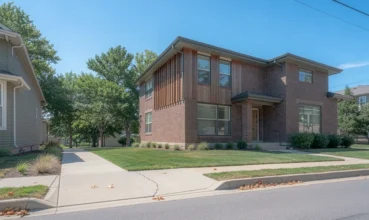
Chesterfield County, just south of Richmond, Virginia, doesn’t generate the kind of attention that faster-moving East Coast markets attract. But the area is in the middle of a residential building cycle that is unusually large for a market its size – and so far, local demand appears to be absorbing it without the oversupply problems that have surfaced in other high-growth regions.
According to Matthew Henry, who leads the Henry Team at Keller Williams Metro Center, between 300 and 500 homes are currently under construction in the area, with another 5,000 to 7,000 planned over the next two years. Hundreds of apartment buildings and townhome communities are also in various stages of development.
What makes the pipeline sustainable so far is the employment base beneath it. The area sits near military installations, government employers, and manufacturing operations. Henry says the county is far enough from Richmond to avoid urban cost pressures but close enough to major employers that residents have stable incomes. Unemployment is low, jobs are plentiful, and the market lacks the sharp boom-and-bust cycles that characterize parts of Florida or California. “We are far enough away from the city that we don’t have the inflation problems, but we’re close enough to organizations that have money that the residents here are financially stable,” Henry says.
Where the Buyers Are Coming From
About 80 percent of the Henry team’s business involves local move-up buyers – people going from a first or second home to a larger one, often in the $800,000 to $1.3 million range. The remainder includes first-time buyers entering around $300,000, which Henry describes as essentially the floor for the area, and a smaller share of out-of-state relocations.
The relocation traffic skews toward four states: California, Colorado, Texas, and Florida. Some buyers are also arriving from North Carolina. Out-of-state buyers tend to behave differently from locals in one respect – they are more willing to purchase a townhome as a transitional property, planning to convert it into a rental within two or three years before buying a single-family home. “They don’t know the area too well, and they’re okay with buying a townhouse knowing that they’re going to use it for a rental in two or three years,” Henry says.
Single-family homes dominate the market by volume. Henry estimates there are ten times as many single-family listings as townhome listings, which limits the relevance of the townhome and condo segment in Chesterfield even if those categories move quickly in broader Richmond-area data.
How Listings Behave at Different Price Points
The Chesterfield market splits cleanly along price lines. A move-in-ready home at $300,000 can draw multiple offers in the first week. At $500,000, a home in comparable condition is more likely to attract one or two offers in the first week or two.
Henry says his team has sold every listing within 10 days, at asking price or above, with at least one or two offers on each. When other agents’ listings sit longer, he attributes it to one of two causes: something undesirable about the property, or overpricing. “Understanding the value of the home and then also understanding where the market’s going – very, very important indicators,” he says.
That pricing discipline extends to how the team handles seller expectations. Henry describes a method modeled on appraisal methodology, distinguishing between a home’s current assessed value and the direction of market trends. “Those two numbers can be different,” he says. “The value of the home versus where the market trend is can be different. And so we educate our clients to let them know what to expect.”
In one recent transaction, Henry listed a rural property that other agents had valued $100,000 to $200,000 lower. The home drew multiple showings in its first five days, generated six offers, and ultimately sold for nearly $250,000 more than the sellers had anticipated. Henry says the result came from research-based pricing rather than conservative estimates – an approach he says is modeled on techniques he learned from appraiser colleagues.
Presentation Over Concessions
In a market where some agents are advising sellers to offer closing cost assistance, rate buydowns, or repair credits, Henry takes a different position. His team directs that spending toward the property itself.
“I tell my clients we do not need to give up money up front. We do not need to give up closing costs,” he says. “What we need to do is spend the money on getting the house fixed up so it showcases really well.” The logic is straightforward: when a buyer tours five or ten homes that all meet their criteria on paper, the decision comes down to emotional connection. “Which house do they buy? The one that they emotionally connect to,” Henry says.
For sellers weighing whether to offer financial incentives or invest in the property’s condition, Henry’s position is that money spent on presentation generates stronger offers than money given away at closing.
Seasonal Rhythms, Not Structural Shifts
When asked about headwinds, Henry pointed to seasonal patterns rather than structural concerns. The market slows for two to three weeks when school starts, again during early summer vacations, and from roughly two weeks before Thanksgiving through January 10. He advises sellers that spring is the strongest listing window, followed by summer, then fall.
Interest rate fluctuations produce brief pauses – Henry says a half-point or 0.3-point increase might slow activity for two to three weeks before buying resumes. He attributes much of the broader buyer hesitation to media coverage rather than local conditions. “After they sit down and have a conversation with somebody here on the Henry team, they have a better understanding of what’s really going on,” he says.
Henry’s advice to hesitant buyers is direct: make decisions based on current needs rather than fear. “You can always adjust your interest rate, but you can never save money on the house,” he says. If a home’s price rises $20,000 by next year, that cost is permanent – but a higher interest rate can be refinanced later.
For buyers and sellers in Chesterfield, the seasonal calendar matters more than macro anxiety. The construction pipeline is large, but demand from local move-up buyers and a stable employment base has kept absorption steady. The market’s risk is not oversupply – it is mistiming a listing or letting fear delay a purchase into a higher price.
About the Expert: Matthew Henry leads the Henry Team at Keller Williams Metro Center, covering Chesterfield County, Virginia, just south of Richmond.
This article is based on information provided by the expert source cited above. It is intended for general informational purposes only and does not constitute legal, financial, or real estate advice. Readers should conduct their own research and consult qualified professionals before making any real estate or financial decisions.