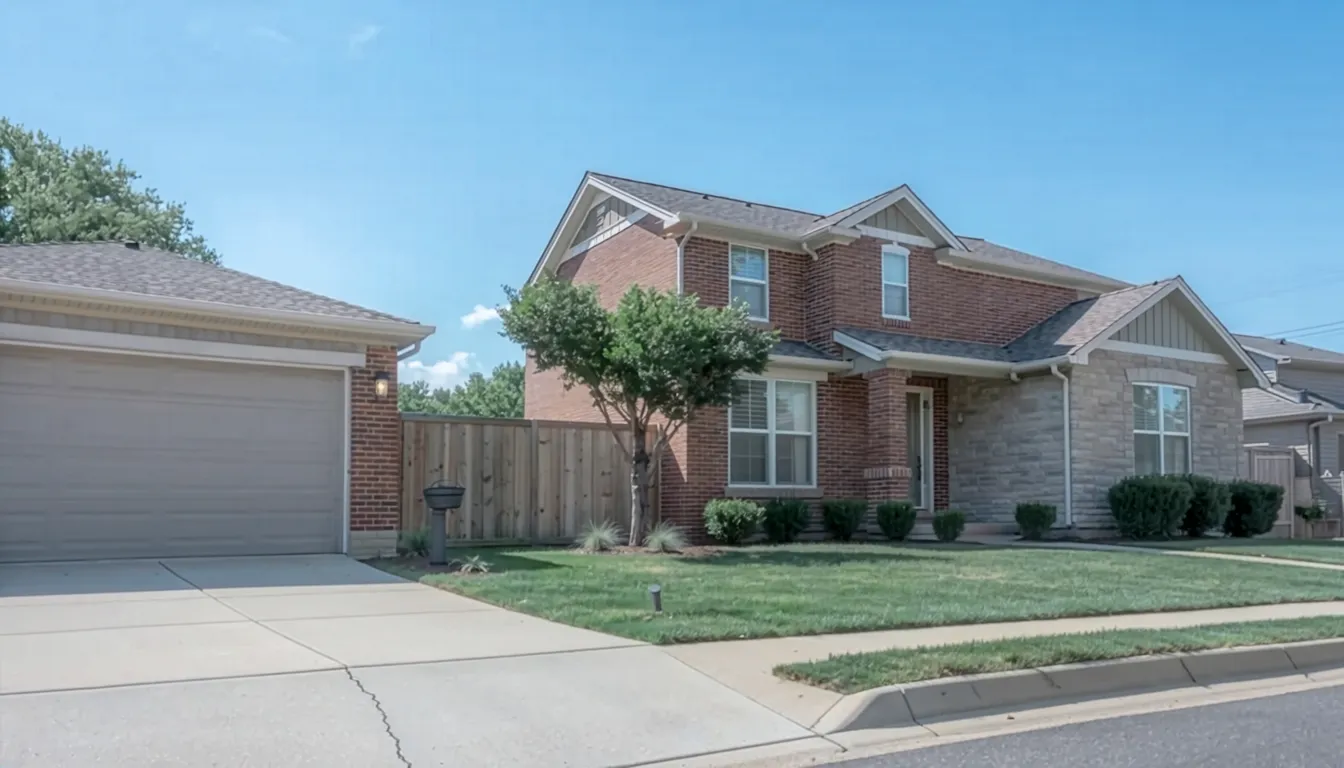
The DFW suburbs have spent years absorbing population growth and new construction at a pace few metro areas can match. But in Burleson, a city in Johnson County about 20 minutes south of downtown Fort Worth, the market is splitting along a clear price line. Homes priced under $300,000 draw steady showing traffic, according to Matt Motley, a real estate agent with Texas Legacy Realty focused on Burleson and the surrounding Tarrant and Johnson County areas. Listings at $500,000 attract online views but little else.
“The $500,000 houses, they get looked at online, but that’s about it,” Motley says. “When you start looking at under 350, under 325, and especially under 300,000, the views go way up. The saves go way up. The showings go way up.”
That gap between price tiers is defining the Burleson market in 2026.
A Buyer’s Market Takes Shape
Inventory has climbed past four months, according to Motley – a level that tilts conditions in buyers’ favor. The buildup comes from two directions: new construction that kept pace with demand during the growth years, and existing homeowners listing properties they no longer need.
Motley says the combination of builder output and downsizing sellers has created a meaningful supply increase. “When you have new construction that’s probably kept up with demand, and then you also have homeowners who are wanting or trying to downsize, that inventory coming on the market as well makes for a decent amount of inventory,” he says.
The cooling is not confined to Burleson. Motley says the broader Texas market has slowed, driven largely by interest rate movement. A recent rate climb of roughly half a percent or more spooked buyers, and the effect rippled quickly into seller expectations. “When interest rates climb like that, that scares a lot of buyers, which means it slows down for sellers,” he says.
New construction has also started to slow in response. Texas has been broadly pro-growth and pro-construction, Motley says, which allowed builders to build as fast as they could to match demand. With that demand now cooling, builders are pulling back to match the lower pace.
The Rate Lock-In Problem
One of the structural challenges for both buyers and investors in Burleson is that many homeowners have no financial reason to move. Motley points to the refinancing wave of 2020 and 2021, which left large numbers of owners with sub-3% mortgage rates. He cites a statistic he encountered recently suggesting roughly four out of every ten homes nationally carry no mortgage at all, and notes the Burleson market may skew even higher.
The result is a market where the typical seller is not choosing to sell – they are being pushed by a life event. “You’re looking for that motivated seller who needs to sell and needs to sell quick,” Motley says. “Death, divorce, job transfer, things like that.”
For sellers who merely want to test the market, the outcome has been less favorable. Motley references 2025 NAR data indicating that over 70% of home sellers nationally completed two price reductions before closing a sale. He believes that figure is a reasonable approximation of what Burleson experienced, and notes it does not account for additional concessions buyers are negotiating on top of those reductions.
His advice to sellers without urgency is direct: don’t list. “If they don’t need to sell their house, don’t list your house for sale right now,” he says. Selling requires keeping the house show-ready at all times, absorbing price cuts, and often agreeing to concessions – a process that rewards only those who genuinely need to move.
What’s Drawing Families South
The primary buyer in Burleson remains families – not investors, not first-time buyers in the traditional sense, but households upgrading from a starter home. A second or third child, a need for more square footage, or a job relocation into the DFW area are the common triggers Motley sees.
He describes the city’s appeal in straightforward terms: the ratio of what buyers get for their money relative to proximity to Fort Worth. “I don’t know that there is a better area that balances location with value,” he says. Schools rate above average, and the city’s Old Town district has become a draw, with live music at restaurants on weekends, regular community events, and a farmer’s market at different times throughout the year.
On the sell side, the representative transaction is a couple whose children have left home, sitting in a four- or five-bedroom house they no longer fully use. Motley is currently listing a home in his own neighborhood fitting that description – owners moving out of state to be closer to aging parents.
Motley says the market is behaving consistently across Burleson’s neighborhoods. No particular pocket stands out as significantly outperforming or underperforming the broader area.
What Patience Looks Like for Investors
For investors willing to deploy capital into Burleson, Motley’s guidance centers on patience and volume. Writing offers aggressively is necessary because most homeowners sitting on low-rate mortgages will simply decline. The opportunity exists among the small subset of genuinely motivated sellers – but finding them requires persistence and a willingness to absorb repeated rejections.
Motley notes he has investment properties himself and understands what investors need in terms of return on investment, monthly cash flow, and appreciation. But most investor activity in Burleson happens off-market, which means the deals that do surface through traditional channels are competing with a large pool of unmotivated owners.
Looking ahead, Motley expects the next three to five years to be uneventful. “I don’t think we’re going to see another 2020 or 2021,” he says. “I think we’re probably going to see 6 to 7% interest rates and it’s going to be boring.” The deals that do happen will come from life events forcing sales, not from broad market momentum – a steady, low-volume environment where the investors who write the most offers will find the most opportunity.
About the Expert: Matt Motley is a real estate agent with Texas Legacy Realty, covering Burleson, Texas, and the surrounding Tarrant and Johnson County areas.
This article is based on information provided by the expert source cited above. It is intended for general informational purposes only and does not constitute legal, financial, or real estate advice. Readers should conduct their own research and consult qualified professionals before making any real estate or financial decisions.