Many apartment owners started 2026 planning to refinance once interest rates came down. With the year almost over, that plan no longer holds. Rates have moved the other way, and owners with maturing loans face decisions they had expected to avoid.
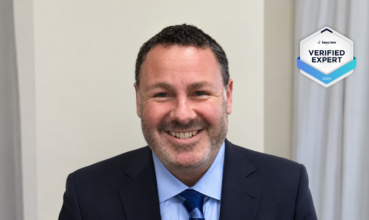
Ron Kutas, Chief Executive Officer of OneWall Communities, a workforce-housing owner-operator that also provides 3rd party management services, has a direct message for those owners. “The plan you had in January isn’t a plan anymore,” he says. He points out that the Fed raised rates in September and that two members wanted another increase in October.
Choosing a path
Kutas’s advice is to re-underwrite at today’s rates, assume they stay there or rise, and then choose a path while there is still time. The options are adding capital, bringing in a partner, restructuring with the lender, or selling. Timing affects how lenders respond. In his experience, lenders work with owners who come early with a real plan and are much less patient with owners who arrive at maturity still hoping for relief. “Waiting is a decision too, and usually the most expensive one,” he says.
A more honest negotiation
Kutas says conversations with distressed sellers have changed over the past six months. Owners used to ask for help bridging the gap until rates fell. Now they ask what their real options are. Because waiting has become a worse alternative for sellers, the gap between their asking prices and what buyers will pay is starting to narrow. Lenders are also more involved and are pushing for resolution. In these situations, he says, OneWall steps in first as the operator to stabilize collections and occupancy, and only then discusses a recapitalization, a management takeover, or an acquisition.
The exit cap rate
Asked which assumption still most often distorts owners’ projections, Kutas points to the exit cap rate. Many models assume a property will sell at a better cap rate than the one it was bought at, or better than today’s rate. That one line quietly carries the whole return. “If the deal only works because someone pays more for it in three years, it doesn’t work,” he says. His test is to model the exit at today’s cap rate or worse and see what return remains.
Returns from operations
When refinancing can’t rescue a deal, Kutas argues, the value has to come from how the property is run. He contrasts this with the typical fee-based manager, who is paid on revenue and manages to a budget. The situation calls for someone who looks at every line the way an owner would: every unit turn, every delinquent account, every vendor contract. In this market, he says, the gains come from collections, turn times, retention, and controlling expenses, not from a refinance.
With rates holding and more loans reaching maturity, the owners best placed for the next phase, in Kutas’s view, are the ones who “treat their operations as the only lever they actually control.”
About OneWall Communities
OneWall Communities is a vertically integrated property management and investment firm specializing in workforce housing. With 15 years of owner-operator experience, OneWall has evolved to offer institutional-level 3rd party management services that combine operational excellence with a community-first approach. For more information, visit onewallcommunities.com.
This article is intended for informational purposes only and does not constitute legal, financial, or investment advice. The views and opinions expressed herein reflect those of the individuals quoted and do not represent an endorsement of any company, product, or service mentioned. Readers should conduct their own due diligence and consult qualified professionals before making any investment decisions.