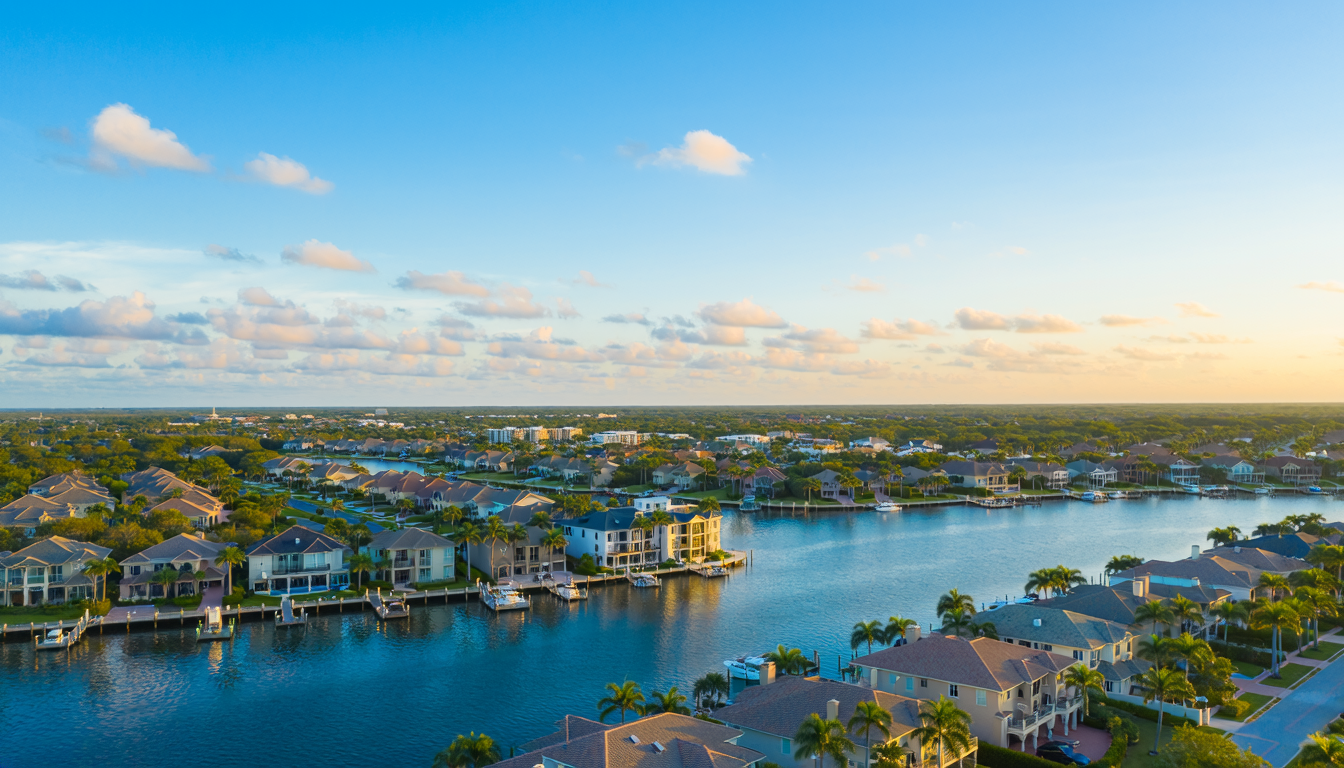
Roughly half of home purchases on Florida’s Treasure Coast, the stretch of Atlantic shoreline between Palm Beach and the Space Coast, close in cash, according to local agent Kim Braunstein of ONE Sotheby’s International Realty. Florida Realtors data bears that out in Martin County, where 451 of 953 closings in the second quarter of 2026 were cash.
That split is shaping which homes sell. Luxury listings keep moving while mortgage-dependent buyers at the median price point and below hold back. Braunstein says sellers in that tier who don’t adjust their pricing strategy risk stalling alongside them.
Braunstein’s Treasure Coast service area covers Martin County, St. Lucie County, and northern Palm Beach County. She puts the local median sale price at around $600,000, in line with Martin County’s single-family median of $610,000 for 2026 through July. She describes a financing-driven standoff at and below that price point.
“Homes that are priced right around that median and below are the ones that are a challenge right now in our market,” says Braunstein, a global real estate advisor with ONE Sotheby’s International Realty. “Typically at the higher price points, people come into our market and they buy them with cash.”
Where the Buyer Pool Breaks
Cash also explains the speed gap: Braunstein says luxury homes are currently selling faster than homes priced at the median. Closer to the median, more buyers rely on financing, and many are holding out.
Braunstein says many of those buyers still measure today’s rates against the two, three, or four percent that was common during the pandemic, and anything near current levels looks unacceptable by comparison. “People are a little confused about what’s good, what’s safe, what’s normal,” she says. “There’s this feeling that now’s not the time because the interest rates are too high.” Freddie Mac’s weekly average for a 30-year fixed mortgage stood at 7.11% as of Nov. 12, 2026.
Braunstein says that hesitancy has thinned the active buyer pool at and below the median. Countywide figures look healthier: Martin County’s single-family inventory and time to contract have both fallen over the past year, according to Florida Realtors data, though those numbers aren’t broken out by price point. Braunstein points to one of her current listings as an example: a home built in 2024 in a gated community, priced at $485,000. She describes it as flawless and in a very desirable community, and attributes its slow activity to the financing environment rather than the property itself.
Concessions and Pricing
For homes in the rate-sensitive tier, Braunstein advises sellers to give back a portion of their sale proceeds as a concession, which buyers can apply toward a rate buydown. For that $485,000 listing, she recommended $10,000.
Beyond concessions, Braunstein’s central message to sellers concerns launch pricing. The traditional approach of listing above the expected sale price to leave room for negotiation no longer works in this environment, she argues.
“Buyers in this market, whether they’re buying with cash or mortgage, are hyper sensitive to overpricing,” she says. If a home feels priced like its own private island, she adds, buyers simply skip it and tell their agents to move on.
The alternative is an approach Braunstein calls “precision pricing”: setting the list price strictly on sold comparables and, if anything, slightly below rather than above. Her reasoning is that a home’s initial list price determines its traffic volume, not its eventual sale price. With a diminished buyer pool, early foot traffic becomes the priority.
Condo Confidence Returning
Florida’s condo market went through a period of turmoil after the Surfside collapse and the regulatory reforms that followed. New maintenance and reserve requirements forced associations to fund deferred work, pushing fees up and making some units unaffordable for existing owners.
Braunstein’s read is that the condo correction on the Treasure Coast is largely behind it. In her view, the reforms made buildings safer, even as higher fees forced some owners to sell. Recent sales back up part of that view. Martin County condo and townhouse sales rose 18.9% year over year in the second quarter of 2026, though prices have yet to fully recover, with the median slipping 4.7% to $255,000.
Martin County’s comprehensive plan has capped buildings at four stories since 1984, and Braunstein credits that limit with sparing the county’s condo buildings the scale of repairs seen in taller towers. “The cleanup and the catch-up work on those four stories and less buildings was not anything like the 14 stories or the tall skyscrapers,” she says.
Those buildings still fall under the state’s milestone inspection and reserve requirements, which apply at three stories and up. For buyers in this segment, her advice is to read the full 12 months of HOA meeting minutes during the due diligence period, look for unresolved maintenance items, and understand how the association makes decisions.
Who’s Moving to the Treasure Coast
Braunstein describes two main groups of buyers. The first comes from Florida’s own southern counties, drawn by lower density, what she calls excellent schools, and lower prices. She estimates that waterfront property costing $3 million on the Treasure Coast might run $10 to $15 million in the counties to the south.
The second comes from the northeast (Connecticut, New York, New Jersey, and points north), including many downsizers looking to escape winter. Staying on the eastern seaboard, she notes, makes trips back home easier for buyers who split their time.
A more recent stream has emerged from Florida’s own west coast, where hurricane exposure has prompted some buyers to look east instead. “They had intended maybe to head to the western side of the state of Florida, but did a detour when they saw these weather patterns,” Braunstein says. The Treasure Coast isn’t free of hurricanes, she notes, but it is less exposed than communities on the Gulf.
Those buyers are keeping demand alive across the region. But for homes at and below the median, many buyers and sellers are waiting on rates. Braunstein’s view is that the decision should rest on personal circumstances, not market timing. “The best time for someone to buy or sell is when the time is right for them,” she says.
About the Expert: Kim Braunstein is a global real estate advisor with ONE Sotheby’s International Realty on Florida’s Treasure Coast, where she and the Braunstein Team work with buyers and sellers across Martin County, St. Lucie County, and northern Palm Beach County.
This article is intended for informational purposes only and does not constitute legal, financial, or investment advice. The views and opinions expressed herein reflect those of the individuals quoted and do not represent an endorsement of any company, product, or service mentioned. Readers should conduct their own due diligence and consult qualified professionals before making any investment decisions.