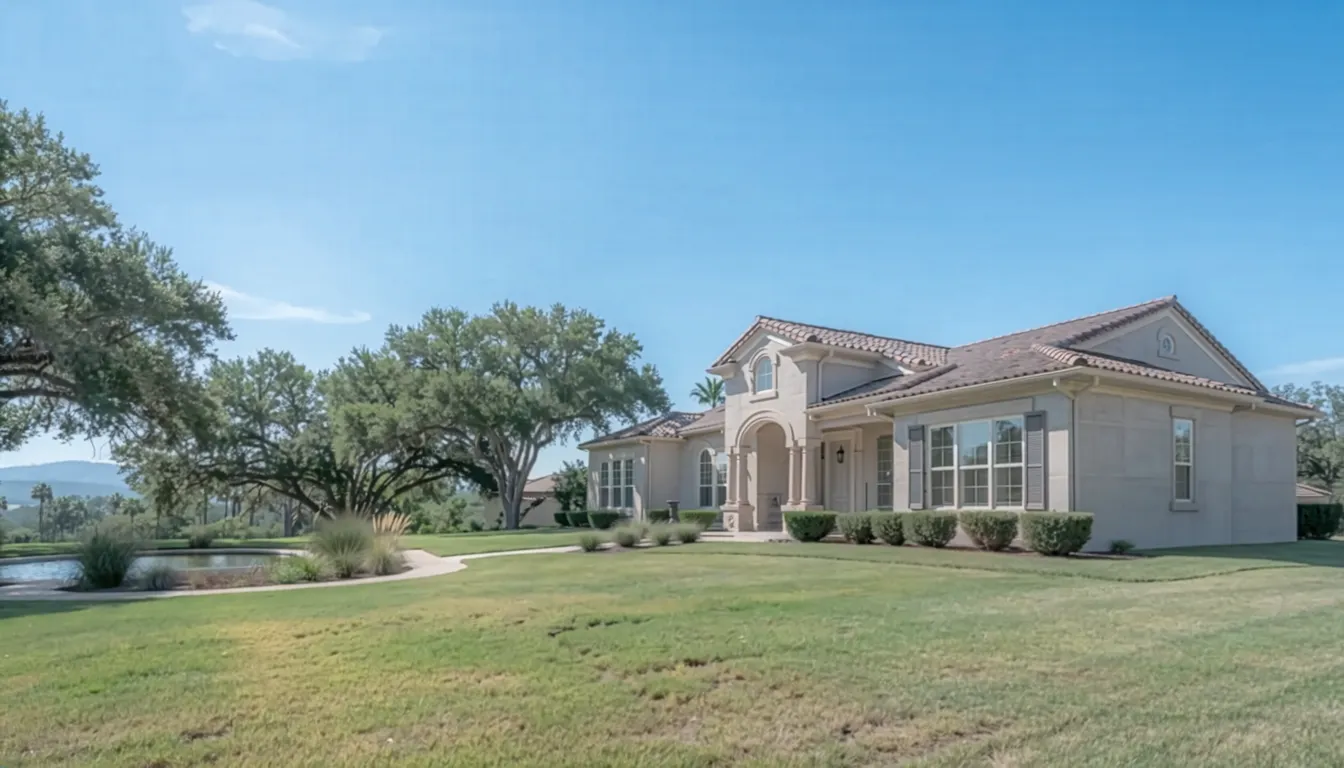
Most luxury submarkets in the Dallas-Fort Worth metroplex have felt the drag of elevated interest rates and longer days on market. Westlake, a small municipality west of Fort Worth where most homes sit on an acre or more, has not followed that pattern – and the reason has less to do with housing fundamentals than with corporate hiring decisions made hundreds of miles away, according to Andra Beatty, a broker with more than 20 years of experience in the Fort Worth market.
Goldman Sachs recently announced it would relocate most of its corporate staff to the Westlake, Dallas, and Fort Worth area. That move follows years of campus buildout by Fidelity Investments and Charles Schwab, both of which already operate large facilities accessible from Westlake without getting on a freeway. The Texas Stock Exchange, now located in Dallas, is roughly a 30-minute drive away. The result is a concentration of financial-sector employers within a tight radius – and a steady stream of executive-level buyers whose housing budgets start well above the regional median.
Beatty says that proximity is the central draw. “If you live in the town of Westlake, you literally don’t have to get on a freeway to get to these large investment company campuses,” she says.
Cash Is Standard and Concessions Rare
The Westlake luxury market operates differently from the broader DFW landscape, where buyer concessions and rate buydowns have become common negotiation tools. At the luxury tier, most transactions are cash. Beatty says she sees far more cash offers than financed ones – an unusual pattern for the Texas market, but consistent with the buyer profile. Many purchasers are relocating from higher-cost states like California and New York, arriving with significant equity from home sales in those markets.
That dynamic limits the relevance of interest rate discussions. “The only discussion is sales price, typically,” Beatty says. The concession strategies that work in markets below the luxury threshold – seller-funded rate buydowns, closing cost credits – do not apply when there is no loan to subsidize.
The median home price in Westlake is approximately $3.8 million, up 2% from the prior year, according to Beatty. Nine homes sold in the last 60 days, a pace she considers healthy for a community of this size and price level. She characterizes the market as still favoring sellers, with low inventory keeping pressure on pricing. Some seasonal price reductions have appeared, but Beatty attributes them to normalization rather than a shift in leverage. “I wouldn’t necessarily call it a buyer’s market at this point,” she says.
Condition Is the Dividing Line
What separates properties that sell from those that sit is not price tier or neighborhood – it is presentation. Beatty says homes that show well, whether occupied or vacant, consistently outperform. Buyers at this level expect a near-new appearance: unused fireplaces, pristine outdoor kitchens, clean landscaping, and open floor plans suited to entertaining.
Homes that lack staging or show signs of heavy use linger. Beatty notes that some unstaged or vacant listings in the area have exceeded 180 days on the market, with a few stretching past 300. In a community where new construction sells quickly, that gap in presentation becomes the deciding variable. “Most people that I find, they really truly are looking for the home that is the most pristine, beautiful, clean,” she says.
In Vaquero, one of Westlake’s more established neighborhoods, homeowners are renovating interiors to keep pace with buyer expectations – a sign that even in stable communities, the standard for condition keeps rising.
Quail Hollow Is Setting the Pace
Among Westlake’s several neighborhoods – Vaquero, Barcelona, Granada, Entrada, Glenwick, Terrabella, and the Knolls at Solana – Quail Hollow stands out. Beatty says it is outperforming all others, with active construction and rapid absorption of finished homes. Lot prices there have risen from around $500,000 five years ago to between $1 million and $2 million for a single acre.
“There is no slowing down in Quail Hollow,” Beatty says. Two homes just under $10 million are currently available, with several more under construction. The neighborhood attracts buyers from sports, media, and investment banking – a profile that aligns with the broader executive-relocation pipeline feeding the area.
The other communities remain stable. Vaquero, Barcelona, Entrada, and Granada all show consistent sales activity without the same upward velocity, which Beatty attributes to their more established character rather than any sign of weakness.
What’s Sustaining Demand
Beyond corporate proximity, the area’s appeal to relocating executives rests on a handful of practical factors. Westlake Academy, a K-12 International Baccalaureate school, is a draw for families that adjacent communities cannot match. DFW Airport is minutes away – a consideration Beatty says matters more than almost anything else for executives who travel frequently. “They want to be back home and have a lifestyle and a comfort in a place that just feels home,” she says.
The area’s walkability, trail systems, and proximity to shopping and medical resources reinforce its draw for executives who spend significant time traveling and want a low-friction daily routine when they are home. Beatty says the community’s design – lakes, trees, ponds, and streams woven through the neighborhoods – contributes to the sense of retreat that these buyers prioritize.
Builders in Westlake’s active communities are turning homes quickly after completion, and Beatty sees no sign of that pipeline slowing. “They are continually building new homes in these Westlake communities, and they’re not staying on the market that long after they’re built out and finished,” she says. As long as the corporate relocation pipeline continues feeding executive buyers into the area, Westlake’s position as a seller’s market is likely to hold – even as neighboring communities contend with longer days on market and softening prices.
About the Expert: Andra Beatty is a broker covering Westlake and the Fort Worth, Texas area, with more than 20 years of experience in the Fort Worth market.
This article is based on information provided by the expert source cited above. It is intended for general informational purposes only and does not constitute legal, financial, or real estate advice. Readers should conduct their own research and consult qualified professionals before making any real estate or financial decisions.