

Born from personal frustration with international property investment, Yuval Golan is building what he calls the “Amazon checkout plus Klarna for real estate.” As founder and CEO...

Building Better Homes: A Corporate Architect's New Vision for Construction

Written by:
Date:
29 Jan 2025
Share via Facebook

Share via Linkedin

Share via X

Copy to clipboard


When Carl Nelson helped build his family’s house on three acres outside Seattle at age 14, he couldn’t have predicted how that experience would shape his future vision for residential construction. “I was just the labor grunt,” Nelson recalls with a smile, “but I saw the whole process. I was intrigued by it.”
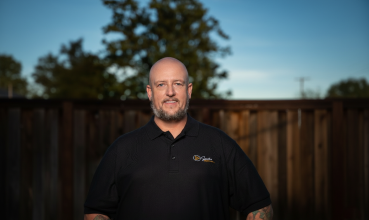
As founder of Visual, Nelson is advancing residential construction by bringing enterprise-level efficiency to an industry dominated by small operators. His unique approach draws from an extensive career path that spans from designing high-end Seattle residences to managing nationwide rollouts for corporate giants like Starbucks and McDonald’s.
“In the residential world, it’s hundreds of small businesses that dominate construction – just a guy in his truck and his buddy. That’s 70% of all construction companies out there,” Nelson explains. “Everything in commercial is well thought out, planned ahead, detailed. It’s more expensive to navigate that world, but there’s a process about it.”
This contrast between residential and commercial construction approaches inspired Nelson’s vision for Visual. The company has developed a structured four-step process – Start, Visualize, Detail, and Build – designed to make home construction more systematic and efficient for homeowners while maintaining the personal touch that residential projects require.
One of Visual’s key innovations: taking purchasing responsibilities away from builders, allowing them to focus solely on construction. “If builders just stop buying stuff and just show up and build, they can build one more house a year,” Nelson explains. “There’s more money in that for them than using their skill and talent shopping for materials.”
The company’s approach addresses common challenges faced by renovation clients. “Most homeowners don’t know where to start or how much it will cost to renovate their home,” Nelson notes. His team specializes in guiding clients through each phase, from initial design concepts to final construction oversight.
While changing established industry practices presents challenges, Nelson sees encouraging progress. Several major projects are in the permitting phase, and the company is developing educational tools to help homeowners better understand the construction process.
For Nelson, who learned to skateboard at 44 during the pandemic pivot that led to founding Visual, the mission extends beyond improving construction efficiency – it’s about creating freedom through structure. Drawing from his corporate experience with systematic approaches, he’s working to help homeowners and builders overcome traditional inefficiencies in residential construction.
“Building new things should be fun,” Nelson insists. With Visual’s growing portfolio of successful projects and satisfied clients, he’s demonstrating that efficiency and enjoyment in home construction can work together to advance the industry.
Similar Articles
Explore similar articles from Our Team of Experts.

Perspectives, Residential Real Estate, Property Technology, Real Estate Services, Market Analysis & Policy, Industry News
Industry expert argues rising costs are forcing innovation in transaction fee structures. The convergence of record-high home prices and mortgage rates has created an unprecedented affordabi...

Industry Profiles, Commercial Real Estate, Property Technology, Market Analysis & Policy, Top Articles
In New York City’s commercial real estate world, few names carry as much weight as Bob Knakal. Having personally brokered the sale of over 2,300 buildings valued at more than $22 billi...