
A property that sits outside a designated FEMA flood zone is not necessarily free of flood risk. It may simply be in territory nobody has formally assessed yet. The United States has roughly...

Midwest Multifamily Development Finds Opportunity Where Institutions Fear to Tread

Written by:
Date:
23 Apr 2026
Share via Facebook

Share via Linkedin

Share via X

Copy to clipboard

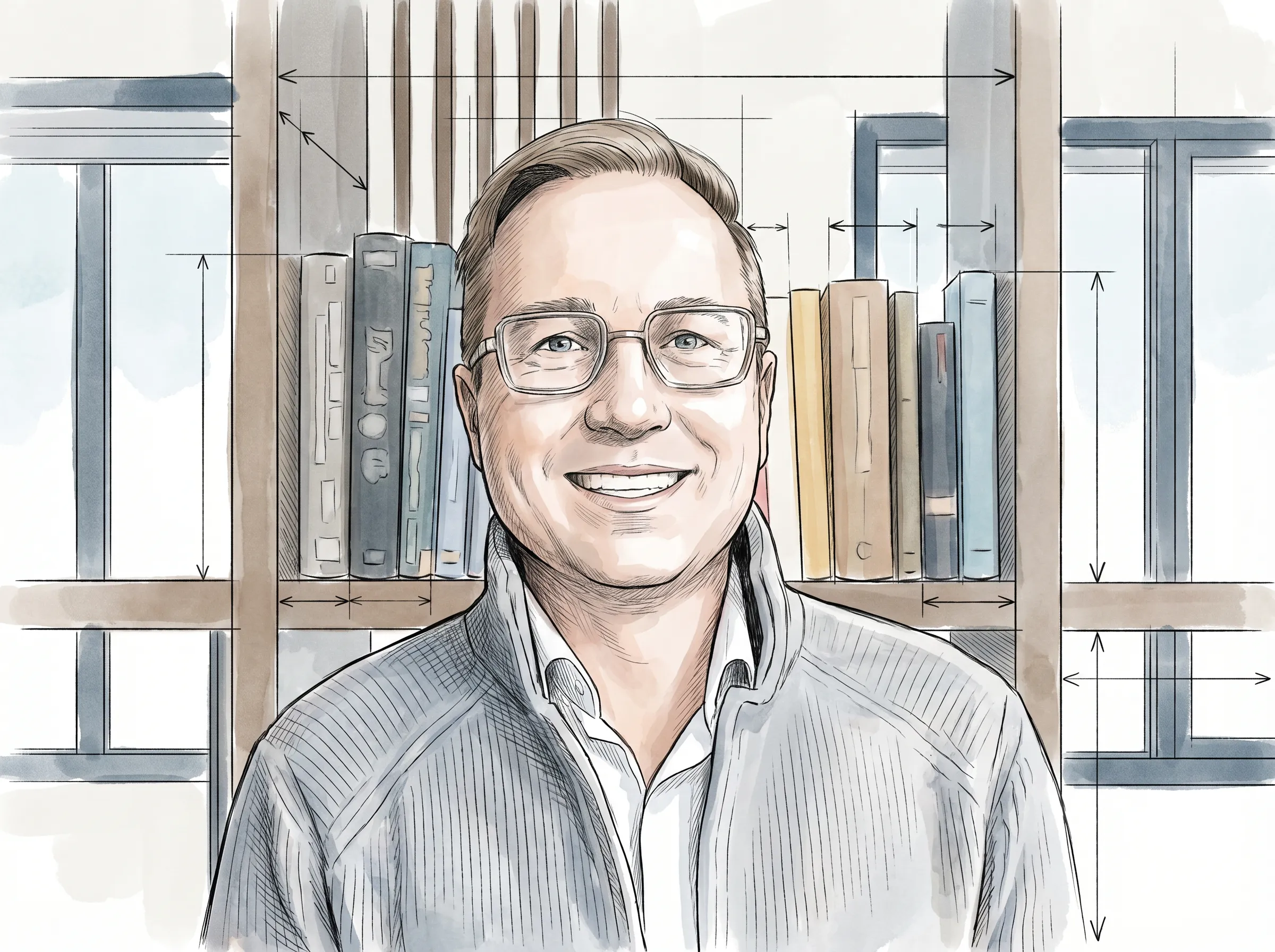
As major real estate markets contend with oversupply and declining returns, a growing set of developers is finding success in overlooked secondary markets across the Midwest. Dusten Hendrickson, founder of Mailbox Money Real Estate & Private Equity, is among those capitalizing on these conditions by building workforce housing where large institutional investors rarely look.
The Midwest Advantage
After initial expansions into southeastern states and Phoenix, Hendrickson returned to the Midwest for practical reasons. He found that he could build more affordably, achieve similar rents, and attract more reliable tenants. “I can build for cheaper, build better, and get a better tenant in the Midwest,” he says.
The benefits extend beyond construction costs. Hendrickson notes lower bad debt, fewer concessions, and less competition compared to overheated markets elsewhere. “In each area of the country, people act a little differently. I knew the people here better.”
This local understanding has proven valuable as market conditions have shifted. Mailbox Money now operates in Sioux Falls, South Dakota, with expansion underway in Rochester, Minnesota, and Ankeny, Iowa — markets often overlooked by institutional capital. Hendrickson points out that many of the hottest markets of 2020 are now saturated. “Where are the good markets? Well, they’re mainly in the Midwest. They’re mainly in overlooked areas where people haven’t built or haven’t invested.”
Design as Competitive Advantage
Mailbox Money does not compete solely on price. Instead, the company emphasizes “wellness design,” focusing on large windows, high-quality finishes, and carefully planned spaces with a Scandinavian-inspired aesthetic — white-on-white palettes with warm wood accents. “We have large windows, very well-designed spaces. Everything you grab is high quality,” Hendrickson says. Each unit includes features such as high-end countertops, modern appliances, black hardware, bathroom windows, an in-unit washer and dryer, custom closets, and floor-to-ceiling windows.
Site selection is also strategic, with properties located near parks and natural areas. “We put them next to nature. So you have a symbiotic feel with nature. You feel better when you live in a place, you want to stay there longer,” he explains.
This design-driven approach distinguishes Mailbox Money in secondary markets. “We almost have no competition, because our design is so nice, there’s nobody really building the same thing we’re building, and if they are, they’re usually almost twice as expensive.”
Systematic Development Process
Mailbox Money operates as a fully integrated development firm, managing land acquisition, construction, leasing, and asset management. The company focuses on sites already zoned and ready to build, avoiding the delays of raw land entitlement.
Construction proceeds in phases to maximize efficiency and cash flow. “We build one building at a time,” Hendrickson explains. “Each phase jumps right. So we put the foundations in, and then the framer starts behind, and then the framer moves on, and the plumber comes in.”
This approach delivered strong results in a recent Sioux Falls project. After acquiring land three years ago, the 12-building development reached 95% pre-leasing and 80% occupancy by month 20. “The whole thing was fully leased. It’s already stabilized, and it’s already in the black.”
Financial performance has been strong. Institutional investors who contributed $10 million to the project are receiving about $1 million in cash-out refinancing proceeds, with a projected annual cash flow of $700,000 to $800,000.
Adapting to Market Realities
Over the past year, Mailbox Money has adjusted its underwriting to reflect changing market conditions. “We used to always underwrite for rent increases, because that’s what it was like for 20 years,” Hendrickson says. “Now they’re plateauing or even coming down a little bit. So we’re underwriting for just flat rents with very little growth.”
Despite lower rent growth projections, Hendrickson believes the fundamentals remain strong in the Midwest. Interest rates have pulled back from their peak, but he expects borrowing costs to remain elevated. “It’s looking like interest rates might stay high for a long time, and they might never come down,” he says.
The financing environment has stabilized for Mailbox Money’s model. The company typically works with community banks in cities with workforce housing needs, securing construction-to-permanent loans at about 6% interest, with 30-35% equity requirements and five-year terms.
Scaling Challenges and Opportunities
Currently building 500-600 units per year, Mailbox Money aims to reach 1,000 annually. “We just have to raise a little more equity,” Hendrickson explains. “If we had one institutional partner that could write a $50 million check, we’d get pushed over the hump.”
The groundwork for expansion is in place. “We have the land identified that we can purchase. We have really good relationships. Our products are all full, and they’re occupied, and they’re stabilized almost immediately after the construction crew pulls off.”
Target markets for geographic growth include Kansas City, Indianapolis, and Columbus, where high prices for existing inventory create opportunities for new construction. “Any market that’s really expensive to buy in is a good market for us to build in,” Hendrickson says.
Market Outlook and Strategy
Looking ahead, Hendrickson expects ongoing economic uncertainty but maintains that steady execution is key. “You cannot adjust everything according to what might happen. You always have to do business as if nothing is really happening,” he advises.
This approach extends to fluctuations in the supply chain and material costs. Hendrickson notes that developers who continued building during recent disruptions fared better than those who paused operations.
The long-term outlook for Midwest multifamily remains positive, supported by persistent supply-demand imbalances. “You’ve got to be long-term, and you always have to be thinking you’re building for the future when money will be inflated,” he says. “Inflation is actually good for real estate anyway.”
Why This Matters Now
With rising interest rates, tighter lending, and a glut of inventory weighing on coastal and Sunbelt markets, the Midwest stands out for its relative stability and untapped demand for workforce housing. Developers like Mailbox Money are leveraging local expertise, efficient construction, and patient capital to fill a gap that institutional investors have largely ignored.
For investors and developers seeking alternatives to oversaturated markets, the Midwest model demonstrates how focusing on overlooked regions, disciplined execution, and thoughtful design can deliver strong returns — even as the broader industry faces headwinds. As national conditions remain uncertain, these secondary markets offer a blueprint for sustainable growth grounded in real housing needs and long-term fundamentals.
About the Expert: Dusten Hendrickson is the founder of Mailbox Money Real Estate & Private Equity, where he focuses on developing workforce housing projects across secondary Midwest markets through an integrated, construction-driven development model. His perspective highlights how disciplined execution, design-focused multifamily construction, and a shift toward overlooked regions like Sioux Falls, Rochester, and Ankeny are creating durable opportunities amid broader national real estate headwinds.
This article is based on information provided by the expert source cited above. It is intended for general informational purposes only and does not constitute legal, financial, or real estate advice. Readers should conduct their own research and consult qualified professionals before making any real estate or financial decisions.
Similar Articles
Explore similar articles from Our Team of Experts.