

The key to successful hostel operations lies in systematically obsessing over guest experience, not just providing affordable beds, according to Nathan St Cyr, Co-founder of Howzit Hostels, ...

Solar Construction Automation and Robotics Drive U.S. Utility-Scale Project Efficiency

Written by:
Date:
25 Mar 2026
Share via Facebook

Share via Linkedin

Share via X

Copy to clipboard

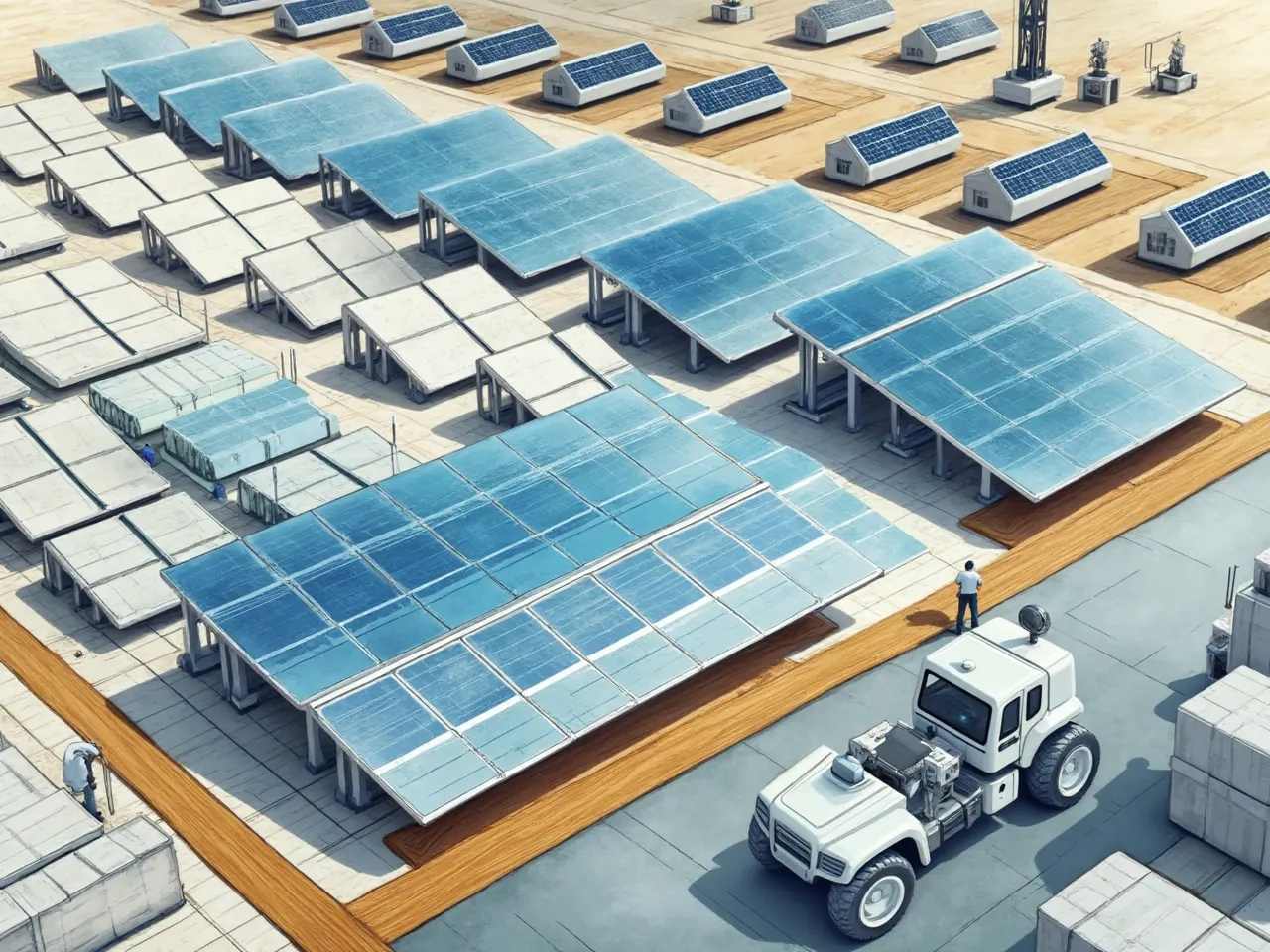
The solar construction industry is moving away from labor-intensive, craft-based methods toward a model that resembles outdoor manufacturing, with automation and robotics playing a growing role. Ryan Johnson, Vice President of Solar and Energy Storage at Clayco, says the repetitive nature of solar installations makes them well-suited for autonomous systems handling core tasks such as surveying, layout, equipment distribution, and component installation.
Johnson explains that solar projects involve repeating the same tasks thousands of times, making them ideal for automation. “Solar is very repeatable, so it lends itself to a more autonomous installation, like an outdoor manufacturing-type construction facility,” he says.
This transition is driven by more than a desire to reduce labor costs. As the industry prepares to deploy hundreds of gigawatts of new solar capacity over the next decade, speed and consistency are essential. Automation is becoming a key strategy for meeting project deadlines and addressing ongoing workforce shortages.
Automation Handles Repetitive Tasks
Johnson says automation and robotics in solar construction are focused on specific, high-volume activities. Surveying and layout, which set the precise locations of solar arrays, are increasingly handled by autonomous equipment that delivers faster, more accurate results than manual crews. Moving panels, inverters, and other components across large sites is also being automated, reducing time and labor needs.
Installation of solar components is another area where automation is advancing. Mounting panels, connecting wiring, and installing trackers are highly repetitive tasks that follow standardized procedures, making them well-suited for robots and automated systems that can operate at scale.
“Innovation is continuing to change our industry, and automation in how we build is something all the large EPCs, including Clayco, will be deploying to maximize how efficiently we can build these projects,” Johnson says.
The aim is not to replace human workers entirely but to shift them to higher-value roles while automating repetitive, physically demanding jobs. This mirrors trends in manufacturing, where automation has increased output and moved workers into roles requiring technical skills and oversight.
Two Decades of Efficiency Gains
Johnson has overseen 10.5 gigawatts of solar and 4.5 gigawatt-hours of battery storage during his 19-year career and has witnessed dramatic improvements in construction efficiency. Early in his career, building a 20-megawatt solar project took nine to twelve months. Today, projects of 250 to 300 megawatts are completed in the same timeframe, a tenfold increase in scale without extending the construction schedule.
Johnson attributes these gains to advances in technology and construction methods. Solar modules have become more powerful and easier to install, while inverters and tracking systems are more reliable and require less on-site adjustment. Construction teams have developed standardized processes, allowing them to build rapidly and at scale.
Johnson says further efficiency improvements depend on automation. With the industry facing the challenge of deploying hundreds of gigawatts of new capacity, automating installation will be critical for meeting deadlines and managing labor shortages.
Automation Addresses Workforce Shortages
The construction industry faces a shortage of skilled trades workers, and solar construction is no exception. As demand for renewable energy projects grows, the available workforce cannot expand quickly enough through traditional training and apprenticeship programs.
Automation addresses this problem in part by taking over the most repetitive and physically demanding tasks, reducing the number of workers needed per project. This frees the existing workforce to focus on roles requiring judgment, problem-solving, and technical expertise.
Clayco is also investing in workforce development through an apprenticeship program to train new construction professionals, part of the company’s broader effort to grow, mentor, and train workers for the construction trades.
“One of the challenges in the construction industry is construction professionals and skilled trades. How can we be more proactive in bringing those new people into the industry, training them, empowering them to grow in their careers, and building our projects across the country?” Johnson says.
Combining automation with workforce development reflects an understanding that scaling solar construction requires both technological innovation and investment in people. Automation can boost productivity, but skilled professionals are still needed to manage complex projects and ensure quality.
Efficiency Rivals Equipment Cost
For the past two decades, falling prices for panels, inverters, and related equipment have fueled the solar industry’s growth. Lower costs have made solar the most economical source of new electricity generation in many markets, driving rapid adoption and large-scale deployment.
As the industry grows, the ability to build projects quickly and reliably is becoming just as important as equipment prices. Construction efficiency, enabled by automation, will determine how much solar capacity can be installed in a given period.
“The technological advances in solar modules, inverters, and trackers have improved exponentially over the last few years, and that’s continued to help drive down the cost of solar and make it a real competitor in the nationwide generation space,” Johnson says.
As Clayco and other large engineering, procurement, and construction firms implement automation, the industry will better understand the true efficiency gains possible and the limits of automation in outdoor construction. These developments will shape how future solar projects are built and how quickly the industry can meet the demand for clean energy.
Automation’s Role in Scaling Solar
The push for automation in solar construction is a direct response to the need for rapid, large-scale deployment of renewable energy. As timelines tighten and skilled labor remains scarce, automation offers a practical way to increase output without sacrificing quality or safety. Its success depends on balancing technological advances with continued investment in workforce development, ensuring human expertise remains central to building and managing the next generation of solar projects.
Similar Articles
Explore similar articles from Our Team of Experts.