
The commercial real estate industry has long struggled with a fundamental communication problem. While technology has improved nearly every aspect of business operations, the way complex dea...

Corporate Office Design Adapts to New Market Realities in Manhattan

Written by:
Date:
19 Jan 2026
Share via Facebook

Share via Linkedin

Share via X

Copy to clipboard

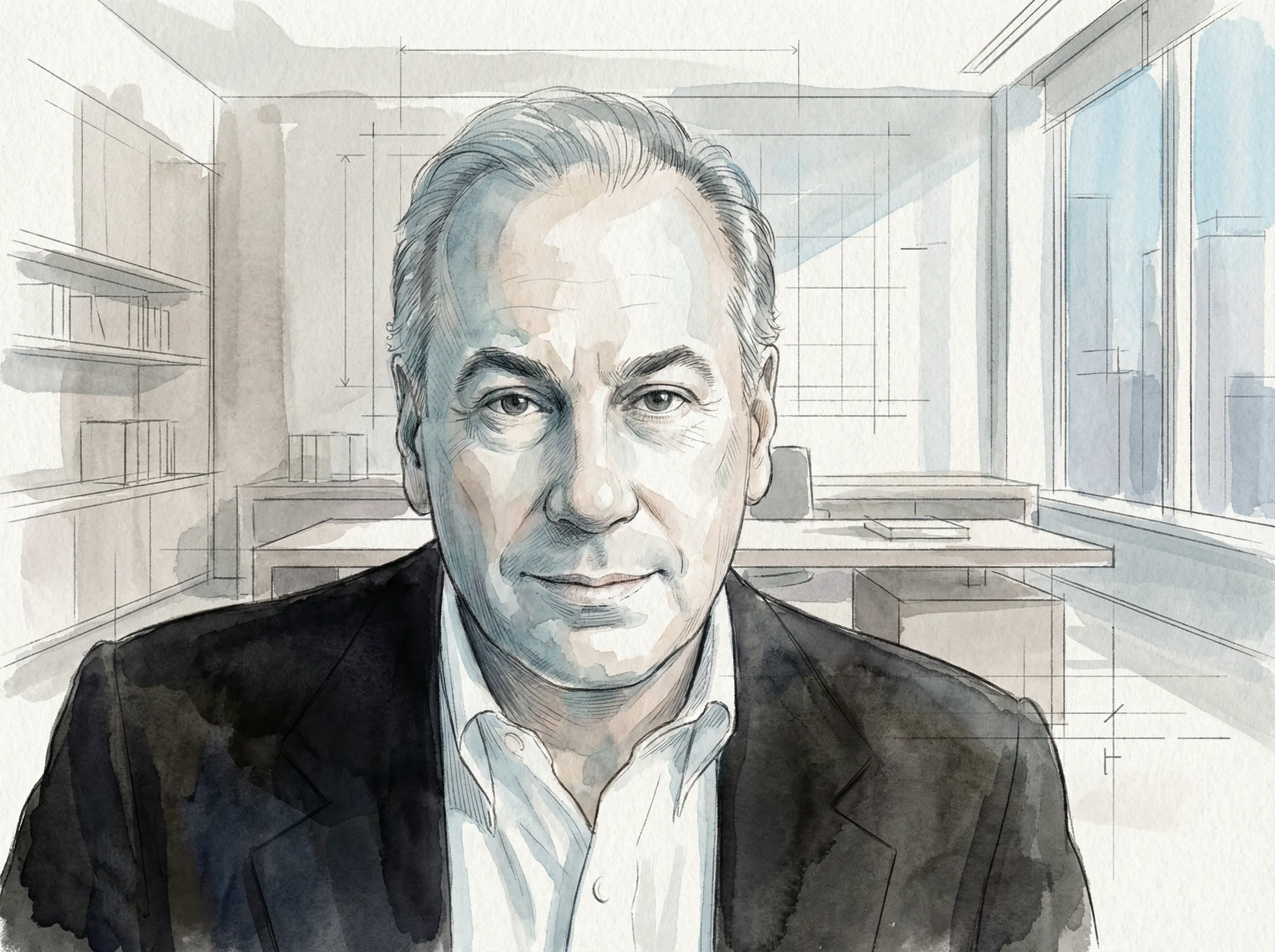
The Manhattan office market is undergoing significant changes as companies respond to post-pandemic workplace dynamics. Tenant improvement budgets and space planning requirements are evolving to meet new business priorities. Michael Rait, founder and president of BR Design Associates, has spent four decades designing corporate interiors in New York City and has seen firsthand how current market pressures are reshaping the industry.
A Four-Decade Perspective on Design Evolution
Rait began his design career in the 1980s after graduating from Parsons School of Design. He started with international nightclub projects, including Studio 54 in Barcelona, before shifting to corporate interiors, where he found his professional focus. “I decided that’s really where I like to focus,” Rait says of his move into corporate design.
Since its founding in 1985, BR Design Associates has grown into a firm of 20–25 employees serving three main client groups: large corporations seeking direct design services, landlords developing tenant spaces, and real estate brokers facilitating transactions. This broad client base has given Rait a detailed view of how market forces affect every part of the commercial real estate ecosystem.
Landlord Investment Strategies Reshape Tenant Improvements
One of the most significant changes Rait has observed is in landlord strategies for tenant improvements. Instead of just providing cash allowances, more property owners now offer turnkey build-outs to attract and retain tenants.
“We see a lot more of the turnkey type of things where the landlord is giving the incentive to the tenant to say, ‘We’ll build the space for you. This is our standard. This is the rent amount. This is what we’re going to do for you,” Rait says.
This approach reflects landlords’ recognition that high-quality tenant improvements are essential to stand out in a market with more choices. Higher standards have become common, especially in Class A buildings where premium rents justify enhanced build-outs.
“If it’s an A, A-minus building with high rents, it’s going to be a nice build-out,” Rait notes, pointing out that more basic improvements still prevail in lower-tier buildings.
Space Planning Defies Downsizing Predictions
While many predicted that remote work would lead to a lasting reduction in office space demand, Rait’s experience shows a more nuanced outcome. Some companies have reduced their footprints, but many are maintaining or even increasing their space, focusing on different uses.
“We thought there was going to be a reduction in square footage because of people working remotely, but most of the firms are growing, and where they might have saved space on having fewer people in the office, they have more amenities,” Rait explains.
Expanded collaborative areas, larger pantries, and dedicated fitness facilities are common additions as companies seek to make the office environment more appealing. As a result, firms that would have leased 10,000 square feet before the pandemic are often still seeking the same amount of space, but with a new layout that prioritizes shared and amenity spaces.
Construction Costs and Material Availability Stabilize
The supply chain disruptions that affected the industry during the pandemic have eased, mainly. “We’re not really seeing those delays in getting product,” Rait says, noting that more suppliers are now warehousing components domestically instead of relying on overseas shipments.
However, higher tariffs and overall inflation have driven material costs up compared to five years ago. “It’s a lot more expensive now to build out space than it was five years ago,” Rait acknowledges. Despite higher costs, projects are moving forward without the extended delays that were common in the immediate aftermath of the pandemic.
Geographic Preferences Reflect Industry Characteristics
Manhattan’s neighborhoods continue to attract businesses of different types, driven by operational needs and company culture. Financial firms remain concentrated in the “Plaza District” around Park Avenue and 57th Street, while tech and media companies prefer downtown locations like Soho, Tribeca, and Hudson Square.
“Tech companies like Google have a huge campus downtown. Disney recently built a large campus in Tribeca or Soho. Hudson Square is another very hot area,” Rait observes. These clusters reflect how companies select locations that align with both their operational priorities and workforce preferences.
Access to transportation remains a key factor in these decisions, with proximity to Penn Station, Grand Central, and major subway lines weighing heavily in companies’ office space evaluations.
Flight to Quality Drives Market Activity
A significant trend in the current market is the “flight to quality,” as companies use lease renewals or relocations to upgrade their office environments. “Clients that can afford it are looking to upgrade. They’re saying, ‘For the money I was paying in this space, I can get a much nicer space in a better building in a better area,’” Rait explains.
Landlords have responded by offering more competitive packages, enabling companies to improve their office environments without significantly increasing their real estate costs. This has increased activity in higher-quality buildings and neighborhoods, while less competitive properties have seen higher vacancy rates.
Return-to-Office Investments Signal Commitment
Companies’ willingness to invest in office improvements signals a clear intent to bring employees back to physical workplaces. Rait cites JP Morgan Chase’s new headquarters as a high-profile example, but notes that smaller firms are also making substantial investments.
“A lot of our clients are coming back, trying to have their employees come back to the office. So it seems like they’re willing to invest,” he says.
These investments suggest that companies now view office design as a strategic tool for attracting and retaining talent and reinforcing corporate culture, rather than simply an operational expense.
Market Velocity Returns to Pre-Pandemic Levels
Recent data support Rait’s observations of increased market activity. “In the last quarter of last year, they determined the velocity of deals was at pre-pandemic levels,” he says. Spaces that previously attracted one or two interested tenants now regularly see three to five competing prospects.
This higher competition gives landlords more leverage in negotiations and has contributed to rising rents in desirable buildings and locations.
Professional Approach Remains Consistent Across Budgets
Rait emphasizes that his firm applies the same professional standards to every project, regardless of budget. “Whether they have a high-end project or a budget project, we still have to deliver the same services professionally,” he says.
The main difference is the amount of time spent on material research and design development for higher-budget projects. Still, the fundamental process of programming, budgeting, and space analysis is consistent across all clients.
Landlord Responsiveness to Tenant Needs
Rait notes that landlords have become more responsive to evolving tenant needs. Modern buildings now offer amenities that were rare before the pandemic, including shared conference rooms, fitness centers, and wellness-certified spaces.
“Landlords are getting more right than wrong,” Rait says. “Most of the landlords that we deal with want to really help their tenants succeed and do whatever they can to support their tenants.”
This collaborative approach between landlords and tenants, supported by design professionals, indicates a more mature market where all parties understand the value of creating environments that support both business goals and employee satisfaction.
As Manhattan’s office market adapts to new realities, insights from experienced practitioners like Rait highlight how design, real estate strategy, and business priorities are converging in one of the world’s most competitive commercial environments.
Similar Articles
Explore similar articles from Our Team of Experts.