
Municipal planning decisions have traditionally relied heavily on subjective judgment and community input, but according to one planning expert, a quiet revolution is underway as departments...

Labor Costs Won’t Return to Pre-Pandemic Levels, Arizona Construction Executive Says

Written by:
Date:
04 Jan 2026
Share via Facebook

Share via Linkedin

Share via X

Copy to clipboard

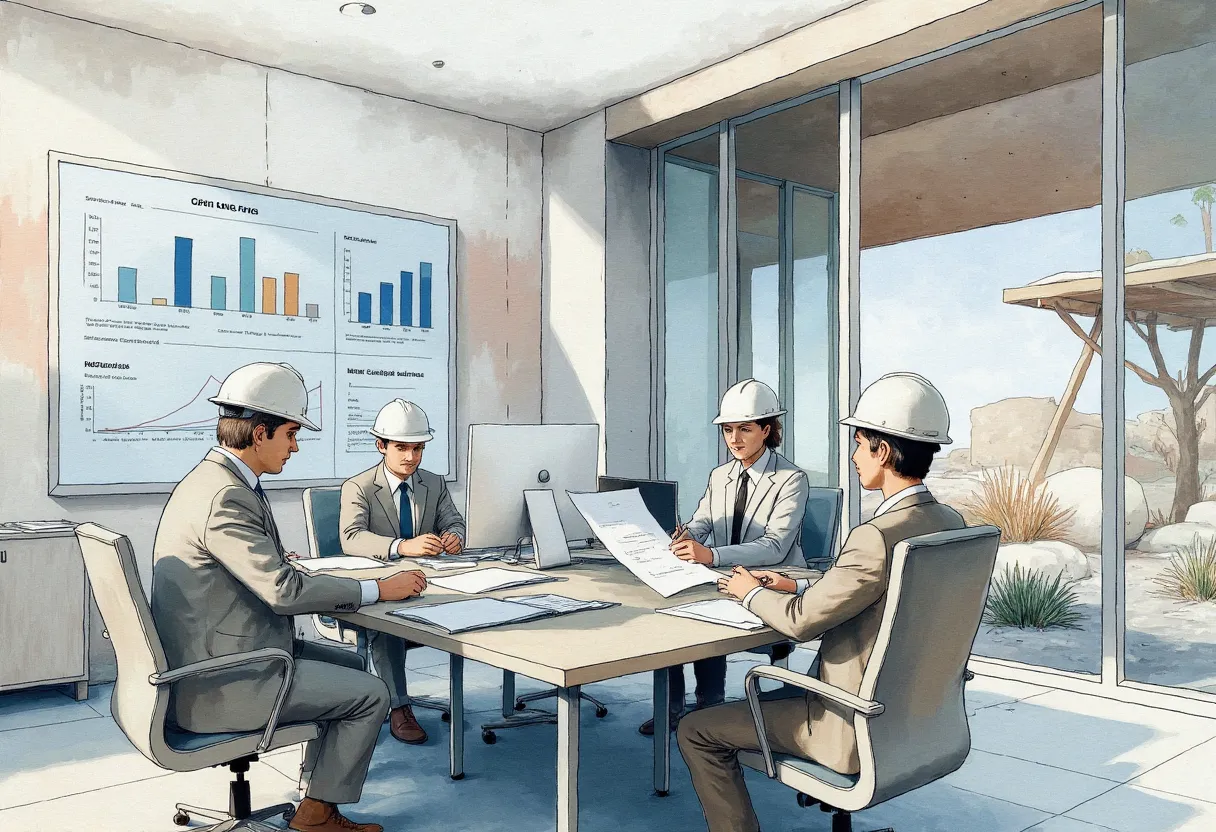
Construction cost inflation has been a central concern for the industry over the past three years. Still, Jim Roland, Senior Vice President of Arizona Operations at Alcorn Construction, says a key factor is being overlooked: labor costs show no signs of returning to pre-pandemic levels.
Roland explains that wage increases driven by the 2021-2022 inflation spike are now built into project budgets for the long term. “Inflation forced everybody to raise pay rates, raise wages,” Roland says. “But to my knowledge, I haven’t seen anybody who’s told me that they cut their employees’ pay back to what it was four or five years ago.”
This shift means developers must plan for permanently higher labor costs, even as material prices fluctuate or decline.
The Commodity-Labor Cost Split
The construction industry is now seeing a clear divergence between commodity and labor markets. Roland notes, “We’ve seen some flattening in the construction costs. We saw some significant inflation over the last couple of years. You’ll see some fluctuation in the commodity markets for maybe some cost stabilizing, maybe some costs coming down.”
However, labor costs are not following the same pattern. “What we don’t see is we don’t see labor costs coming down,” he says.
Labor accounts for a significant share of total construction costs, especially for projects that require skilled trades. The result is that, despite some moderation in material costs, overall construction budgets remain well above pre-pandemic levels.
“As much as we get to commodities that maybe come down just a little bit, the labor costs are up,” Roland says. “So it’s not as bad as it was, but it’s not where it was four or five years ago.”
Why Wages Remain High
Roland attributes the persistence of higher wages to the acute labor shortages and intense competition for skilled trades during the post-pandemic construction surge. The wage increases that resulted from these pressures have now become permanent.
He explains that both workers and employers have adjusted to this new reality. Workers have set their financial expectations based on higher wages, and employers have restructured operations to account for increased payroll costs. “That’s just kind of become essentially what the new norm is,” Roland says.
Unlike commodity prices, which can fall quickly when worker expectations, cost of living, and ongoing competition for talent shape demand drops, wage rates. These factors make it unlikely that labor costs will decrease, even as other inflationary pressures subside.
Project Feasibility and the New Cost Structure
For developers, the implications are clear: the construction cost structure has shifted upward, and budgets based on 2019 figures are no longer realistic. Commodity price reductions may provide some relief, but they do not offset the permanent increase in labor expenses.
Roland advises developers to distinguish between temporary inflation and lasting changes in the cost structure. “We want to get in early with the client, work with them, understand where they’re at budget-wise, what their expectations are,” he says, describing Alcorn’s approach to helping clients navigate this new environment.
Early engagement allows contractors to provide developers with an accurate picture of project costs and to identify efficiencies elsewhere to help offset higher labor costs. This may include value engineering, strategic material selection, and improved construction sequencing.
Industry Context: A Structural Change
Roland brings three decades of experience in Arizona construction, including time with both national and regional contractors. He says the current labor cost environment represents a genuine structural change rather than a temporary fluctuation.
“We’re not in the same boat as we were coming right out of COVID,” Roland says, referencing the severe labor shortages of 2021-2022. “What we’re seeing is a little more balance to manpower these days.”
However, he emphasizes that this balance does not mean lower costs. Instead, it means contractors can now staff projects more reliably, but only at the new, higher wage levels. “We make sure that we have the right people in the right seats on a project, so that they have the manpower, they have the commitment to it,” Roland says.
Contractor Adaptation: Early Engagement and Planning
Alcorn Construction has responded to these changes by engaging with clients earlier in the process and focusing on extensive pre-construction planning. Roland says the company specializes in design-build and design-assist projects, which allow for cost optimization before construction begins.
“We want to provide a one-stop shop, specializing in design-build and design-assist work that allows us to be very active at the beginning of a project,” Roland explains. This proactive approach helps address budgeting challenges and enables the company to deliver projects within client budgets, despite higher labor costs.
Roland suggests that other contractors may also need to adopt early-engagement strategies, as developers have accepted that pre-pandemic labor costs are not coming back.
The Takeaway: Labor Costs Are the New Baseline
The construction industry’s experience since 2021 shows that while material prices may fluctuate, labor costs have reset at a higher level and are unlikely to fall. Developers and contractors who recognize and plan for this reality will be better positioned to make sound investment decisions and deliver successful projects in today’s market.
Similar Articles
Explore similar articles from Our Team of Experts.