
The Orlando housing market is confronting a severe affordability crisis, with first-time buyers increasingly unable to access traditional entry-level homes. Rising costs, stalled segments, a...

From Bartender to Legal Authority: How One Firm Became the Nation's Leading Restaurant Law Practice

Written by:
Date:
30 Dec 2025
Share via Facebook

Share via Linkedin

Share via X

Copy to clipboard


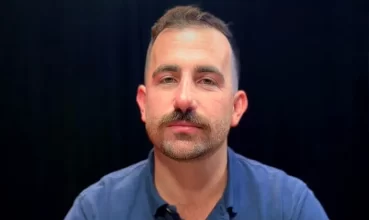
The hospitality industry’s intricate legal environment has found a specialized advocate in David Helbraun, whose unconventional journey from teenage bartender to founding chairman of the nation’s largest restaurant-focused law firm demonstrates how hands-on industry experience can shape legal practice.
Helbraun’s career began at age 17 when he convinced a bartending school owner to let him enroll despite being underage. “I told the owner that I was of age, but I wasn’t,” Helbraun recalls. “He looked at me with a side eye and said, ‘Do you have a check with you?’ And I said, ‘I do.’ He said, ‘Come on in, kid.’”
That early exposure to hospitality proved formative. Helbraun worked in restaurants throughout college and law school, but midway through his legal studies, he reconsidered his career path. “I decided that being a lawyer was probably the most boring job in the world. So I finished, and I went immediately back into the restaurant industry.”
Building Industry Expertise
In the mid-1990s, Helbraun capitalized on the coffee boom, managing and then owning a chain of coffee bars in Manhattan for a decade. “I ended up managing and then owning a chain of coffee bars in Manhattan. I did that for 10 years,” he says.
When disagreements with business partners arose, Helbraun returned to law, leveraging his hospitality network for clients. “I took the bar exam, passed the bar, hung out a shingle, and all my friends were in the restaurant business. I went to them and said, ‘Hey, I’m a lawyer now, can I represent you?’”
Initial reactions were skeptical. “They said, ‘You’re a lawyer? You’re David Coffee. What do you mean you’re a lawyer?’ And I had to explain to everybody what happened.”
Despite early doubts, Helbraun’s blend of operational know-how and legal training resonated. “Little by little, people would say, ‘Yeah, I’ll give you a couple of bucks. You can help me fight this guy or my landlord.’”
Starting in 2005, Helbraun Levey grew from a solo practice into a 40-person firm specializing in food and beverage law. “Fast forward to 2025, 20 years later, and we’re the largest law firm in the country that just represents restaurants. It’s food and beverage all day long, every day.”
Addressing Industry Pain Points
The firm’s growth is rooted in the persistent challenges facing restaurant operators, especially first-time owners. Helbraun identifies several recurring mistakes that can jeopardize new ventures.
“One of the biggest issues we’ve seen is that people fall in love with spaces,” he explains. “They love the block, the building, but sometimes the right elements aren’t there.”
Emotional attachment to locations often leads to unsustainable financial decisions. “Someone will fall in love with the space. The rent will be $25,000 a month, and all they can really afford is $15,000. They’ll take the space, open up a beautiful restaurant, and a year later they’ll come knocking saying, ‘I can’t pay the rent.’”
Another frequent problem is underestimating construction costs. “First-timers especially get really hung up and lose their shirts because they underestimate how much it’s going to cost to build out their first restaurant. They think it’s going to be $100,000, and it ends up being $350,000.”
To help address these pitfalls, Helbraun Levey created a “concierge program” for newcomers. “We give them a lower hourly rate, and we hold their hand throughout the process and start teaching them about the business and legalities of opening a restaurant. That’s our favorite thing to do.”
The Florida Expansion
Helbraun Levey’s move into Florida was driven by client demand, not market analysis. “We opened up in Florida because our clients asked us to. So many New York clients were opening up restaurants, and they kept telling us, ‘Man, we wish you guys were here. There’s nobody who does what you do.’ You hear that 10 or 15 times, you start looking around.”
The expansion tracks the migration of restaurant groups seeking new markets. “The big driver is that it’s an international stage,” Helbraun says. “Some of the big clients like to be on that stage. They want to be seen not just in New York, which is also an international stage, but a different one.”
Economic considerations factor in as well. “They understand that they can get more real estate down there for less money. It’s exciting for them to have the capacity to potentially open up a $15 million a year restaurant, where in New York, that’s very hard to do, just because of the lack of space and cost.”
Customer migration also influences these decisions. “There are so many New Yorkers down there, so if you own a restaurant in the city, and your clients are telling you that they’re spending half of their year in Miami, they start to listen. So they’re following their clients the way we’re following ours.”
Notable restaurant groups making the move include Milos, a high-end Greek restaurant with locations in Miami, West Palm Beach, and Palm Beach; Catch, which expanded from New York and Los Angeles; and New York institution Harry Steak, now operating in Palm Beach.
Florida Market Challenges
The Florida market presents unique hurdles, even for seasoned operators. The most significant is seasonality.
“People have been shopping hungry,” Helbraun says of out-of-state operators. “They’re thinking, ‘Florida is such a boom state that we can take these big footprint places that have 10,000-15,000 square feet, put in 350 seats, and we’re going to be busy all year.’”
The reality is different. “They open up in November, and they are busy. December is great. January, February, March, fantastic. Then April starts to roll around, and things start to slow down, and then you get to May and June, and it starts to become crickets.”
The long, slow season can be financially damaging for those unprepared. “Sometimes the slow season in Florida could be May to November, and now they’re stuck with this giant restaurant, and there’s seven people eating lunch there on a Thursday.”
Geographic unfamiliarity adds to the risk. “They don’t know the neighborhoods well, and so it takes a long time to understand a city,” Helbraun notes. “People get excited by Miami Beach, for example – maybe not the best place for mom and pop. They don’t understand Wynwood, or they’ve heard of Wynwood, or they don’t understand different parts of town.”
Legal Landscape Differences
Florida’s regulatory environment also differs from New York’s, especially regarding commercial leases. In New York, operators benefit from the “good guy guarantee,” which allows them to exit leases with several months’ notice and limited personal liability.
“In New York, we have this thing called the good guy guarantee that says if your business is not doing well, you can give three or six months’ notice to the landlord, pay up until the time you leave, and the landlord rips up your personal guarantee,” Helbraun explains. “It allows people to be a little riskier, to open up more places, because they know that their whole livelihood is not at stake.”
Florida’s more traditional lease structure increases personal liability exposure, though larger groups can sometimes negotiate corporate guarantees in place of personal ones.
Expanding Into Hotels
Looking ahead to 2026, Helbraun Levey is expanding its hospitality focus into the hotel sector. The firm recently hired a former hotel CEO and general counsel to lead this new division.
“We’ve been involved in the hotel scene in that we represent restaurants that are part of hotels. We do restaurant management agreements when a hotel opens, and they hire a chef or restaurateur to handle their food and beverage,” Helbraun says. “Now we’re at a place where we’re starting to represent the hotels themselves.”
This move is a logical next step. “Hotels are big clients. They’ve got a lot going on, not just food and beverage. They tend to grow, they tend to get involved in lots of things, and it’s a natural expansion for us as it’s right in the center of the hospitality industry.”
The firm’s Florida presence will continue to expand beyond Miami, with plans to serve clients “all up and down the coast” and provide educational resources through webinars and informational sessions tailored to Florida’s restaurant and hospitality market.
For real estate professionals working with hospitality clients, Helbraun’s experience offers practical insights into the operational realities shaping location choices, lease negotiations, and expansion strategies in one of the country’s most dynamic sectors.
Similar Articles
Explore similar articles from Our Team of Experts.