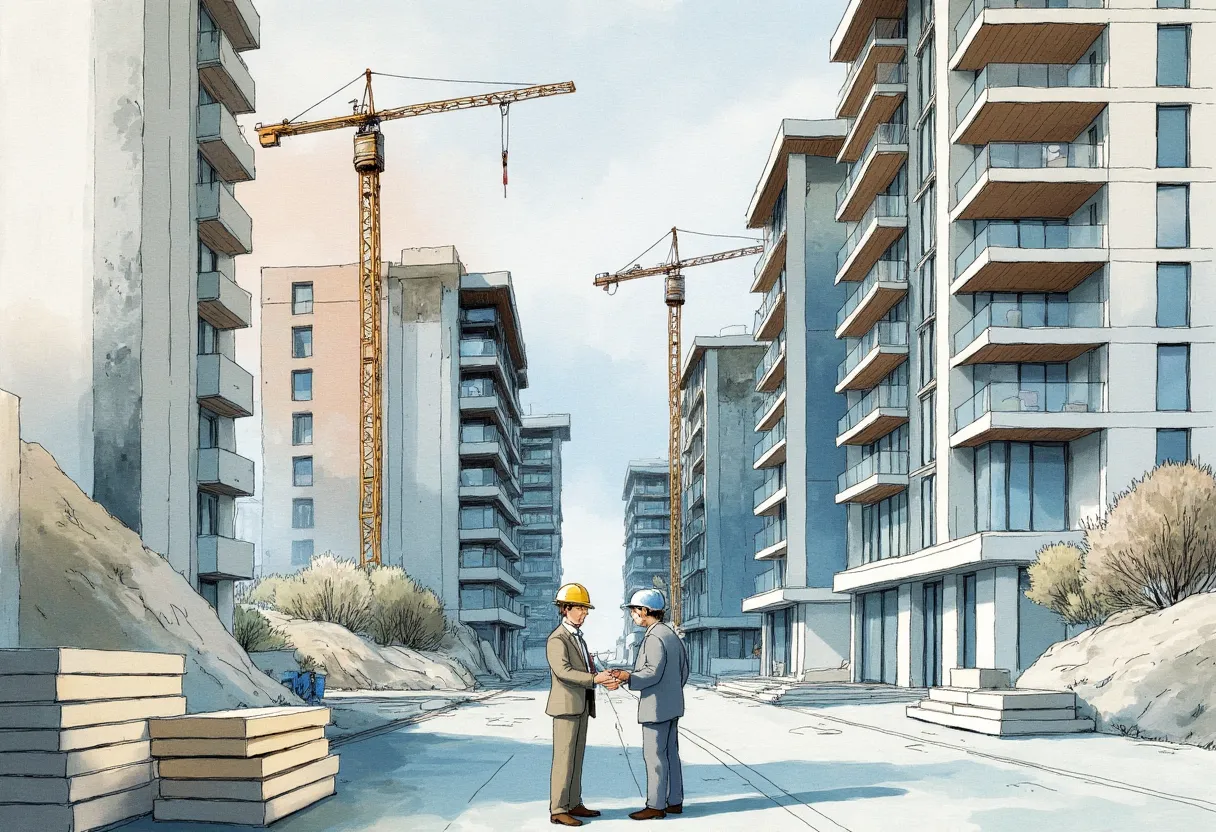
Developers nationwide are finding it increasingly difficult to make multifamily projects financially feasible as construction costs remain high and access to capital tightens. Lisette Calderon, CEO of Neology Group in Miami, argues that the only reliable solution is a level of vertical integration that most firms have not attempted.
Calderon says Neology Group now performs about 15% of construction work in-house and has taken over all property management functions directly. “We have general contractors in-house,” Calderon says. “We’re vertically integrated, so we perform a lot of the finishes ourselves. From drywall on, we handle much of that work. And again, it’s a margins game, so we need to make sure that we can recognize those margins.”
She contends that the traditional model—where development, construction, and operations are managed by separate companies—leads to inefficiencies and cost overruns that are no longer sustainable. Projects can become impossible to underwrite if developers cannot control costs at every stage.
Land Acquisition Discipline
Calderon emphasizes that vertical integration only works when combined with disciplined land acquisition. “Our land basis has to be right,” she says. “Our model does not allow us to overpay for land, so that’s really important.”
Neology Group determines what rents the local market can support and works backward from those numbers to set limits on land and construction costs. “We absolutely know the rents that our market can pay, and then we have to work backwards into that,” Calderon explains. “We don’t do it the other way around.”
This approach often means passing on deals that do not fit the model, even if competition is intense. Calderon says that is the only way to ensure a project can be completed profitably, given current costs and financing constraints.
Construction Technology and Standardization
Beyond land strategy, Calderon points to construction methods as a key factor in managing costs. The firm uses Building Information Modeling (BIM) technology throughout the development process to reduce change orders and speed up construction.
“We use BIM because that allows me to build as fast as I can and with as few change orders as possible,” Calderon says. “So I don’t get to the ninth floor and realize we didn’t run plumbing to the pool or something like that. BIM gives you that ahead of time.”
She argues that combining BIM with in-house construction capabilities provides speed and cost advantages that third-party contractors cannot typically deliver. “Time is money, and you need to build these as fast as possible,” she adds.
Neology Group also standardizes building specifications across all projects, including glazing ratios, floor-to-area ratios, efficiency ratios, and kitchen and appliance packages. Calderon says this standardization streamlines construction and makes costs more predictable.
Bringing Property Management In-House
The company’s vertical integration extends to property management. Calderon says Neology Group took this step after concluding that third-party managers could not deliver the resident experience or operational efficiency required.
“We realized that nobody was doing it the way we wanted it to be done,” Calderon says. “So out of necessity, we started our own management company because we felt we could do it. We could give a better experience for our residents, which is ultimately the most important thing.”
She reports that Neology Group has implemented technology-driven processes that reduce administrative overhead while improving resident experience, efficiencies she says third-party managers rarely pursue.
Industry Implications
Calderon’s strategy raises the question of whether the conventional separation between development, construction, and operations is still viable. With construction costs high and lenders scrutinizing returns, developers who cannot manage costs throughout the project lifecycle may struggle to compete.
Neology Group currently operates several properties in Miami’s Allapattah neighborhood, reporting occupancy rates above 96% and lease-up periods of less than six months. The firm has announced plans to expand through partnerships that could add thousands of units to its portfolio.
Whether other developers can adopt this level of vertical integration—or whether it becomes necessary for survival—will depend on how long construction costs remain elevated and how much pressure capital providers continue to apply to project returns. For now, Calderon sees vertical integration as the only way to keep projects viable in a challenging market.
Connecticut’s fix-and-flip market does not follow the typical seasonal slowdown seen in traditional home sales. Instead, many investors seek properties during the winter, when most residen...
The Cove neighborhood in Panama City is drawing renewed attention from investors and renovation-minded buyers, despite challenges that have previously discouraged mainstream interest, accord...
Facing mounting regulatory requirements and rising interest rates, New York City building boards are developing innovative funding strategies beyond traditional assessments and loans, accord...
The rise of artificial intelligence in real estate has sparked intense debate about the future role of agents, but according to Brad Weisman, a 33-year industry veteran and Keller Williams p...
The waterfront real estate market in Cape Coral remains resilient, even as insurance challenges and flood zone concerns complicate transactions. Jenn Spears, a realtor with RE/MAX Realty Tea...
The Tampa Bay rental market is undergoing a notable correction, with prices falling 7-8% in many areas compared to last year, according to local property management expert Lei Cheng. In a re...