

The real estate industry’s traditional separation into distinct service silos is fundamentally misaligned with customer needs, according to one industry leader who sees recent market c...

Richmond's First Industrial Park in 20 Years Exposes Institutional Capital's Blind Spot

Written by:
Date:
24 Nov 2025
Share via Facebook

Share via Linkedin

Share via X

Copy to clipboard

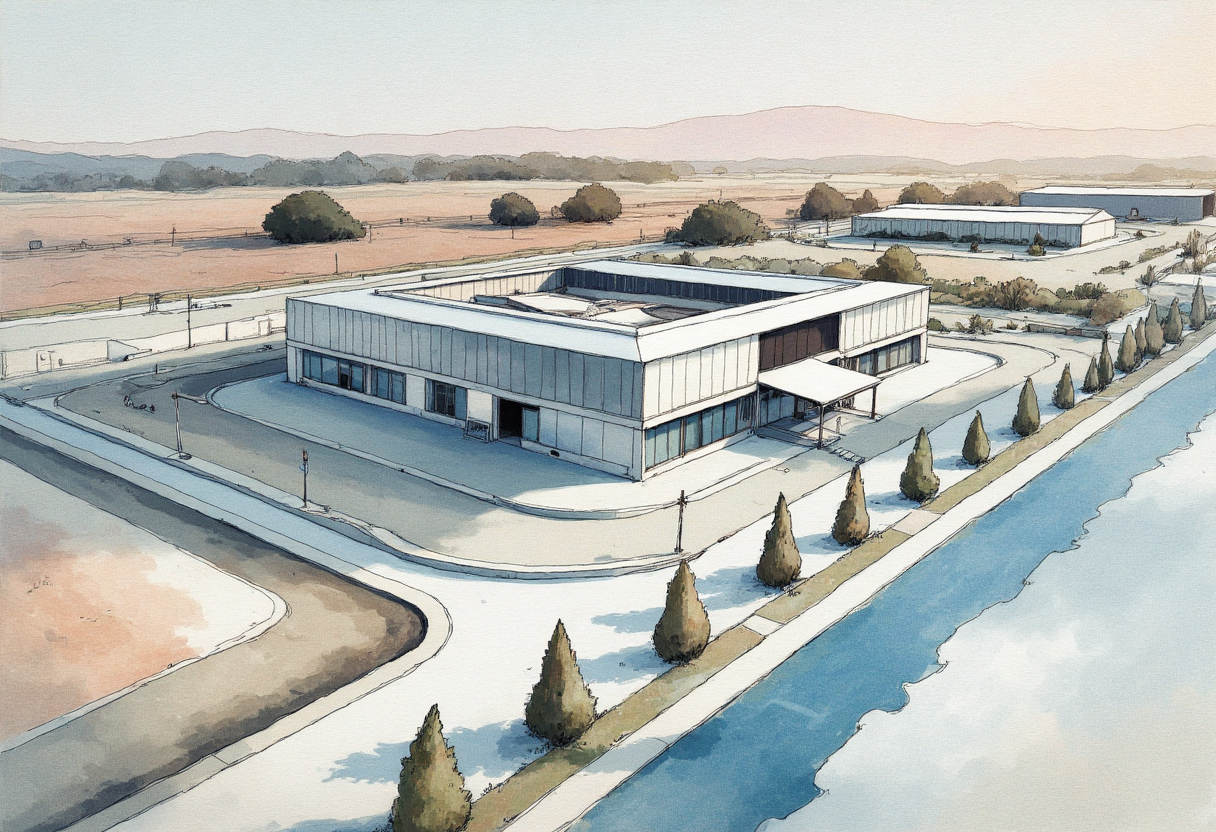
Small-lot industrial development has been systematically abandoned by major developers, creating artificial scarcity in a critical market segment.
The Richmond metro area just delivered its first new industrial park in two decades, and according to Michael Mayhew, Vice President at Commonwealth Commercial Partners, this 20-year gap exposes a fundamental flaw in how institutional capital allocates resources in industrial real estate.
“This project is the first industrial park that’s been developed in the last 20 years in the Richmond area,” Mayhew says of the Pony Farm Industrial Park in Goochland County. “There’s a handful of parks we could point to in the area. Some were developed in the 50s, some in the 80s, one in the early 90s, and then nothing.”
According to Mayhew, the drought stems from a simple but devastating economic calculation by large developers. “If the same two projects are going to take you the same amount of time, why not swing for the big one? For the larger property, larger return, larger construction,” he argues.
Mayhew says institutional developers face identical approval timelines whether they’re building small industrial parks or massive distribution centers. “These small industrial sites and the large industrial sites take about the same time, battling through county approvals, permits, citizen opposition,” he notes. “They both take the same amount of time.”
This time-cost equation has pushed institutional capital toward big-box development exclusively. “Institutional investors, institutional developers, are largely focused on some of the bigger distribution centers and industrial developments around the region, and rightly so if you’re a large developer, and you put a lot of time into developing a site, you want the highest return for your investment,”Mayhew observes.
The result, according to Mayhew, is that “smaller scale industrial” has been left “by the wayside”across multiple markets, not just Richmond.
The institutional exodus has created what Mayhew describes as severe supply-demand imbalances. The Pony Farm project, which took three and a half years to develop, has “nearly sold out of the entire park”before lots were even delivered. “We’ve got maybe 25% of the available lots left for sale, which is incredible because we haven’t even delivered the lot yet,” Mayhew says.
This pre-delivery sellout, according to Mayhew, “tells a story in itself, of the demand, supply, demand imbalance” in small-lot industrial space.
The problem extends beyond Richmond, Mayhew argues. “The same issues that Richmond’s faced, they’re also facing in other markets. Developers are focused on larger distribution style, big box development and not necessarily small lot industrial.”
Mayhew suggests this institutional blind spot is creating market inefficiencies at a macro level. As he points out, “Richmond has seen tremendous economic growth in the last 10 years,” yet the industrial infrastructure to support that growth has been systematically underbuilt in the small-lot segment.
The gap has particular implications for local and regional businesses that need smaller industrial spaces but can’t compete for the limited existing inventory. According to Mayhew, many of these businesses “have been operating in the same areas for the last 30 years” without opportunities to expand or relocate.
The success of projects like Pony Farm suggests there may be opportunities for smaller, more nimble developers to fill the gap left by institutional capital. Mayhew’s firm worked with Village Bank on creative financing for the speculative land development, demonstrating that alternative capital sources can support these projects.
“The banks still really like to lend on” owner-occupied industrial properties, Mayhew notes, and some regional lenders are willing to finance well-conceived small-lot developments.
Whether this model can scale to address the broader supply shortage may depend on how quickly other regional developers recognize the opportunity that institutional capital has systematically ignored for two decades.
Similar Articles
Explore similar articles from Our Team of Experts.