For six years, Rochester’s residential real estate market operated under a simple rule: list it, and it sells. Property values climbed roughly 75 to 80 percent since the pandemic began...

Bridging Traditional Real Estate and Blockchain Technology

Written by:
Date:
26 Nov 2025
Share via Facebook

Share via Linkedin

Share via X

Copy to clipboard


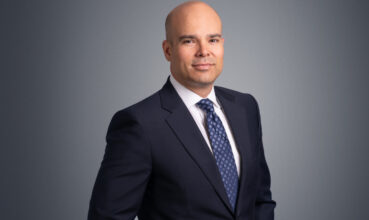
The commercial real estate industry is at a pivotal moment, caught between long-established investment practices and the rise of blockchain technology. Edward Nwokedi, founder and CEO of RedSwan Digital Real Estate, has placed himself at the forefront of this shift, using nearly two decades of institutional real estate experience to drive the adoption of tokenized assets.
Nwokedi spent 18 years as an executive in Cushman & Wakefield’s capital markets division, overseeing approximately $3 billion in transactions. In 2018, he made a significant career change, prompted by a colleague’s repeated suggestion to attend a blockchain conference in Dallas. “I was very busy at the time. I didn’t know what blockchain was, but based on our relationship and his persistence, I decided to go,” Nwokedi recalls. At the conference, he saw firsthand how blockchain applications could enhance liquidity in real estate markets. “Something just clicked in my mind to understand that this would be a perfect way to enhance liquidity for capital markets.”
The timing of his entry into blockchain was critical. Shortly after he met potential partners running initial coin offerings (ICOs) for real estate, the SEC banned ICOs in the United States, requiring security token offerings (STOs) instead. This regulatory change gave Nwokedi the clarity to launch RedSwan and transition from traditional brokerage to blockchain-based real estate tokenization.
Expanding Access to Real Estate Investment
Nwokedi’s motivation stemmed from the exclusivity of commercial real estate investing. “One of the biggest problems I had was I’m selling real estate, but I’m only dialing up the top 50 companies in the world who want to buy this high quality real estate, because no one else can really afford to write a check for $10, $20, or $50 million to buy a property other than these large institutions,” he explains.
Blockchain tokenization changes this by allowing a wide range of investors to participate. “Implementing blockchain technology was a way for significant diversification and democratization of real estate by allowing now people of any size to come in and crowd fund into a real estate investment.”
This broader access is especially attractive to international investors facing currency risks. Nwokedi points to his experience with the pension fund of Lagos, Nigeria, which manages $40 billion for government employees and lost nearly 30% of its value over four years due to currency devaluation. “With blockchain technology, they can actually invest in U.S. assets that are dollar denominated, and that will help stabilize their pension funds,” he says. “Even if they’re not making 4% or 5% yield, the main thing is preserving their capital.”
Building Proprietary Infrastructure
RedSwan took a different approach than many blockchain startups by developing its own end-to-end technology platform. Initially, the company licensed software from outside providers, but quickly realized the importance of controlling the customer experience. “We realized that having people involved in your customer life cycle, life journey was probably not a good thing. You want to make sure you keep all your customers in house,” Nwokedi explains.
Their platform integrates several functions: real estate evaluation, a minting studio for compliant security tokens, a marketplace for listings, customer management tools, and an Alternative Trading System (ATS) for secondary market liquidity.
From the start, RedSwan operated as a securities dealer, not a commodity trader. “We knew we were selling real estate securities, income producing properties, so we approached the SEC to apply for a broker dealer license,” Nwokedi says. The approval process took 18 months, and RedSwan now has five licensed professionals on staff.
Overcoming Skepticism Through Education
The main obstacle to widespread adoption of tokenized real estate is not technical, but educational. “I think people really are confused, rather than they’re skeptical because they’re confused,” Nwokedi observes. Many associate blockchain with cryptocurrencies, which have a reputation for volatility and risk.
RedSwan addresses this misconception by explaining the difference between security tokens and cryptocurrencies. “We are selling security tokens, which is a totally different vehicle than a commodity such as cryptocurrencies or NFTs,” he says. “With a license and selling digital securities, you’re actually registering people and their purchases like you do stocks onto a ledger and using the blockchain as the immutable global ledger for transactions of security.”
Institutional interest has increased as major asset managers enter the space. BlackRock’s announcement that it plans to tokenize its $13 trillion in assets has influenced industry perceptions. “Whenever I go in front of a large institution or a large property owner and let them know what we’re doing, we can always bring up the fact that the largest asset manager in the world is actually doing exactly what we’re proposing for this client to do,” Nwokedi says.
Choosing the Right Technical Infrastructure
RedSwan’s choice of blockchain infrastructure reflects a focus on affordability and accessibility. The company began with Ethereum via Polymath, but found gas fees of $45 to $65 for $1,000 transactions too high for small investors. “We want to make sure their cost is minimal, because they might only have $50 to $100 to buy into a security. And if $25 is eaten up by gas fees, then their net investment is only $25 instead of $50,” Nwokedi explains.
Switching to Hedera and Stellar blockchains reduced transaction fees to under $1 for $500 transactions, ensuring that nearly all investor capital goes to the investment itself.
Global Trends and U.S. Adoption
Internationally, blockchain adoption in real estate has advanced more quickly than in the U.S. “United States was probably number eight in terms of activity in blockchain technology. Asian countries, Middle East countries, have been very active,” Nwokedi notes. Japan, for example, has been tokenizing real estate assets for several years, with about $25 billion in completed transactions. These markets are now looking to U.S. real estate for higher yields.
Recent U.S. legislation has provided more regulatory clarity, encouraging domestic adoption. “I’m very happy to see that the United States government, under the current administration, has moved more aggressively towards using blockchain technology and digital assets as a whole,” Nwokedi says.
Efficiency Gains Over Traditional Investment
Tokenization also streamlines the investment process. Traditional real estate investment trusts (REITs) typically charge 6-7% entry fees and 4-5% exit fees, requiring investors to overcome 10-11% in costs before seeing profit. “Digital to digital, we’re now just talking about no gatekeepers like broker dealers or lawyers involved. You’re looking at just fees from your blockchain transfer, which are gas fees, which are pennies instead of tens or hundreds of dollars,” Nwokedi explains.
Additionally, blockchain enables instant settlement, unlike the traditional T+2 or T+3 settlement periods. “With blockchain it’s T+0. That means instantaneous settlement for your transaction, much more efficient than waiting three or four days and letting it go through different gatekeepers that tag on additional costs.”
Looking Forward: Education as the Key
Nwokedi believes that blockchain adoption in real estate is inevitable, but education remains the primary challenge. “Absolutely everything in the world, in terms of physical hard assets that have value, will probably be put on chain for verification purposes, but also for the movement of those assets on a much more rapid scale.”
He urges greater public understanding of blockchain’s benefits. “I wish that the media would pick up and talk about the benefits of this new technology and what it’s doing,” he says. “I think we need to have more education, even in schools. They should be talking about blockchain technology to students.”
For individual investors, tokenization offers a new path to building wealth. “If you can just take $100 out of your paycheck and buy a piece of real estate that’s giving you a 7% return, and you do it on a regular basis, pretty soon you’re going to see yourself with a basket of capital and cash flow that allows you to buy any house that you want to buy.”
Since 2018, RedSwan has tokenized over $4.5 billion in real estate, showing that traditional real estate expertise combined with blockchain technology can open new investment opportunities. As regulatory clarity grows and education improves, tokenized real estate is likely to become a standard part of diversified investment portfolios.
Similar Articles
Explore similar articles from Our Team of Experts.