
Connecticut’s residential real estate market is deep into a stretch that would test even the most experienced practitioners. Inventory sits roughly 63% below pre-pandemic levels, buyer...

Business Transformation Over Technology How Cadillac Fairview is Redefining Commercial Real Estate Operations

Written by:
Date:
09 Sep 2025
Share via Facebook

Share via Linkedin

Share via X

Copy to clipboard

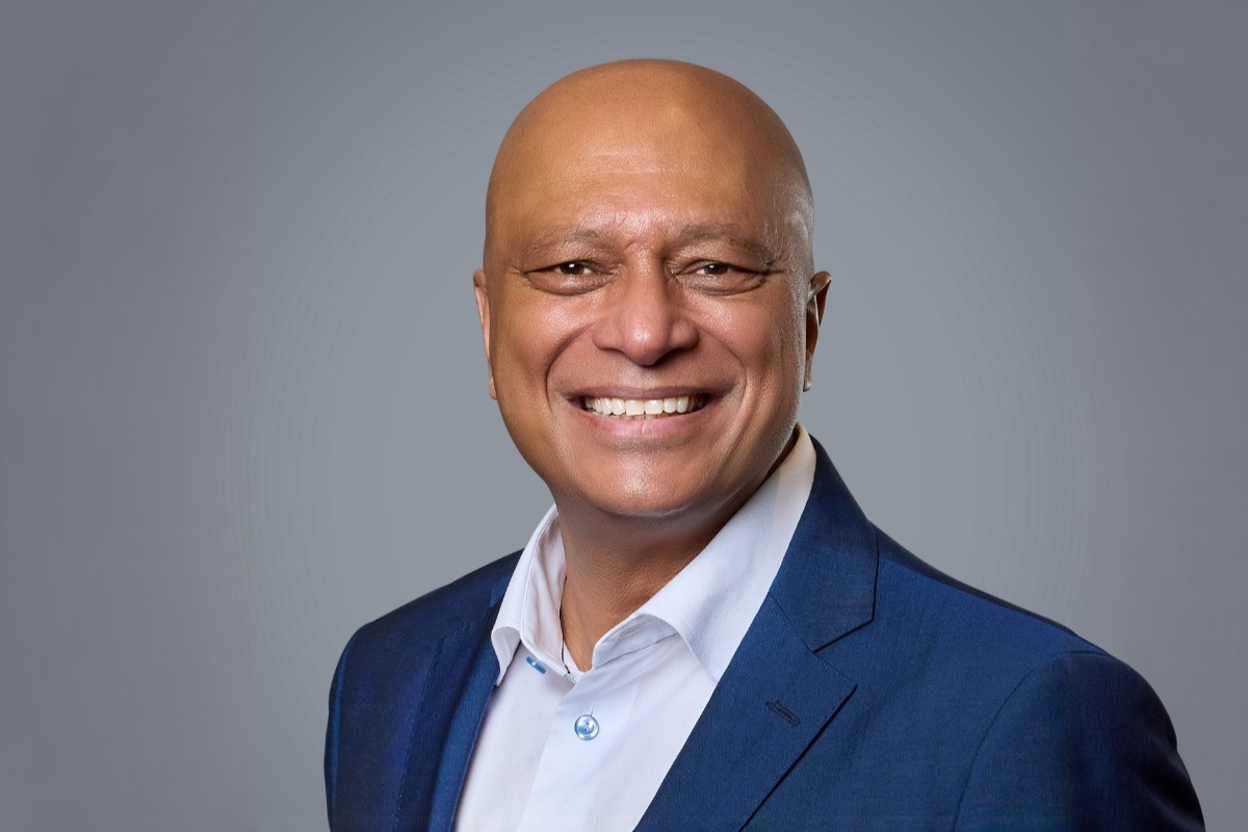
The commercial real estate industry stands at an inflection point. While other sectors have undergone significant digital changes over the past decade, real estate has remained relatively unchanged, until now. At Cadillac Fairview, one of North America’s largest property owners and operators with $30 billion in assets under management, a different approach to innovation is taking shape.
“I like to say that it’s a business transformation and not a technology transformation,” explains Arv Gupta, Senior Vice President of Operations Services at Cadillac Fairview. “The technology is just an enabler of something bigger that’s happening. It’s actually a business transformation.”
This distinction isn’t merely semantic. It represents a fundamental shift in how the industry approaches modernization, moving beyond flashy tech implementations toward systematic operational improvements that drive measurable business outcomes.
The Foundation of Property Operations
Gupta’s perspective comes from leading operations across Cadillac Fairview’s diverse portfolio of 60 properties spanning 33 million square feet of leasable space. His operations services team functions as a shared services organization, cutting across all asset classes to drive efficiency and occupant experience.
“If I look at the core of what is involved in managing assets, like retail or office in particular, the core is really cleaning, security, maintenance and utility management,” Gupta notes. “There’s lots of shiny things that you can do, but that’s the core of what you do.”
These fundamental operations are undergoing significant change. It’s not just about new technologies, it’s about rethinking how work gets done at the most basic level.
From Reactive to Predictive Operations
The traditional approach to property management has followed a predictable pattern: receive data through observation or complaints, analyze the information, determine actionable insights, and take corrective action. This reactive model has defined the industry for decades.
“Historically forever, somebody gets a piece of data, whether it’s through observation or hearing or walking around, they get a utility invoice, they get a call from a customer. That’s a piece of data,” Gupta explains. “They then interpret that data, they analyze that data, and they decide what are the actionable insights from that data, and then they take actions or they issue a work order.”
What’s changed is the volume and speed of available data. Internet of Things sensors and connected devices now generate thousands of data points in real time. This information cannot be processed by human operators alone, necessitating algorithmic analysis and automated decision-making.
The fundamental process remains, data collection, analysis, insight generation, and action, but now operators can anticipate and prevent issues before they impact tenants.
Practical Applications Across Core Operations
This shift from reactive to predictive operations manifests differently across each business function. In maintenance, the evolution involves moving beyond scheduled preventive maintenance to condition-based maintenance that responds to actual equipment needs.
“You have a car, you change your oil every 3,000 miles or 5,000 kilometers, that’s kind of a preventative maintenance routine,” Gupta illustrates. “But what if you were to change your oil when it needed to be changed…? We can now do that through all of these algorithms, through all of this data that’s coming from all the pieces of equipment, across all of our properties.”
In utility management, real-time monitoring enables immediate intervention when systems operate suboptimally.
“We’re finding, oh, this is happening. This was left on, this is heating and cooling at the same time, and we’re able to fix it in real time, leading to dollar savings, leading to carbon savings,” Gupta explains.
Cleaning operations are improved by using smart sensors that determine when spaces actually need attention. “We can look to see when was the washroom used, when was that boardroom used? Does it need cleaning? Does it not?”
Security shows the most significant improvement in response capability. “Rather than reacting to an incident or something bad about to happen in 21 seconds, we can react in three seconds by looking at data from the cameras and understanding it and analyzing and interpreting it.”
The Business Case for Transformation
While technology enables these improvements, the business justification remains paramount. Gupta emphasizes that successful implementations must start with clear business objectives.
“Most people start with the technology. They say, ‘Hey, I have this cool technology. Look what it can do,'” he observes. “But you’ve got to start with the business problem.”
The business benefits span both cost reduction and tenant experience enhancement. In maintenance, predictive approaches can reduce work orders by 10-15% while improving tenant comfort by proactively addressing issues.
“One of the biggest client calls we get at the service center is ‘it’s too hot or it’s too cold,'” Gupta notes. “If you can predictably and effectively and efficiently reduce those calls by proactively, predictably monitoring that comfort level, you’re going to have a greater client experience.”
Evaluating Technology Partners
With many proptech startups and solutions, Cadillac Fairview has developed an approach that prioritizes business requirements over novelty.
“We start with the business objective. We build our business requirements,” Gupta explains. “We won’t just go out and say, ‘what’s all the technology that might help us?’ We’ll say, ‘Okay, our strategic objective this year, we have a problem with security. What can we do in a broader program?'”
Only after identifying objectives and requirements does the team evaluate solutions through formal RFP processes.
Expanding Across Asset Classes
Cadillac Fairview’s strategy includes significant expansion into multifamily and industrial properties, creating new challenges for operational consistency. The company is also pursuing what Gupta calls “densification,” transforming traditional retail properties with large parking areas into mixed-use communities.
“What we’re actually doing is we’re taking that land and actually densifying, adding live work play shop, and we’re building communities that are densified,” he explains. This requires new approaches to security, maintenance, and cleaning.
Understanding Tenant Needs
Rather than relying solely on tenant surveys, Cadillac Fairview focuses on understanding the underlying business objectives. For office tenants, this means recognizing that their primary goals are employee engagement and productivity.
“They want their employees to be engaged, and they want them to be productive,” Gupta states. “They want the space to make their employees engaged and happy, and they want to make it easy for them to drive the greatest productivity.”
This understanding drives a systematic service delivery approach that works backward from tenant objectives through multiple layers of enabling factors, only some of which involve technology.
The Change Management Challenge
While technology components are well-established, the greater challenge lies in organizational change. This shift requires new processes, skill sets, and workflows that can be implemented centrally.
“All of this requires a big change in our processes and our capabilities. That’s the bigger challenge, the change management,” Gupta acknowledges. “When you’re looking at the data and trying to figure out all of these actionable insights, that’s no longer happening necessarily with all of the operators at each property. Someone can look at that data 100 miles away and know what has to be done.”
A Framework for Industry Transformation
Gupta’s approach offers a replicable framework for other organizations. The methodology emphasizes starting with core business functions, identifying key performance drivers, and building comprehensive programs that address those drivers.
“Start with the core of the business. Figure out what are the key drivers of that core and keep digging down… Don’t only focus on technology,” he advises. “You’ll get business attention when you take that driver and you build a holistic program to drive that part of the business.”
This approach ensures that technology investments support broader business objectives. By focusing on cleaning, security, maintenance, and utility management, organizations can achieve improvements in both cost efficiency and tenant experience.
The transformation of commercial real estate operations is not about adopting the latest technology for its own sake. Instead, it represents a fundamental reimagining of how properties are managed, with technology serving as an enabler of more efficient, effective, and responsive operations. As Cadillac Fairview demonstrates, success comes from maintaining focus on business outcomes while leveraging technology to achieve them more effectively than ever before.
Similar Articles
Explore similar articles from Our Team of Experts.