

“Sunlight is the ultimate disinfectant,” says Brooke Pfautz, founder of Comparent, as he explains his mission to bring transparency to the vacation rental industry. With a spotlight logo...

'Developers Are Still Making Multi-Million Dollar Decisions Based on Gut Feel,' Analytics CEO Says

Written by:
Date:
23 Jul 2025
Share via Facebook

Share via Linkedin

Share via X

Copy to clipboard

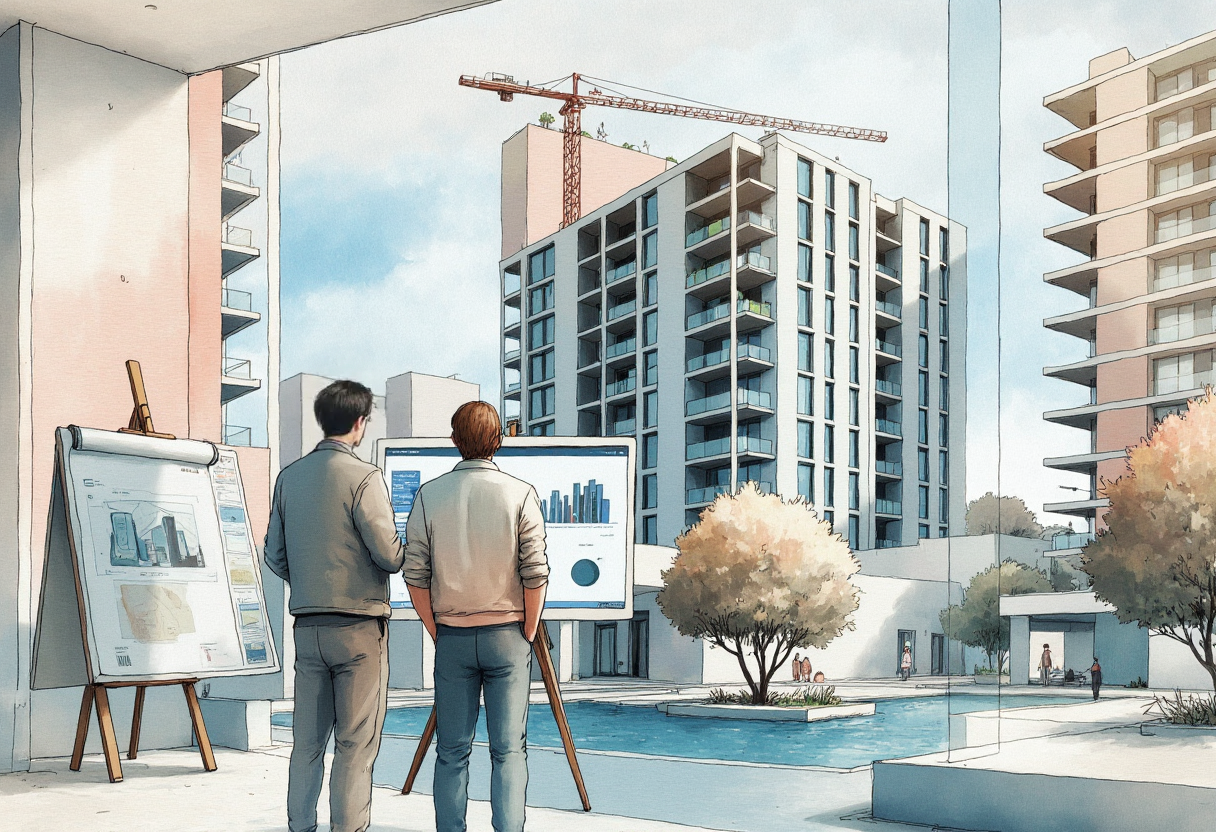
Industry expert argues data-driven approach could eliminate costly programming mistakes in multifamily development. The real estate development industry continues to rely heavily on intuition and anecdotal evidence for major design and amenity decisions, potentially leaving millions in revenue on the table, according to one industry expert.
Michael Broder, CEO of real estate analytics firm RCKRBX, says this reliance on “gut feel” decision-making remains surprisingly common, even for projects worth hundreds of millions of dollars.
The Cost of Intuition-Based Planning
“I can’t tell you how many meetings I used to sit in with various groups and the development teams would be arguing over…amenities and everybody brought to the table their beliefs and opinions based on local market experience, but there was really no way to settle those debates,” Broder says.
These debates, covering everything from appliance packages to window specifications, often end up being resolved based on personal experience or market assumptions rather than hard data about actual renter preferences and willingness to pay.
The Power of Precision
Modern data analytics can now provide statistical validation for these decisions, Broder argues. “We can say, ‘of your high propensity targets for this property, 86% of them are going to pay at least 10% for this appliance set or this type of flooring,'” he explains.
This level of precision allows developers to make informed trade-offs between costs and potential revenue, rather than relying on industry conventional wisdom or personal beliefs.
Beyond Market Comps
While traditional market comparables remain important for context, Broder argues they fail to provide crucial insights about causation. “When you look at a comp and go, ‘Well, why did this building outperform everybody else?’ You can’t answer that question because you don’t understand the connection between that product and people.”
The Solution Emerging
RCKRBX has developed a data-driven approach that aims to eliminate this guesswork. Their platform analyzes renter preferences and willingness to pay across multiple variables, from unit features to amenity packages.
“We build product for people,” Broder notes. “Perhaps we need to understand what’s important to them.” This shift from intuition to data-driven decision making, he suggests, could help developers optimize their projects for both renter satisfaction and financial performance.
Similar Articles
Explore similar articles from Our Team of Experts.