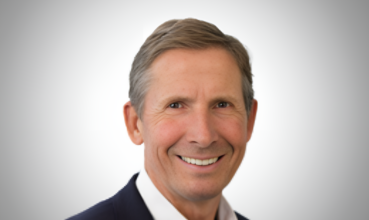
The 1031 exchange industry has a revenue model that few investors fully understand, according to Judd Schoenholtz Co-Founder & CEO Deferred, one PropTech leader who’s pushing for reform. Qualified Intermediaries (QIs) are earning massive interest revenues while continuing to charge substantial transaction fees to clients, creating what some see as an unnecessarily expensive system for real estate investors.
The Hidden Revenue Stream
Judd Schoenholtz, Co-Founder & CEO of Deferred, says the numbers reveal a striking disparity between fee structures and actual revenue sources. “With the interest rate environment, they’re making 70, 80% of the revenue holding the funds, and 20% of the revenue charging this fee,”Schoenholtz explains. “If you’re doing a $5 million exchange and hold the funds for 90 days, you’re making something like $50,000 in interest, and then they still send the client the bill for $1,000.”
This revelation highlights what Schoenholtz sees as a fundamental misalignment in how 1031 exchange services are priced and delivered to clients. The traditional model, he argues, relies on a combination of base fees, rush charges, and other transaction costs that may no longer be justified given the substantial interest income these firms generate.
The Commoditized Fee Problem
“Everybody charges the same fees, it’s like this commoditized fee structure where everybody’s charging $1,000-$1,500 to an exchange, plus a bunch of junk fees for doing it faster,” Schoenholtz notes. He argues these additional charges often stem from operational inefficiencies rather than actual cost structures.
According to Schoenholtz, the industry’s standard practice of charging rush fees “because it’s hard” reflects deeper issues with how traditional QIs manage their operations. These fees, he suggests, are more about compensating for manual processes than reflecting true operational costs.
The Case for Transparency
Schoenholtz advocates for a more transparent approach to fee structures and interest sharing. “We try to be as generous as possible with the interest sharing, and we try to be as transparent as possible with it, and we don’t charge fees,” he says, describing his company’s alternative model.
This push for transparency represents a significant departure from industry norms, where interest sharing often requires negotiation or remains opaque. According to Schoenholtz, some banks will offer minimal interest sharing while still maintaining their fee structures, creating what he sees as an unnecessary cost burden for investors.
Emerging Solutions
While Schoenholtz’s company, Deferred, offers one approach to addressing these issues through a no-fee model and transparent interest sharing, he acknowledges this is just one potential solution to a broader industry challenge. The company maintains traditional safety measures, holding funds in high-interest bank accounts at major commercial banks, while innovating on the fee structure side.
“We don’t want to innovate on yield seeking there,” Schoenholtz explains, emphasizing that security and compliance remain paramount even as fee structures evolve. This approach suggests that meaningful reform in the 1031 exchange industry might focus more on transparency and fee structures than on how funds are actually managed.
Looking ahead, Schoenholtz believes the industry’s fee structures will face increasing scrutiny as investors become more aware of the revenue dynamics at play. Whether other QIs will follow suit with more transparent models remains to be seen, but the conversation around fee structures and interest sharing appears to be gaining momentum.
The short-term rental market in Connecticut and Rhode Island offers significant opportunities for investors who carefully navigate local regulations, according to Robert Marucci, Owner of Be...
The real estate industry is on the cusp of a dramatic shift in how agents manage client relationships, according to Cyrus Mohseni, Co-Founder & Vice President of Strategy and Growth at T...
Class B and C office buildings, typically older properties with fewer amenities and lower rents than premium Class A offices, are facing a widening gap between owner expectations and current...
The purchase prices look almost too good to be true. In Newburgh, New York, a small Hudson Valley city of roughly 30,000 people spanning three square miles, properties can be listed for figu...
A fundamental shift in buyer behavior is disrupting the traditional property ladder progression in Canadian real estate, according to industry veteran Michael Phinney, President and CEO of P...
“San Francisco appears have bounced off the bottom and is starting to come back,” says Brad Lagomarsino, Vice Chair of Multi-Family Investments at Colliers in San Francisco. Afte...