
Bergen County has long been one of northern New Jersey’s most competitive residential markets; good schools, proximity to Manhattan, and distinct town-by-town character keep demand hig...

'The Teenage Denver': Salt Lake City's Real Estate Market Comes of Age

Written by:
Date:
19 Dec 2024
Share via Facebook

Share via Linkedin

Share via X

Copy to clipboard

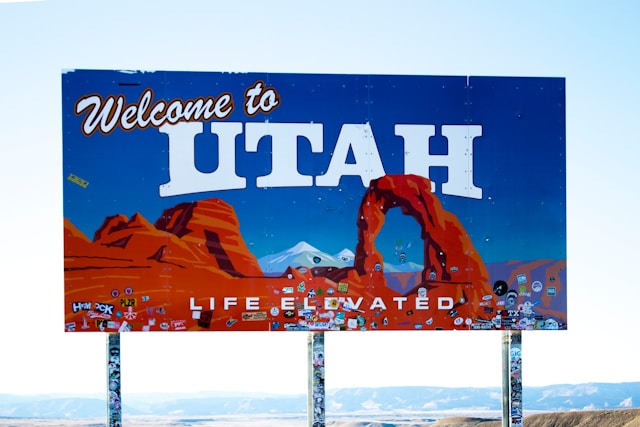
Salt Lake City’s real estate landscape is experiencing growing pains – but in all the right ways, according to Cushman & Wakefield’s leading investment sales team. “We sometimes get referred to as a teenage Denver,” says Kip Paul, Vice Chairman of Investment Sales for Cushman & Wakefield in Salt Lake City. “We think that’s the ultimate compliment, because teenagers are a lot cooler than adults.”
This analogy aptly captures Salt Lake City’s current position: a market maturing into its potential while maintaining the dynamism and resilience that comes with youth. The city’s real estate sector presents a study in contrasts, with different asset classes telling distinctly different stories about the market’s evolution.
A Tale of Two Markets: Office Distress, Retail Renaissance
The office sector reflects the broader national challenges, but with a distinctly Salt Lake twist. “The Salt Lake market is weathering the storm better than most markets in the West,” notes Paul, though the numbers tell a sobering story. Buildings that previously commanded $300-350 per square foot are now trading at drastically reduced prices. A recent example: a 250,000-square-foot downtown property, City Center, sold for just $90 per square foot despite its prime location and quality construction.
Yet this disruption has created unexpected opportunities. The team has observed an emerging trend of municipalities and public entities stepping in to acquire premium office assets at unprecedented discounts. “Replacement costs to build a new single-tenant campus or county building would be at least $500 per foot,” explains Michael King, Director on the investment sales team, pointing to recent acquisitions by Summit County, Salt Lake County, and the Canyon School District. “There’s no better time to buy well-positioned, strong Class A office than right now.”
Meanwhile, retail tells a markedly different story. The sector, which underwent its own painful adjustment period years ago, has emerged stronger and more rational. “When COVID hit, everybody said we’re not shopping anymore, we’re ordering everything from Amazon,” says King. “We’ve now seen a full pivot.” Limited new construction has kept vacancy rates low and lease rates climbing, creating what the team describes as one of the few asset classes where buyers and sellers currently agree on pricing.
Downtown’s Vertical Ambitions
Perhaps the most visible sign of Salt Lake City’s maturation is in its multi-family sector, particularly downtown. The market is experiencing unprecedented development activity, with new construction representing about 20% of existing inventory – approximately 3,000 units in the downtown area alone.
More significantly, the city is reaching for the sky with its first true high-rise residential developments. “We’re starting to see our first true high-rise product getting built – 30 to 40-story, true condo quality towers,” notes JT Redd, Director at Cushman & Wakefield. These projects are pushing rental rates above $4 per square foot, well beyond the market’s previous high-water mark of $3.50-3.75.
This evolution is driven by changing demographics and expectations. “We’re getting a lot of new people coming in from the coast that have lived in that type of product, that have an idea of what the standard of rental housing should be,” Redd explains. “We’re finally starting to see that in Salt Lake City right now.”
Stability as a Virtue
What sets Salt Lake City apart, according to the team, is its measured approach to growth. “It’s a low velocity market,” Paul notes. “When investors and owners get properties here, they tend to hang on to them longer than in other markets.” This characteristic, while potentially making market entry more challenging, contributes to the market’s stability.
“Salt Lake is never going to have the big ups, nor will we have the big downs,” Paul adds. “It’s just more of a steady, consistent market.” In today’s uncertain environment, that stability might be exactly what investors are seeking.
As Salt Lake City continues its evolution from regional hub to emerging national player, it’s maintaining a careful balance between growth and stability. Like any teenager, it’s finding its own path – but doing so with a maturity that belies its years.
Similar Articles
Explore similar articles from Our Team of Experts.


From Student Ideas to Real-World Impact How Ivory Innovations is Bridging the Housing Innovation Gap
The housing affordability crisis has reached a point where solutions can no longer come from traditional approaches alone. As Ian Cahoon, Director of Innovation at Ivory Innovations, observe...