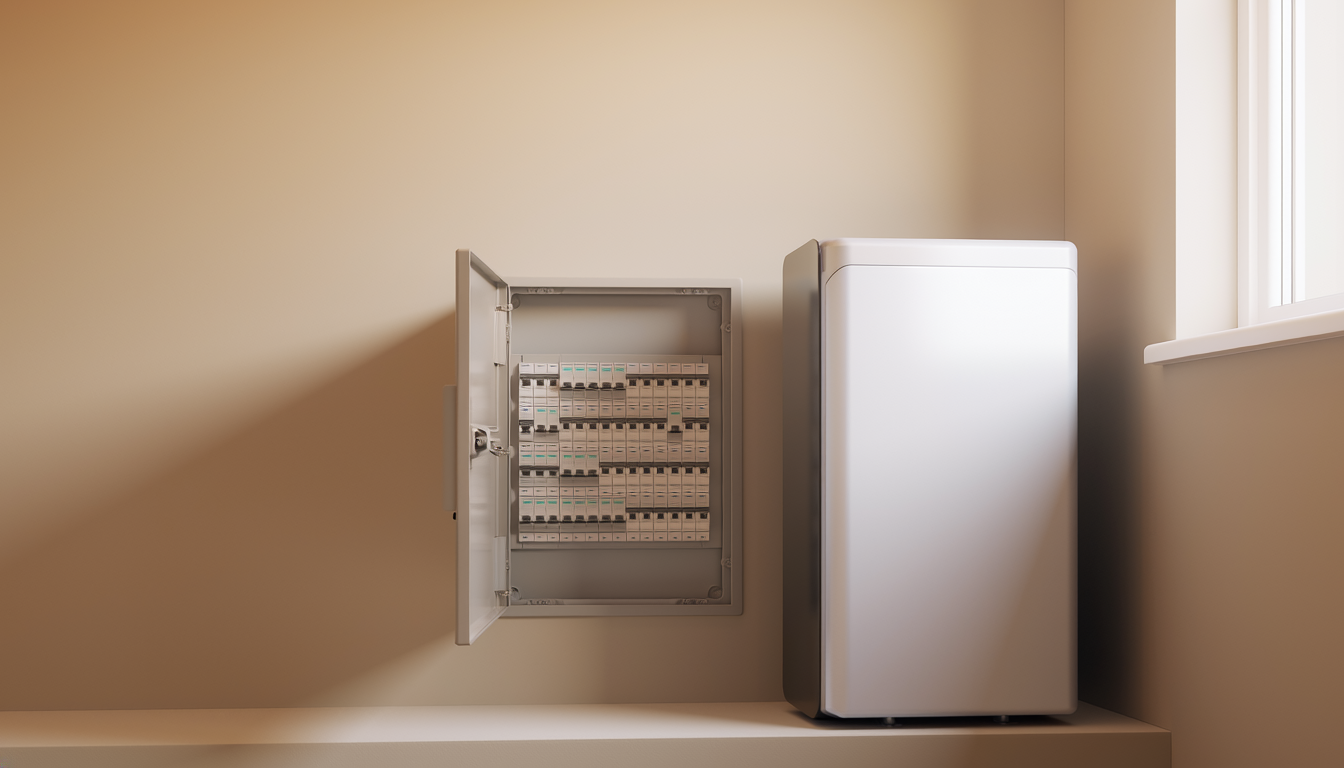
Buyers ask plenty of questions about a home’s layout, location and condition. Fewer ask what happens inside it when the electricity goes out for a day or longer. Outages arrive with summer heat waves, ice storms and high winds in many parts of the country, and whether a home stays livable through one depends on features that rarely make it into a listing.
Pearl, the company behind Pearl SCORE™, treats outage readiness as part of how a home performs. Pearl SCORE™ is the national standard for how homebuyers evaluate home performance. It covers five pillars: Safety, Comfort, Operations, Resilience, and Energy. An outage draws mainly on two of them, Resilience and Energy.
What Home Performance Means When the Power Goes Out
Home performance describes how a home works for the people living in it, beyond how it looks in photos. An outage is one of the clearest tests of that.
Resilience covers how prepared a home is for major weather events, including the severe winter storms that often bring down power lines. Energy covers a home’s ability to generate and store its own power, through features such as solar panels, battery backup and EV charging.
Efficiency is a separate matter. Pearl scores how efficiently a home’s systems run under Operations. A highly efficient home can still lose every light and appliance in an outage if it has no way to produce or store power, which is why a home’s Pearl SCORE looks well beyond energy efficiency.
Solar Panels Don’t Always Mean Power During an Outage
Many buyers assume a home with solar panels will keep running when the grid goes down. Often it won’t. Many grid-connected solar systems shut off automatically during an outage, which protects utility crews working on the lines. Solar can keep a home powered when it is paired with battery storage and equipment set up to supply the house.
Backup batteries vary, too. Some are sized to run an entire home, while others cover selected circuits such as the refrigerator, lights and a few outlets. Some newer electric vehicles can also supply power to a home, but only with compatible charging equipment. Standby generators are another option, usually connected through a transfer switch.
The useful question isn’t whether a home has solar, a battery or a generator. It’s what that equipment will run during an outage, and for how long.
Which Essentials Depend on Electricity
A home can rely on electricity in ways that aren’t obvious during a showing. A gas furnace typically still needs power for its blower and controls. A private well needs power for its pump. Refrigerators, garage doors, medical devices and home offices all stop without it.
How well a home holds its temperature matters, too. A well-insulated, well-sealed home stays comfortable longer once heating or cooling stops, which gives a household more time during a longer outage.
Outage Questions to Ask Before You Make an Offer
- How often has the home lost power, and how long did the longest outage last?
- Is there a battery, a generator or both? What do they run, and for how long?
- If the home has solar, will it keep supplying power when the grid is down?
- Is there a transfer switch or a panel that separates essential circuits?
- Which systems in the home need electricity to work, including heating and water?
- Are there installation records or model numbers for any backup equipment?
The Pearl SCORE™ Report shows buyers what a home has documented under Resilience and Energy. Unclaimed homes reflect what is known from public records, while claimed homes include details the owner has added, such as a home battery or solar system. If a listing mentions backup power that the report doesn’t show, that’s worth raising with the listing agent before an offer.
About Pearl
Founded in 2013, Pearl is a ratings and standards company building the national standard for home performance. Pearl SCORE™ rates every single-family home in the U.S. across five key pillars — Safety, Comfort, Operations, Resilience, and Energy — so homebuyers, homeowners, and real estate professionals can understand how a home performs in daily life. As a Certified B Corporation, we’re accountable not only to our shareholders, but also to the homeowners and communities we serve. For more information, visit pearlscore.com.
This article is based on publicly available information from Pearl. It is intended for general informational purposes only and does not constitute legal, financial, or real estate advice. Readers should conduct their own research and consult qualified professionals before making any real estate or financial decisions.