Six months ago, most data center site conversations in Kansas City started with power and price. Today, says Logan Freeman, managing broker at Midwest CRE Advisors in Overland Park, Kansas, the first question is usually about policy.
Since June, a state executive order, a public rejection from Kansas City planners, a wave of local ballot measures and new utility rules have changed how buyers screen sites across the Midwest. “The market didn’t slow down this summer. It got picky,” Freeman said.
Three Developments That Changed The Market Since June
The first was in Nebraska. On July 20, Gov. Jim Pillen signed an executive order ending ImagiNE Nebraska incentive eligibility for new data center applications and adding a joint state review of land, water and power impacts. Freeman notes it is not a moratorium, but it showed that incentives can disappear in a single afternoon, so nobody should underwrite them as permanent.
The second was Kansas City saying no in public. Kansas City, Missouri, already required council approval and will-serve letters from KC Water and Evergy for data center projects. In August, the city’s Plan Commission voted 6-0 to deny a proposed 20-story data center downtown. Freeman reads that as a market becoming more selective about where projects go and how big they are, not a market that is slowing down.
The third was the Nov. 3 election. Nearly every local data center measure on the ballot went toward restrictions. Several Ohio communities approved bans on data centers above 25 MW, and voters in Ottawa, Kansas, approved a similar 25 MW limit in unofficial results. Iowa’s incoming governor campaigned on making data centers pay 100% of their infrastructure and energy costs.
Freeman says all of it points the same way. Capacity that already exists, is the right size and is politically settled is becoming the scarcest product in the Midwest.
Buyers Are Screening For Certainty First
The biggest change Freeman sees is the order of the questions. One group his firm works with gave a single filter for sites: no moratoriums. Another, looking for 50 MW or more, said the location could not depend on Texas and had to be politically stable. That request followed Texas pausing data center grid interconnections in August while state regulators audited projects in the queue. Neither group mentioned incentives.
Buyers are moving away from places where the answer depends on a discretionary vote, whether that is a city council, a rezoning or a ballot measure. They are moving toward suburban and county locations where industrial zoning already allows the use, and toward utility territories that have published their large-load rules. Evergy’s large-load tariff took effect in Kansas in November 2025 and in Missouri in March, and Ameren Missouri has one as well. The terms are strict, including a 12-year minimum contract, minimum bills and collateral, but they are written down.
“Buyers will accept a tough rule. They won’t accept an open question,” Freeman said.
Nebraska did not drop off anyone’s list, he adds. It moved from an incentive play to a market where a project has to stand on its own fundamentals. Kansas City’s rules pushed attention past the city limits, not out of the metro.
The Deals That Moved Had Paperwork
Since summer, several of the powered-site opportunities Freeman’s team represents have moved from first conversations into signed NDAs and letters of intent, including a signed master services agreement for more than 15 MW in a Tier 3 data center. Much of the current work centers on powered sites and Tier 3 capacity coming online in 2027. Client deals remain confidential until the clients choose to announce them.
Some deals also fell apart, and Freeman says those taught more than the ones that advanced. Every deal that stalled had the same weak spot: power that someone described out loud but never documented. Every deal that advanced had a utility letter, or service already energized, before a buyer ever saw it.
“Every deal that stalled had a power story. Every deal that moved had a power letter,” he said. His advice to developers entering the region is to confirm three facts in writing before marketing anything: how many megawatts are deliverable, by what date and under which tariff.
Where The Opportunity Is Still Open
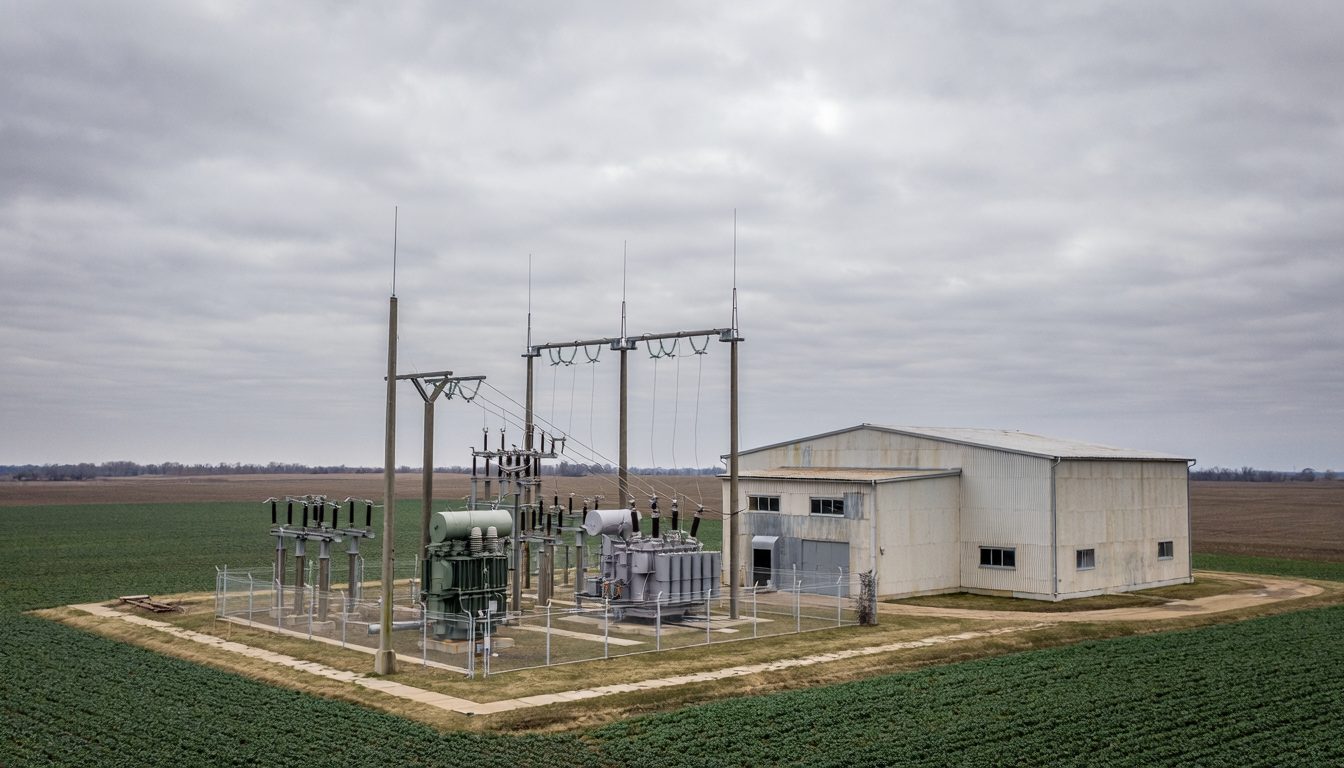
The opening Freeman sees now is energized industrial buildings in the 2 to 20 MW range, in secondary Missouri and Kansas markets where industrial zoning already allows the use. Owners usually price them as warehouses, even though a data center buyer would value them for their power. “The best data center in the Midwest is probably listed as a warehouse right now,” he said.
Kansas City’s industrial vacancy fell to 3.7% in the third quarter, according to Newmark Zimmer, yet most owners of buildings with heavy power have never treated their electrical service as the main asset. By comparison, Cushman & Wakefield puts powered land in primary markets at about $584,000 per MW, up 51% from a year earlier. These buildings also come in under the 25 MW line that local measures are now writing into law, which keeps them out of the fights slowing larger projects.
Freeman puts the window at about two to three quarters. Three things could close it: the 2027 legislative sessions opening in January, with new governors arriving on cost-recovery agendas; local caps spreading to more cities and counties; and institutional capital recognizing the same gap and bidding these buildings up. “The cheapest money is gone,” he said, “but the scarcity premium is still out there for buyers who move first.”
Midwest CRE Advisors is a commercial real estate brokerage and advisory firm headquartered in Overland Park, Kansas, specializing in data center site selection, industrial outdoor storage, and traditional commercial investment across Kansas, Missouri, and the broader Midwest. Founded by managing broker Logan Freeman, the firm has carved out a specific niche in identifying brownfield industrial sites and stranded power capacity for AI inference data center deployment. Active in secondary markets including Kansas City, Oklahoma City, Arkansas, Iowa, and Nebraska, the firm serves AI infrastructure companies, colocation operators, and regional developers evaluating Midwest sites, as well as local and regional investors pursuing industrial, flex, land, multifamily, retail, medical office, senior living and senior housing, storage, specialty property, and single-tenant commercial acquisitions and dispositions. Learn more at www.mwcreadvisors.com.
This article is based on information provided by the expert source cited above. It is intended for general informational purposes only and does not constitute legal, financial, or real estate advice. Readers should conduct their own research and consult qualified professionals before making any real estate or financial decisions.