Most data center headlines in Kansas City are about hyperscale. Google leased the entire 920,400-square-foot Building VII at the I-49 Industrial Center in south Kansas City, Missouri, for a hyperscale data center, with move-in expected in January 2027, according to Newmark Zimmer’s third-quarter industrial report.
Logan Freeman, managing broker at Midwest CRE Advisors in Overland Park, Kansas, says the calls coming into his office describe a different business. “Hyperscale makes the headlines. Inference makes the phone ring,” he said. For owners, developers and investors, that demand shows where the next wave of Midwest data center activity is heading.
Who Is Calling And How Much Power They Need
Since mid-October, Freeman’s team has logged more than 50 inbound data center requirements. The largest group by far is GPU operators and neoclouds, the cloud providers built to rent out AI computing capacity. Most need between 1 and 20 MW, and they need it energized now. About a third name the exact hardware they plan to deploy, including liquid-cooled racks that draw up to roughly 160 kW each.
Of the requests that included a size, about two out of three started at 20 MW or less. Enterprise users have been steady, and telecom has been the quietest group. Buyers looking for 100 MW or more of land are still active, but they are now a minority.
The bigger shift is in the question buyers ask. “A year ago it was ‘how many acres can you find me,’” Freeman said. “Now it is ‘how many megawatts can you energize this quarter, and can I add more later.’”
Why Inference Demand Favors Secondary Midwest Metros
Inference is the work of running AI models for users, as opposed to training them. Freeman forecasts that it will make up 70 to 80% of data center demand in the markets his firm covers by 2030, and he is clear that this is his own forecast, not a published consensus.
The published baseline is lower. McKinsey’s model puts inference at about 60% of AI data center demand by 2030, growing about 35% a year to more than 90 GW worldwide, while training grows about 22% a year.
Freeman’s number runs higher because of where each workload goes. “Training goes where the cheapest gigawatt is. Inference goes where the people are,” he said. Inference needs users, fiber and low latency nearby, which describes metros like Kansas City and Oklahoma City. That is why he expects inference’s share of new demand in those markets to run ahead of the national figure, and his own deal flow mostly backs that up.
Two things could complicate the forecast. Large training campuses are still absorbing record volume nationally, and better chips and smaller models could slow how fast inference power demand grows. McKinsey has flagged the same uncertainty. “The exact percentage matters less than which way it’s moving,” Freeman said.
What Makes A Site Hold Its Value For The Next Decade
Freeman says a site that will still be competitive in 10 years needs five things. The first is power that is either energized or documented in writing by the utility, with a clear path to upgrade the substation. The second is fiber diversity, meaning at least two real routes rather than a single line along the highway. The third is transmission headroom, plus natural gas close enough for on-site or bridge generation.
The fourth is zoning that already allows the use, ideally including on-site generation, so the project never needs a rezoning vote. The fifth is a size that can start under local political limits and grow in phases. That last requirement is new this year. In local ballot measures this fall, 25 MW became a common cap, and voters in Wilmington, Ohio, rejected rezonings that would have cleared the way for a data center project.
The sites Freeman expects to age badly are the ones that look strong in a pitch deck but depend on something that can be taken away: a rezoning that has not happened, a state incentive, or a utility saying it can probably serve the load with nothing signed.
“If the site only works after a vote, a subsidy or a promise, it’s a bet, not a site,” Freeman said.
What Developers Should Buy Over The Next 12 To 24 Months
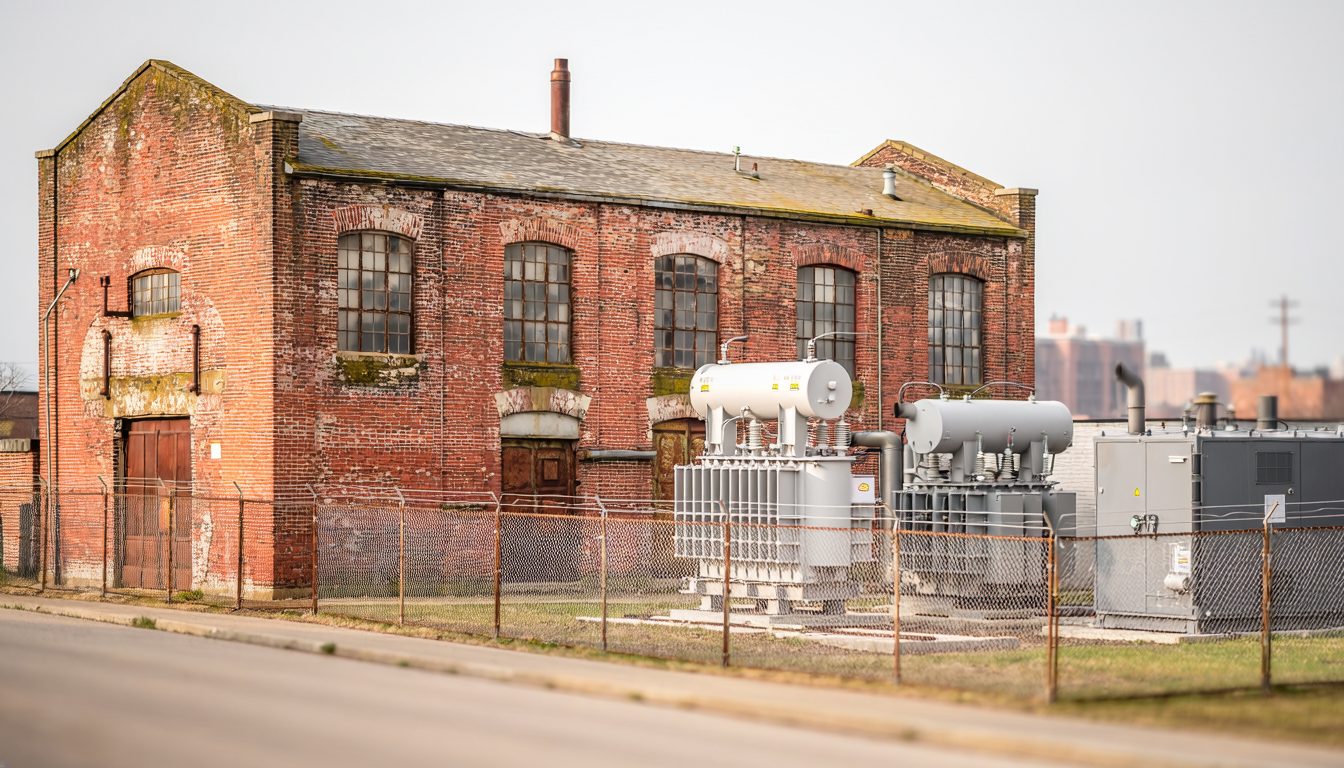
Two faster paths to capacity are now a regular part of Freeman’s pipeline. Some of the most specific requests come from buyers who want legacy enterprise data centers in the 1 to 15 MW range, or metro buildings they can convert for edge colocation. Groups deploying modular AI capacity also reach out regularly. They don’t need a building. They need a pad, a yard, a transformer and permission.
The reason is cost and time. JLL puts 2026 shell-and-core construction at about $11.3 million per MW before the tenant’s fit-out, and Cushman & Wakefield puts all-in greenfield development at about $17.6 million per MW. Greenfield projects also typically take three years or more. With almost no vacant capacity on the market, a building that delivers power 18 months sooner is worth paying more for.
Freeman’s advice is to buy existing electrical service, yard space and zoning that allows the use, not raw acreage. Industrial buildings with a real utility feed, outdoor room for equipment and generators, and enough clear height for modern racks are becoming the core product. The number to underwrite, he says, is the all-in cost per commissioned critical megawatt and how many months it takes until that megawatt is usable.
“The building is not the asset. The power that is already inside it is,” he said.
Midwest CRE Advisors is a commercial real estate brokerage and advisory firm headquartered in Overland Park, Kansas, specializing in data center site selection, industrial outdoor storage, and traditional commercial investment across Kansas, Missouri, and the broader Midwest. Founded by managing broker Logan Freeman, the firm has carved out a specific niche in identifying brownfield industrial sites and stranded power capacity for AI inference data center deployment. Active in secondary markets including Kansas City, Oklahoma City, Arkansas, Iowa, and Nebraska, the firm serves AI infrastructure companies, colocation operators, and regional developers evaluating Midwest sites, as well as local and regional investors pursuing industrial, flex, land, multifamily, retail, medical office, senior living and senior housing, storage, specialty property, and single-tenant commercial acquisitions and dispositions. Learn more at www.mwcreadvisors.com.
This article is based on information provided by the expert source cited above. It is intended for general informational purposes only and does not constitute legal, financial, or real estate advice. Readers should conduct their own research and consult qualified professionals before making any real estate or financial decisions.