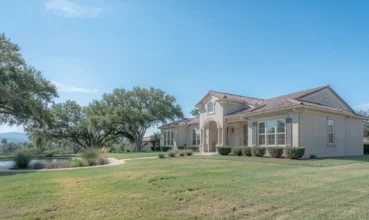
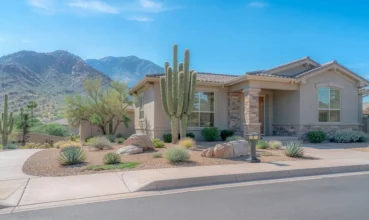
In Tucson, Arizona, quality still sells at the top of the market. A $925,000 home in Oro Valley, one of the area’s higher-end districts, recently sold at full price in six days after drawing more than one offer. Michael Oliver, who co-owns Oliver Realty, a boutique luxury brokerage, with his wife, Heather, calls multiple offers “somewhat rare in today’s market.” The sales that feed the top of the market are slowing, however. The $700,000 buyer who needs to sell a $500,000 home first is pulling back, and Oliver sees the effects moving up toward the $1 million tier.
Oliver describes the dynamic as a property ladder. A first-time buyer rarely purchases a $1 million home, so its sale depends on someone moving up from a $700,000 or $800,000 house. That seller, in turn, depends on a buyer stepping up from $500,000. “That person that wants to move up from the seven or eight hundred thousand dollar house, sell their house and they buy the million dollar home – that’s the link in the chain that is starting to break,” he says.
The Snowbird Variable
Tucson’s top tier also feels pressure that has nothing to do with the ladder: its sensitivity to the national economy. Oliver points to roughly nine months a year of exceptional weather and summers cooler than Phoenix’s, which together create what he calls a snowbird effect. “When people have extra money, they want to buy a second home in Tucson. But when the economy starts to pull back, then people want to sell those same second and third homes to cut expenses.” He sees the same pattern across Sun Belt markets. In practice, it means anyone listing a home in Tucson has to weigh the national economy as well as local conditions.
The buyers who arrive tend to have a reason to choose Tucson over Phoenix or Las Vegas. Oliver says many of his affluent buyers have a personal tie to the city: they attended the University of Arizona, served in the Air Force, or have family in town. Others relocate for work, including engineers and other employees at Raytheon. Retirees and near-retirees from California and Seattle form another steady group, selling in expensive markets to live larger and make their savings last longer. Oliver says he has seen that pattern hold throughout his 24 years in the business.
The affluent clients at the center of his business, buyers at $500,000 and above, often above $1 million, still have the means to transact. “They may not want to do it for certain situations, but it’s not like they can’t,” he says. Their constraint is willingness, not capacity. Oliver still sees the high end performing well, though he has started to see some slowdown.
What’s Moving and What Isn’t
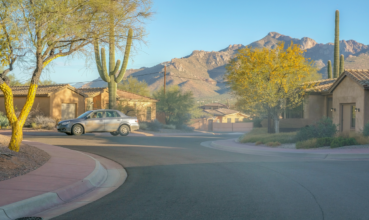
That slowdown shows up unevenly across submarkets. Oliver ranks the Catalina Foothills as the highest-demand area and says buyers will sell in Dove Mountain, or sometimes Oro Valley, to move there. He sees Oro Valley beginning to soften, calls Dove Mountain the softest of the three, and describes far outlying areas as slow. In his words, the luxury areas are “doing okay. It’s just different colors of okay.”
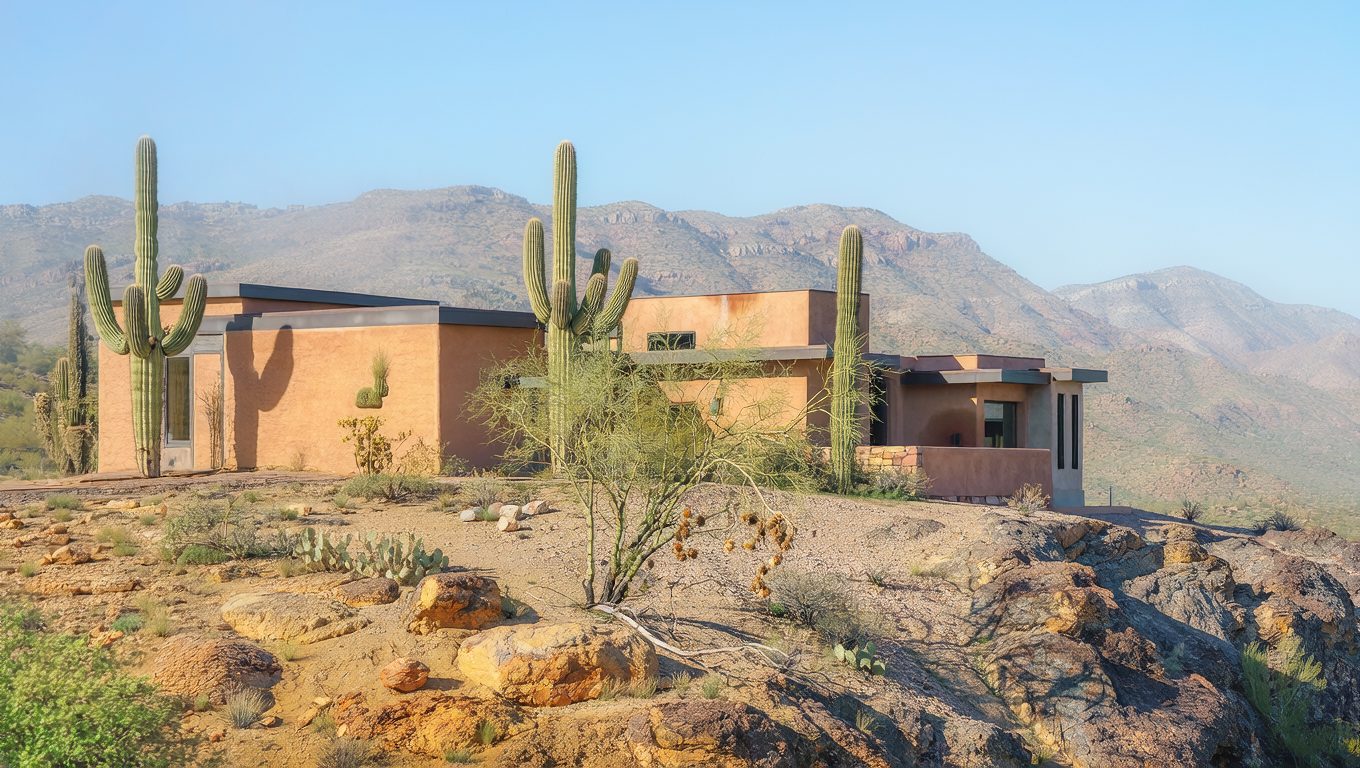
The west side has been a surprise. Oliver has had good success selling higher-end homes there, though he cautions that “strength is relative.” He credits two advantages. The first is proximity to a downtown that has absorbed 10 to 20 years of investment and now offers restaurants and attractions it once lacked. The second is a mountain setting at prices well below the foothills. A million dollars in the foothills buys a 35- to 40-year-old house that needs work, he says, while roughly the same budget on the west side buys a new or nearly new contemporary home on a ridge. “I think people are just doing the valuation,” he says. He also sees visible development, such as a new casino about to open, giving upper-end buyers more confidence in areas they would have avoided a decade ago.
In every submarket, quality decides what sells. Homes with something hard to duplicate, such as a mountain view or a neighborhood buyers want even when the house itself isn’t exceptional, still move. Overpriced homes, homes without a distinguishing feature, and fixer-uppers listed at premium prices sit. “The buyers are being picky,” Oliver says. Pickiness has not reduced what buyers will pay for the rarest features. Oliver says he has not seen a pullback on views or privacy at the high end. During the Great Recession, a view helped a home sell but did not bring a higher price. Today, top-end buyers will pay more for features they can’t easily find elsewhere.
Affordability Is the Central Risk
Those premiums protect the best homes, but they don’t address what Oliver calls the number one headwind for the coming year: affordability, whether measured by home prices, interest rates, or both. He puts home affordability at extreme lows. The wealthiest buyers can absorb that. If they want to buy or sell, Oliver says, they can afford to. The pressure lands on the rungs below them, and because each rung depends on the one beneath it, a stall among $500,000 and $700,000 sellers eventually reaches the $1 million market.
Interest rates have sharpened the problem in recent weeks. Oliver describes buyers who were shopping two or three months ago at rates around 6.5% and now face rates around 7.5%. Many have moved to the sidelines to wait for relief, the way drivers put off filling up when gas prices spike. That patience lasts only so long. “Once you’re pretty much on E and you’re gonna run out of gas, like, you gotta pay what it is,” he says. Cash buyers have their own reason to wait, since their savings and money market accounts now pay well. “I’m getting paid to wait. And they see the market softening,” Oliver says, describing their thinking.
Why Lower Costs Won’t Fix It
The squeeze also tests one of Tucson’s longtime advantages. For as long as Oliver has sold homes there, buyers from Los Angeles, Seattle, and other expensive markets have come to stretch their money further. Those buyers arrive with equity from the homes they sold and, as Oliver describes them, money left over to put in the bank. The local homeowner trying to move from $700,000 to $1 million has no such head start. That buyer depends on finding someone to buy the house they already own. Tucson’s lower costs still attract outside buyers, but that appeal does little for the move-up sales that hold the ladder together.
Oliver has seen this kind of stall before, and it has always ended in a correction. “Every other time I’ve seen affordability become a problem, you see prices come down or interest rates have to come down dramatically,” he says. The only other way out is very strong economic growth. He doesn’t predict which will come first, but his experience leaves no doubt that the current conditions can’t hold. “Something has to happen there because affordability is the base level of how real estate operates.”
About Michael Oliver: Michael Oliver is co-owner of Oliver Realty, a boutique luxury brokerage in Tucson, Arizona.
This article is based on information provided by the expert source cited above. It is intended for general informational purposes only and does not constitute legal, financial, or real estate advice. Readers should conduct their own research and consult qualified professionals before making any real estate or financial decisions.