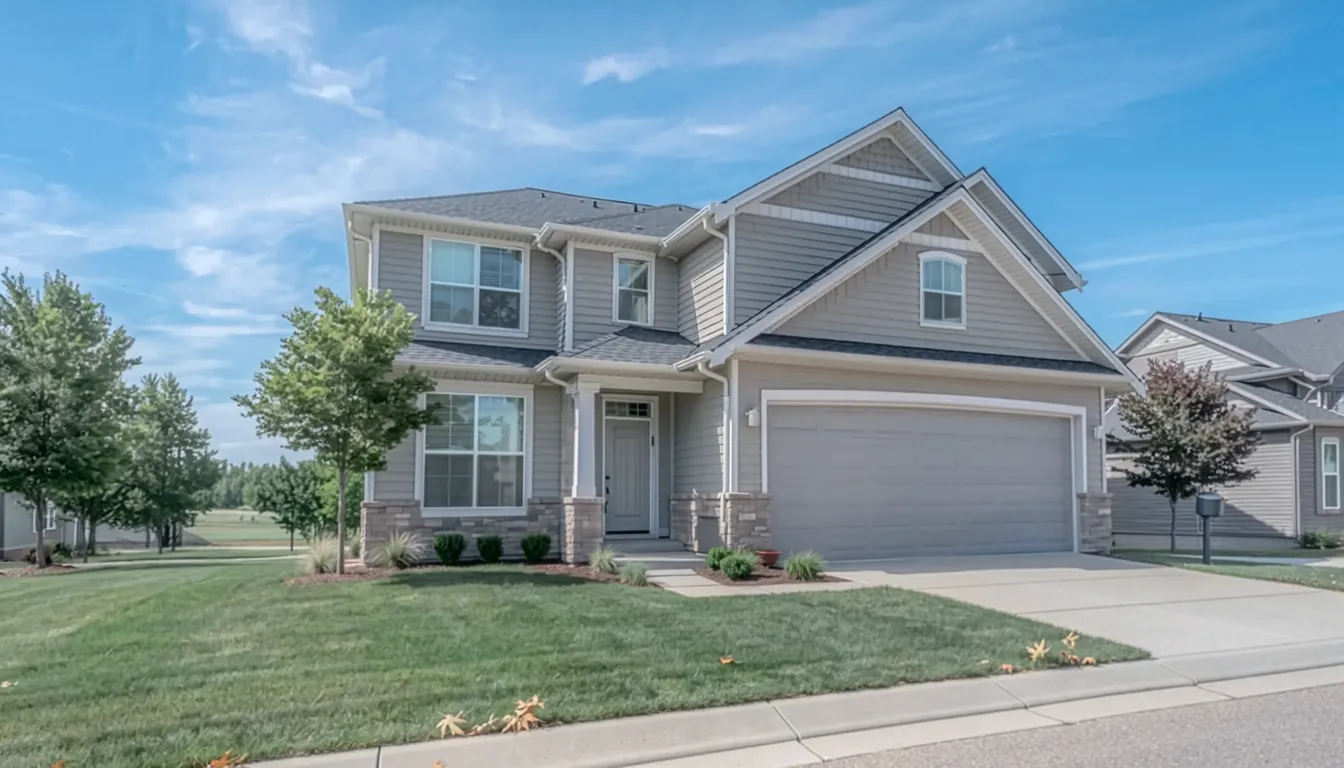
For the better part of five or six years, sellers in Sioux Falls, South Dakota, had the upper hand. Inventory was tight, offers came in fast, and negotiations were brief. That era appears to be ending. Homes are coming off the market unsold at rates the city hasn’t seen in some time, buyers are negotiating on price and inspection items, and sellers are adjusting – sometimes reluctantly – to conditions that no longer reward overpricing, according to Julie Roth, a licensed agent with nearly eight years of experience and a practicing interior designer in the Sioux Falls market.
Roth describes the current environment as balanced market territory – something the city hasn’t seen for a long time. The shift is not a collapse, she adds, but a normalization that is catching some sellers off guard.
The Pricing Reality Check
Sellers who price correctly and present well are still landing between 97 and 100 percent of asking price, according to Roth. But the failure rate – properties coming off the market without a sale – has climbed noticeably. The gap between what sellers believe their home is worth and what buyers are willing to pay has widened.
Interest rates, which Roth says recently hit a multi-year high, are a major factor. First-time buyers in particular are stretching to afford a purchase, and that strain is showing up at the negotiation table. Requests for seller credits toward rate buydowns and closing costs have become more common, especially at lower prices.
“It’s not always a fun conversation right now to have with sellers,” Roth says. The listing conversation now involves assessing whether the timing is right to sell at all, or whether renovations that improve how the home shows might be worth doing first.
Where the Activity Is
Not every price band in Sioux Falls is experiencing the same conditions. The segment at $350,000 and below remains active. The city’s average sale price sits around $375,000, which still buys a solid single-family home. At the other end, the luxury tier – which Roth defines as starting around $750,000 to $800,000 – is surprisingly busy, with new construction moving briskly above the million-dollar mark. Roth says developments with homes in the $5 million to $6 million range are now underway, a scale she finds remarkable after 16 years in the area.
Buyers between those two tiers have more inventory to choose from and more leverage to negotiate. Sellers in that middle range who might have expected bidding wars a year or two ago are now fielding offers with contingencies and concessions attached.
Geographically, growth continues at the city’s perimeter. The core downtown offers little room for new development. New construction fans outward, with the Harrisburg area to the south drawing families in part because of its school district. Roth, who serves on a local task force working with the area’s Economic Development Corp., says the Harrisburg school district’s programming and rankings are a meaningful draw for buyers relocating to the metro. Anything south of 57th Street in Sioux Falls falls within the Harrisburg district, pulling a significant share of the city’s families into that school system.
The Investor Angle
For investors considering Sioux Falls, Roth sees the clearest opportunity in small multifamily properties – duplexes, triplexes, and fourplexes that have been held by long-term owners and are often rented below market rates. The approach is straightforward: acquire, renovate, bring rents to market, and hold.
“We have a lot of duplexes, triplexes, and fourplexes that are maybe owned by mom-and-pops that have owned them for years and years and are under rented,” she says. “There’s an opportunity there to come in and maybe do some renovations and get some new tenants in there and increase rents.”
South Dakota’s lack of a state income tax adds another layer of appeal for out-of-state capital. Single-family flips, by contrast, are harder to make work. Roth says acquisition costs have risen enough that returns are tighter than they were even a few years ago. Cash flow in general, she acknowledges, is more difficult to achieve across the board. The multifamily segment, however, is not oversaturated, which Roth views as a reason the opportunity still exists.
Why Presentation Still Moves the Needle
In a market where buyers have more options, the condition a home presents in at listing carries more weight. Roth, whose background in interior design predates her real estate career, stages every listing her team handles. For vacant homes, she works with a local staging company; for occupied ones, her team keeps a storage unit stocked with art, pillows, rugs, and accessories.
She points to a recent portfolio of inherited rental properties her team handled for a client whose father had passed away. After light renovations – paint, carpet, and staging – three or four of those homes sold within days or weeks of listing. They hit the active sub-$350,000 range, but Roth believes the presentation changed how buyers responded. “People fall in love with homes before they even come in the door,” she says.
A Seasonal Window
Sioux Falls has a pronounced seasonal rhythm. Spring brings the most inventory and the most activity; fall tapers as the weather turns. Roth expects the coming winter months to push sellers toward more realistic expectations, creating a window for buyers who are ready to act.
Her view is that this market is settling into something durable rather than temporary. “I think we are going to be in this type of market for a while, and I think people just need to understand that this is kind of our new normal,” she says. “It’s not good, it’s not bad. It’s not going to crash. I feel like we’re just going to become more of a normalized market like the pre-Covid market.”
For buyers who have spent years competing in a seller-dominated market, that normalization means leverage they haven’t had in half a decade – more choices, more room to negotiate, and sellers who are increasingly willing to meet them partway.
About the Expert: Julie Roth is a licensed agent and interior designer in the Sioux Falls, South Dakota market, with nearly eight years of real estate experience.
This article is based on information provided by the expert source cited above. It is intended for general informational purposes only and does not constitute legal, financial, or real estate advice. Readers should conduct their own research and consult qualified professionals before making any real estate or financial decisions.